In a nutshell
- 🪙 The 10p coin test quickly exposes hidden mould and biofilm: slide the coin around the door gasket and detergent drawer; residue or odour on a tissue signals contamination.
- 🔍 Mould hotspots include the inner door seal folds, detergent drawer cavity, drain filter housing, and drum rim—worsened by low-temp cycles, liquid overdosing, and keeping the door shut.
- 🧭 How to test: power off, sweep the coin gently under seals and lips, wipe onto white tissue, and assess colour/odour—don’t gouge the gasket; document trouble spots for targeted cleaning.
- 📊 Interpreting results: Clean, Trace, Moderate, or Severe guides action—from a hot maintenance wash to deep cleaning, and in worst cases, gasket replacement or a service check.
- 🧼 Removal and prevention: use oxygen-based cleaners or 3% hydrogen peroxide, scrub drawer and filter, run 60–90°C cycles, switch to powder detergent, dry the machine after use, and seek professional help for persistent odours or leaks.
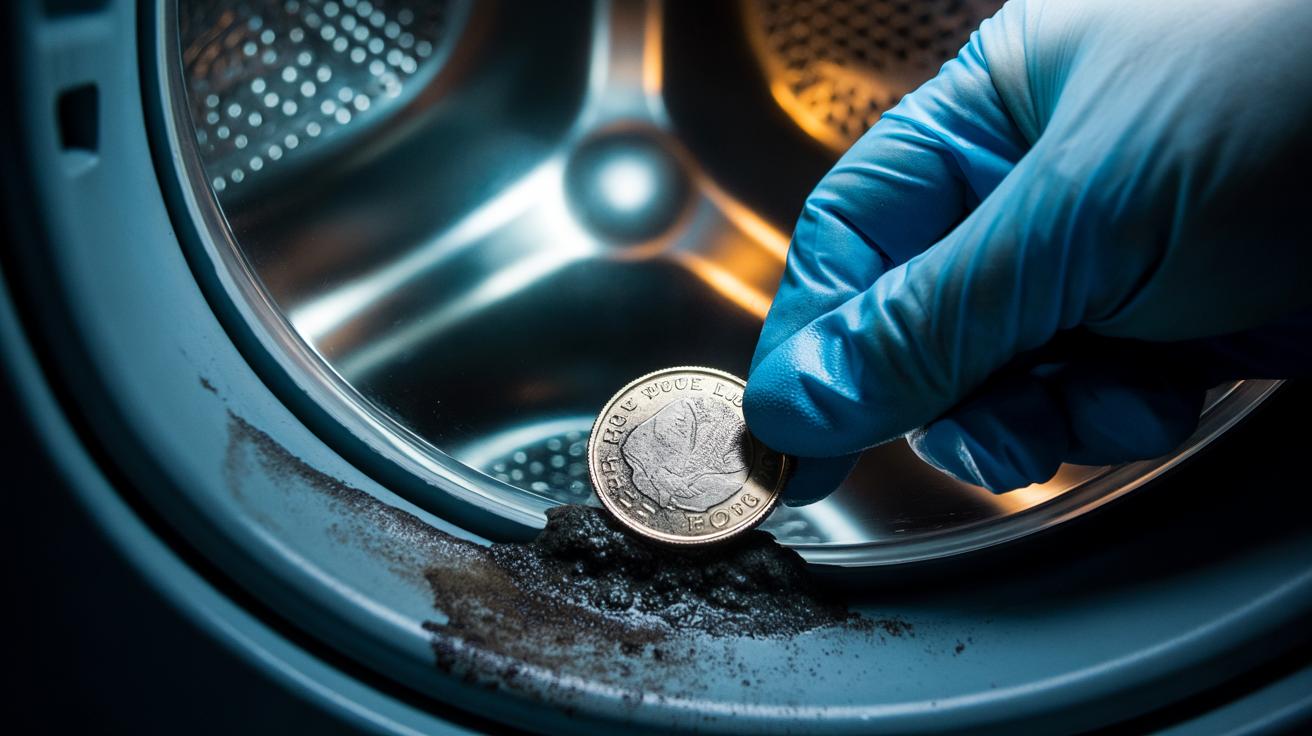
There’s a simple trick circulating in savvy British households that exposes the grime your washing machine hides in plain sight. The 10p coin test takes seconds, costs nothing, and often proves why clean laundry can still smell swampy. Slide a coin around your door seal and detergent recesses and you’ll likely dislodge black residue—evidence of mould and stubborn biofilm. This isn’t just cosmetic. If left to thrive, hidden mould shortens appliance life, taints fabrics, and releases unpleasant odours. Below, you’ll find how the test works, where the growth lurks, what your results mean, and the smartest ways to banish it for good without wrecking rubber, steel, or your weekly schedule.
What the 10p Coin Test Is and Why It Works
The UK 10p coin is the perfect probing tool: slim enough to reach the creases of a washer’s door gasket, sturdy enough to scrape residue, and common in every pocket. At roughly 24.5 mm across with a crisp milled edge, it acts like a mini spatula. Slide the coin’s rim gently under the moulding of the seal and along the inner lip of the detergent drawer. If the coin emerges with grey slime, black specks, or a sour smell on a tissue, you’re looking at biofilm—a mix of soap scum, fabric fibres, skin oils, and fungi. A clean coin and clean tissue after a sweep is a powerful sign your machine is genuinely hygienic.
This test works because mould colonises places brushes rarely reach and light never hits. The coin lifts the film where it anchors: the gasket folds, the channel under the door glass, the drawer rails, and the lip above the drum opening. Each pass acts as a sampling swipe, producing quick, visible evidence without dismantling the appliance or using harsh chemicals.
Where Mould Hides in Your Machine
Most growth concentrates where water lingers. The top culprit is the door seal, especially the inner fold that traps lint and detergent. Feel for tackiness, then use the 10p rim to probe the crease—dark streaks often indicate established colonies. The detergent drawer and the cavity behind it host black patches fuelled by liquid detergents and softeners. Drawer runners and the underside lip can look clean at a glance yet paint your coin grey in one sweep. If your towels smell musty straight from a “fresh” wash, these zones are prime suspects.
Look lower down as well. The drain filter housing can hold silt and thread bundles that keep areas wet between cycles. Drum ribs and the rim behind the porthole glass also catch residue. Low-temperature washing and quick cycles, popular to save energy, leave more nutrients for microbes. Combine that with over-dosing liquid detergent and always shutting the door, and you’ve created a perfect incubator.
Step-By-Step: Performing the 10p Coin Test
Power off the machine. Open the door and pull back the gasket lip. Slide the coin’s edge around the full circle, pausing to wipe the coin on a white tissue every 10 cm so you can see what it picks up. Inspect the inner channel beneath the glass rim and the small drainage holes in the seal; if the coin emerges slimy or black, mark those spots mentally for cleaning. Never gouge the rubber—gentle pressure protects the seal from tears.
Next, remove the detergent drawer. Run the coin under the cavity’s top lip and along the rails, again wiping onto tissue to check for residues. Finally, open the lower hatch and look at the filter surround; a careful coin pass will often reveal sludge. Note the smell intensity on the tissue—sharp, sour odour equals active biofilm. Photograph what you find if you want a before-and-after record after cleaning.
How to Read Your Results
Your tissue tells the story: colour, amount, and smell correlate with how much mould you’re hosting and where it’s anchored. Use the guide below to prioritise action.
| Result | What the 10p Reveals | What It Means | Quick Response |
|---|---|---|---|
| Clean | No residue; no odour | Low biofilm burden | Monthly hot maintenance wash |
| Trace | Light grey film; faint smell | Early growth in gasket/drawer | Wipe surfaces; run 60°C cycle |
| Moderate | Black flecks; tacky slime | Established mould colonies | Deep clean; switch to powder |
| Severe | Thick sludge; strong odour | Widespread biofilm | Gasket clean/replacement; service check |
If the coin sticks in sticky residue or the tissue turns almost black after one sweep, treat it as severe and plan a thorough clean plus a follow-up test in a week.
How to Remove Mould and Keep It Away
Start with the gasket: wear gloves, then wipe the folds using a cloth soaked in hot water with oxygen-based cleaner (sodium percarbonate) or a 3% hydrogen peroxide solution. For stubborn spots, apply a paste of bicarbonate of soda and a little peroxide, leave for 10 minutes, then wipe clean. Remove the detergent drawer, scrub with a toothbrush, and rinse the cavity. Clean the filter and its housing thoroughly. Do not mix chlorine bleach with vinegar or other acids. After reassembly, run an empty 60–90°C maintenance cycle with a scoop of powder to flush residues.
Now adjust habits. Prefer powder detergent for routine washes; it leaves less food for biofilm. Dose correctly; over-dosing invites slime. Run a monthly hot cycle, open the door and drawer after each wash to dry, and remove wet laundry promptly. If you air-dry indoors, ventilate the room. Add the 10p sweep to your monthly routine; it’s a quick audit that catches relapse early.
When to Call a Professional or Replace Parts
If black stains are etched into the seal and return within days of cleaning, the rubber may be perished. Replacement gaskets for common models cost far less than a new machine and restore hygiene. Persistent odours after deep cleans can indicate a blocked drain hose or biofilm beyond reach in the sump or pressure chamber. Repeated severe results from the 10p test are a signal to inspect components rather than scrub indefinitely.
Leaks, unexplained error codes, or slow draining merit a service visit. Ask the technician to check the sump, hoses, and pump volute for sludge. For machines over a decade old with chronic mould issues and worn seals, a targeted repair may still be cheaper and greener than replacement, but factor in energy efficiency gains from newer models when making the call.
The humble 10p coin test turns guesswork into clear evidence and gives you a fast route to fresher laundry and a healthier appliance. A few sweeps reveal where grime hides, and a focused clean keeps odours at bay while protecting the drum, seal, and pump. Small changes—hotter maintenance cycles, proper dosing, and letting the machine dry—prevent the biofilm from returning. Ready to put your washer to the test? After your first 10p sweep, what did you find, and which spot proved the most surprising in your home?
Did you like it?4.5/5 (20)