In a nutshell
- 🧤 The rubber glove trick harnesses static charge and grippy texture to lift pet hair in one swipe—cheap, low‑waste, and gentle on upholstery.
- ⚡ How it works: friction builds electrostatic attraction; a light mist on the glove boosts grip, outperforming lint rollers and nozzles along seams and corners.
- 🧭 Step-by-step: pick a clean nitrile/latex glove, optionally dampen, use long single‑direction strokes with slight overlap, and finish with a microfibre wipe or quick vacuum.
- 🧪 Choosing the right glove: thin Nitrile for delicate fabrics, Latex for everyday blends, and Silicone for rugged textiles—match pressure and moisture to your sofa.
- 🔧 Troubleshooting: if hair smears, rinse and dry the glove, reduce moisture, and glide in one direction; maintain gloves and pair with pet pre‑brushing and routine vacuuming.
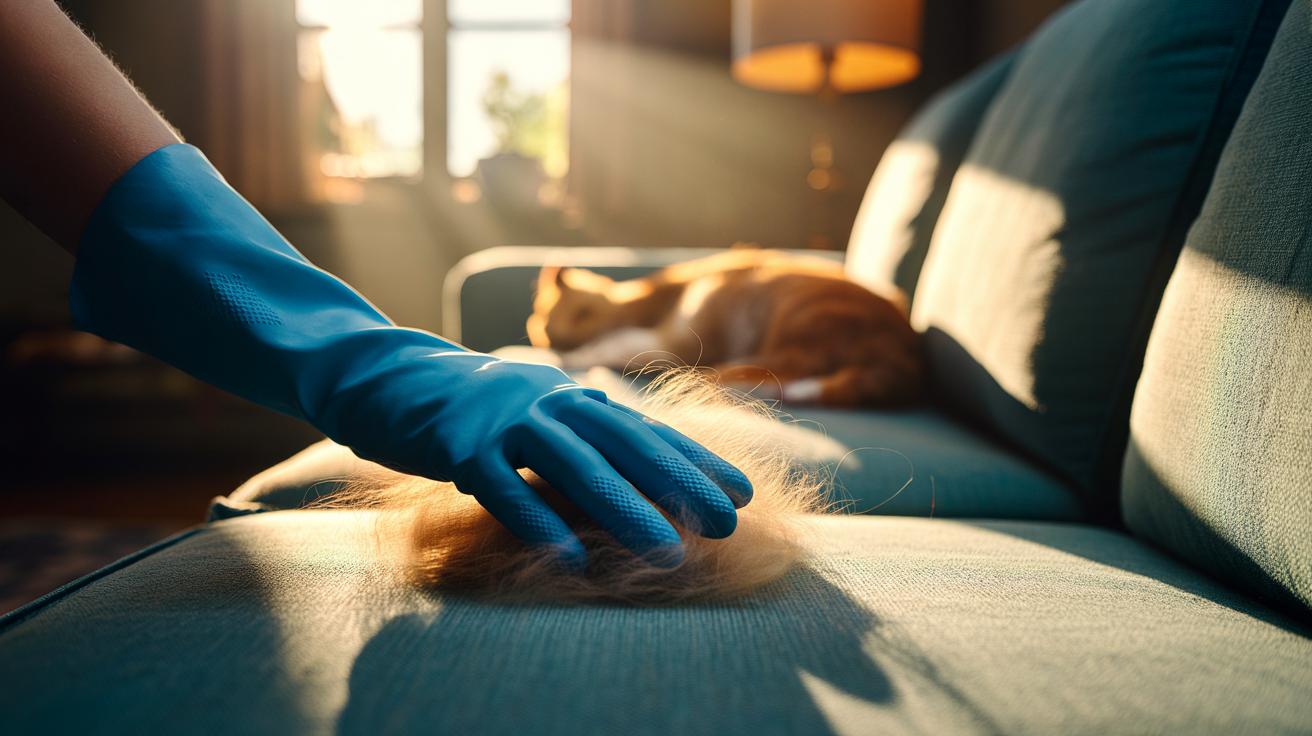
Pet hair has a talent for nesting in upholstery, defying vacuums and lint rollers alike. Yet there’s a household hack doing the rounds that deserves a place in every owner’s cleaning arsenal: the rubber glove trick. With a single, confident pass, a humble glove can gather strands that once seemed fused to the fabric. The secret lies in static charge and a grippy surface that corrals fur rather than scattering it. Used correctly, one swipe can lift the bulk of hair and leave the weave looking refreshed. It’s cheap, quick, and gentle on most sofas, making it ideal for nightly tidying or last‑minute spruce‑ups before guests arrive.
How Static and Texture Do the Heavy Lifting
The method works because rubber builds a mild electrostatic charge when drawn across fabric. That charge encourages loose and embedded strands to leap towards the glove, while the glove’s slightly tacky texture helps trap the fibres. Instead of fighting hair buried in the nap, you’re exploiting physics to coax it out. The combination of friction and charge turns a flat, stubborn surface into one that willingly releases debris. Different weaves respond differently: tighter polyester blends release quickly, while dense wool mixes may need a slower pass to tease out deeply set strands.
Moisture can amplify results. A light mist on the glove increases grip without soaking the sofa. Avoid drenching; you want a thin film, not a puddle. The trick excels along seams and cushions where conventional tools falter. Compared with a lint roller, which relies on adhesive, a rubber glove reduces waste and cost, and unlike vacuum nozzles, it can navigate tufted corners without tugging threads. The result is a pile that looks lifted rather than compressed, with far less effort.
Step-by-Step: The One-Swipe Glove Method
Begin by choosing a clean, dry glove—standard latex or nitrile works well. If your sofa is prone to static shocks, dampen the glove lightly with water or a 50:50 water–white vinegar mix to neutralise odour and boost grip. Test a discreet patch to ensure no colour transfer. Press the glove flat to the fabric and draw it in a smooth, single direction; aim for long strokes rather than short scrubs, which can push hair deeper. You’ll see hair roll into satisfying clumps that can be pinched off and binned.
Work in lanes from one edge of the cushion to the other, overlapping passes by a few centimetres. For piping and corners, curl your fingers to follow the contours without snagging. If the glove loses bite, rinse away accumulated oils and hair, then continue. Stubborn patches respond to a second, slower glide with slightly more pressure. Finish by gathering the hair pile with your palm or a microfibre cloth. A quick vacuum at the end can lift any remaining dander, leaving the sofa crisp and groomed.
Choosing the Right Glove and Sofa Strategy
Not all gloves are equal. Thin nitrile offers sensitivity and control on delicate fabrics, while thicker silicone dish gloves provide aggressive traction for rugged textiles. Texture matters: raised patterns increase the micro‑contact points that snag fur. Match glove to fabric—gentle for velvets and chenille, grippier for durable synthetics and pet blankets. If your sofa’s care label warns against moisture, stay dry and rely on friction alone. For light‑coloured upholstery, opt for non‑dyed gloves to avoid marks, and keep a spare pair dedicated solely to pet care to prevent cross‑contamination.
The cheat sheet below helps you pick a combination that fits your home and pets. Think of it as a tuning process: if hair smears, you need more texture or a touch of damp; if threads lift, ease off pressure and slow your stroke. Pair the glove with a weekly routine and you’ll stretch the time between deep cleans, saving wear on fabric and filters.
| Glove Type | Best For | Pros | Notes |
|---|---|---|---|
| Nitrile (thin) | Delicate weaves, velvet, chenille | Great control; low risk of snagging | Use dry or barely damp |
| Latex | Everyday synthetics, cotton blends | Balanced grip and flexibility | Check for latex allergies |
| Silicone dish glove | Pet blankets, hard‑wearing sofas | Strong traction; fast coverage | Go lightly on delicate fibres |
| Rubber grooming glove | Heavy shedders, embedded hair | Raised nubs lift deep fibres | Best for seams and corners |
Troubleshooting Stubborn Fur and Common Mistakes
If hair smears rather than clumps, your glove may be oily or too wet; rinse, dry, and try again with lighter pressure. Always glide in one consistent direction to prevent re‑embedding fibres. Long‑haired breeds can create mats that bind to the weave—pinch and lift these with your fingertips before running a final pass. For static‑prone rooms, a quick humidifier burst or a light mist on the glove cuts crackle and boosts pick‑up. If you notice pilling, slow down and reduce force; the glove should kiss the fabric, not scrub it.
Don’t skip maintenance. Wash gloves after each session to remove oils that blunt grip, and swap them when the surface turns smooth. Consider pre‑brushing pets outdoors during peak shedding to reduce load indoors. Keep a small caddy—glove, microfibre cloth, and a bin bag—near the sofa to make swift clean‑ups routine. Paired with periodic vacuuming and fabric care, the rubber glove trick becomes a low‑waste, high‑impact habit that keeps upholstery guest‑ready with minimal fuss.
The appeal of the glove method is its elegant simplicity: a bit of static, a touch of texture, and you’ve reclaimed your sofa without chemicals or costly gadgets. It’s budget‑friendly, kinder to fabrics than aggressive nozzles, and takes seconds to learn. With a measured swipe, embedded hair releases and gathers into neat clumps you can lift away. As seasons change and shedding surges, a tailored blend of glove type, pressure, and moisture will keep you ahead of the fluff. Which glove–fabric pairing will you test first, and how will you adapt the one‑swipe routine to your home’s specific textures and pets?
Did you like it?4.6/5 (23)