In a nutshell
- 🔬 Why it works: Lemon’s citric acid dissolves copper oxide while salt provides gentle abrasion—delivering a fast, low-tox polish safer than harsh chemical cleaners.
- 🧽 How to do it: Halve a lemon, dip the cut face in salt, scrub the copper exterior in small circles, then rinse and dry immediately; buff with a microfibre cloth for a bright shine.
- ⚠️ Avoid these pitfalls: Check for factory lacquer, keep acid off tin-lined interiors, don’t over-scrub with coarse salt, and never leave acidic residue—finish with a thorough dry; a touch of beeswax can slow re-tarnish.
- ♻️ Alternatives & upkeep: Try white vinegar + salt or even ketchup in a pinch; avoid the dishwasher, store pans to prevent scuffs, and schedule quick refreshes (fortnightly or monthly) for lasting lustre.
- ⏱️ Quick kit & timing: Lemon, salt, soft cloth, optional gloves; expect about 3–8 minutes per pan (longer for heavy tarnish), using coarse salt for speed or fine salt for delicate finishes.
In British kitchens, the quiet glow of copper-bottom pans evokes professional precision and domestic warmth alike. Yet tarnish creeps in, dimming that lustre and nudging many towards costly polishes or harsh chemicals. There is a simpler fix hiding in the fruit bowl: a lemon half and a handful of salt. This old-world pairing cuts through oxidation rapidly, reviving sheen without specialist pastes. As a method, it is frugal, tactile, and kind to the planet. Used correctly, the lemon-and-salt scrub can make a tired copper base look newly minted, and it takes minutes, not hours. Here’s how it works, how to do it safely, and how to keep that shine.
Why Lemon and Salt Work on Copper
The brilliance of the lemon-and-salt method lies in straightforward kitchen chemistry. Copper tarnish is largely copper oxide and sulfide. The lemon’s citric acid dissolves these films by chelating copper ions, loosening the grey-brown layer that dulls your pan. Salt acts as a fine, controlled abrasive, clearing softened oxidation without scoring the metal when used with light pressure. The combination delivers chemical lift plus mechanical polish, something soap alone cannot achieve. It feels satisfying because you can see the tarnish melt away in real time.
This approach is also gentler than many ammonia or solvent-based polishes. You avoid fumes, mystery ingredients, and plastic bottles. The method is particularly effective on copper-clad stainless pans where the copper is a base disk, not a full shell. It is safe for unvarnished copper; if your pan came with a clear lacquer, that finish must be stripped first or avoided entirely. Best of all, the method is inexpensive: one lemon, a spoon of salt, and a clean cloth.
Step-by-Step: The Lemon Half + Salt Scrub
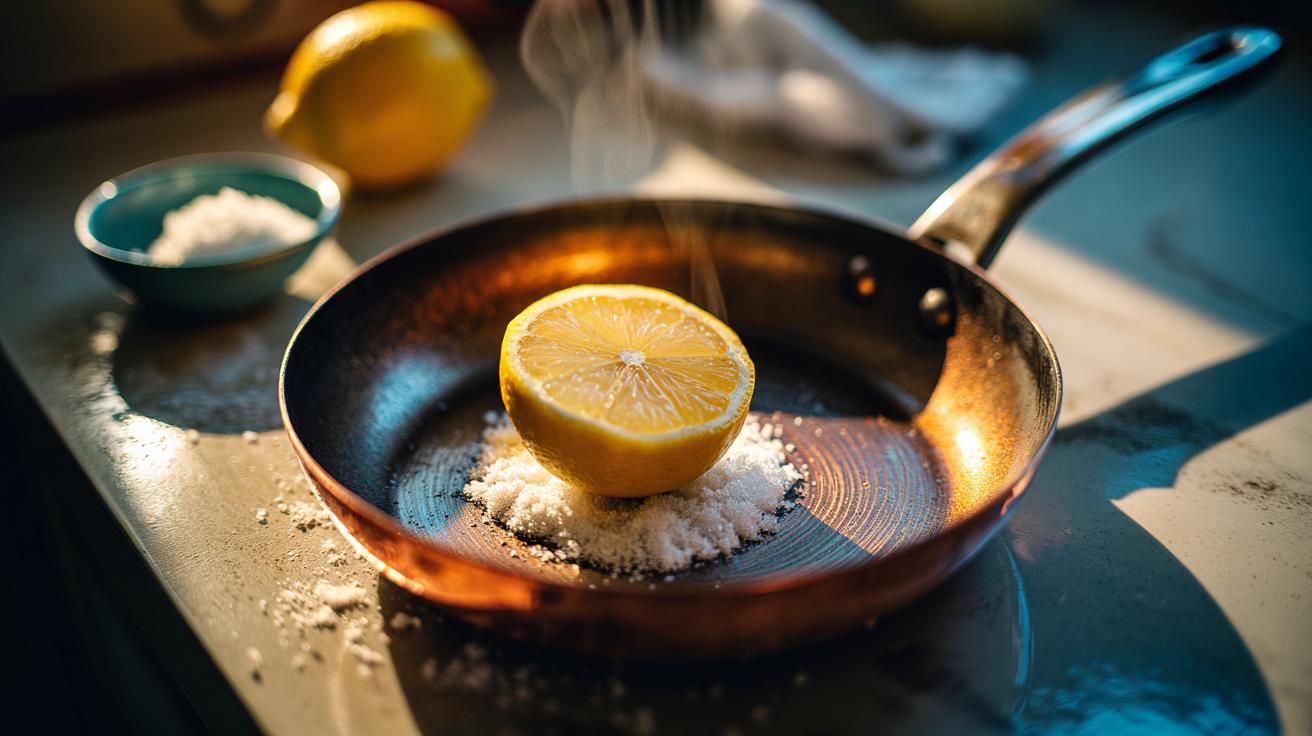
First, assess the pan. Ensure the tarnish is on the copper exterior only. Do not scrub the tin or stainless interior, which performs a separate culinary role and can be damaged by abrasives. Halve a fresh lemon. Sprinkle a plate with coarse or kosher salt; fine table salt can be used for delicate finishes. Dip the cut face of the lemon into the salt until it’s generously coated. Working on a dry copper surface, scrub in small, overlapping circles, refreshing with salt as it dissolves. The metal will brighten as the oxide lifts.
Wipe away the slurry with a damp cloth, then rinse under warm water. Dry immediately and thoroughly to prevent flash tarnish, using a soft tea towel. For a final gleam, buff with a microfibre cloth. Stubborn patches? Park a salt-loaded lemon on the spot for 60 seconds, then continue. Avoid steel wool or aggressive pads that etch. If the copper has deep scratches, accept a satin glow rather than forcing a mirror finish in one session; it’s a polish, not a resurfacing.
| Item | Purpose | Notes |
|---|---|---|
| Lemon Half | Acid to dissolve oxides | Fresh juice works best; bottled is a fallback |
| Salt | Mild abrasive | Coarse for speed, fine for delicate finishes |
| Soft Cloth | Rinse, dry, buff | Microfibre improves final shine |
| Gloves (optional) | Skin protection | Citric acid can irritate sensitive skin |
| Time | 3–8 minutes per pan | Heavier tarnish may take 10–12 minutes |
Common Pitfalls and How to Avoid Them
Not all copper is created equal. Some pans carry a clear lacquer to delay tarnish from the factory. Acid won’t bite through that evenly, leaving streaks. Test a discreet corner first. If the finish beads water, it’s likely coated; use manufacturer-approved methods instead. On full copper pans with a tin lining, keep your lemon well away from the interior—tin is soft and easily worn. Stainless-lined interiors tolerate more, but there’s no benefit to cleaning them with acid.
Pressure and dwell time are the other tripwires. Heavy-handed scrubbing with coarse salt can create micro-scratches that catch grime later. Work patiently with a lightly salted lemon and add passes rather than force. Never leave acidic residue on copper; rinse and dry immediately or you’ll trade tarnish for etching. If you notice a pinkish cast, that’s raw copper freshly exposed—normal after cleaning. Finish with a dry buff and, if you like, a whisper of beeswax on the base to slow re-tarnishing.
Alternatives, Upkeep, and Sustainability
When you’re out of lemons, a slurry of white vinegar and salt works similarly, as does a thin coat of ketchup (tomato acid) left for a few minutes before wiping. Commercial copper polishes deliver a high-gloss finish, yet many contain petroleum distillates. The citrus route cuts packaging and costs. For routine upkeep, brief, regular cleans prevent deep tarnish. After cooking, wash, dry, and give the copper base a quick buff; fingerprints and water spots are the seeds of dullness.
Storage matters: hang pans or place a paper towel between stacked bases to avoid friction marks. Avoid the dishwasher; detergents are alkaline and aggressive on copper. If you cook daily, plan a lemon-and-salt refresh every fortnight; occasional use calls for monthly attention. Dispose of the spent lemon and salt in food waste, not down marble sinks—citric acid can etch natural stone. The environmental dividend is real: low-tox, biodegradable, and no aerosols, just clean metal and a brighter kitchen.
The lemon half and salt scrub is a small act with outsized results: quick chemistry, a hint of elbow grease, and a gleam that lifts the whole hob. It saves money, cuts down on chemical cleaners, and keeps your favourite pans in circulation for years. Handle the interior with care, rinse and dry immediately, and let the copper do the talking. Once you’ve restored that warm glow, the habit is easy to keep. What’s your go-to trick for maintaining heirloom cookware, and have you tried pairing lemon with other gentle abrasives for different metals?
Did you like it?4.4/5 (20)