In a nutshell
- 🧴 Occlusion heals cracked heels by reducing TEWL, rehydrating the stratum corneum, and softening callus; coconut oil adds emollient lipids and mild antimicrobial lauric acid.
- 🦶 Method: soak and dry, optional 10% urea, massage in coconut oil, wrap heels (not whole foot) with cling film, cover with cotton socks, leave 6–8 hours; avoid tight wraps and do not use on bleeding or infected fissures.
- ⏱️ Results: softer edges after one night; shallow fissures often improve within 3–7 days; in the morning, wash, light buff, and apply a daytime moisturiser to maintain elasticity and prevent re‑splitting.
- ⚖️ Choices: coconut oil = lighter feel + antimicrobial; petrolatum = maximal TEWL block for severe dryness; urea balms = humectant/keratolytic for thick callus—combine as needed.
- ✅ Maintenance: wrap 1–2 nights weekly once healed, moisturise daily, wear supportive footwear; stop and seek advice if pain, redness, or discharge occurs, especially with diabetes or poor circulation.
Cracked heels are far more than a cosmetic niggle: they represent a compromised skin barrier under relentless pressure from standing, shoes, and dry indoor air. A deceptively simple ritual—the coconut oil and cling film wrap—uses overnight occlusion to trap moisture, soften callus, and coax splits to knit. This is not about fancy gadgets but about giving the stratum corneum uninterrupted time to rehydrate and rebuild. When done correctly, the method is comfortable, inexpensive, and safe for most people, delivering visible improvement by morning and steady healing over a week. The key is controlled occlusion that reduces water loss while feeding the skin lipids it readily accepts.
Why Occlusion Works on Cracked Heels
Cracked heels form when thickened, dry skin loses flexibility and splits under load. The outermost layer, the stratum corneum, is a brick‑and‑mortar structure of keratin cells and lipids. When its lipids are depleted and transepidermal water loss (TEWL) rises, the “mortar” crumbles. Occlusion tackles this directly: sealing the surface prevents evaporation, raising local humidity and temperature just enough to allow enzymes to tidy up dead cells and signal repair. Coconut oil, rich in medium‑chain triglycerides including lauric acid, acts as an emollient, filling microgaps and softening rigid edges of callus.
Another advantage is hygiene. Lauric acid lends mild antimicrobial activity, useful where tiny fissures invite bacteria. The cling film creates a uniform barrier over uneven heel contours, distributing pressure and keeping the oil from rubbing off on bedding. By halting water loss for six to eight hours, occlusion gives the skin the exact condition it needs to reorganise and regain suppleness.
How to Do the Coconut Oil and Cling Film Wrap
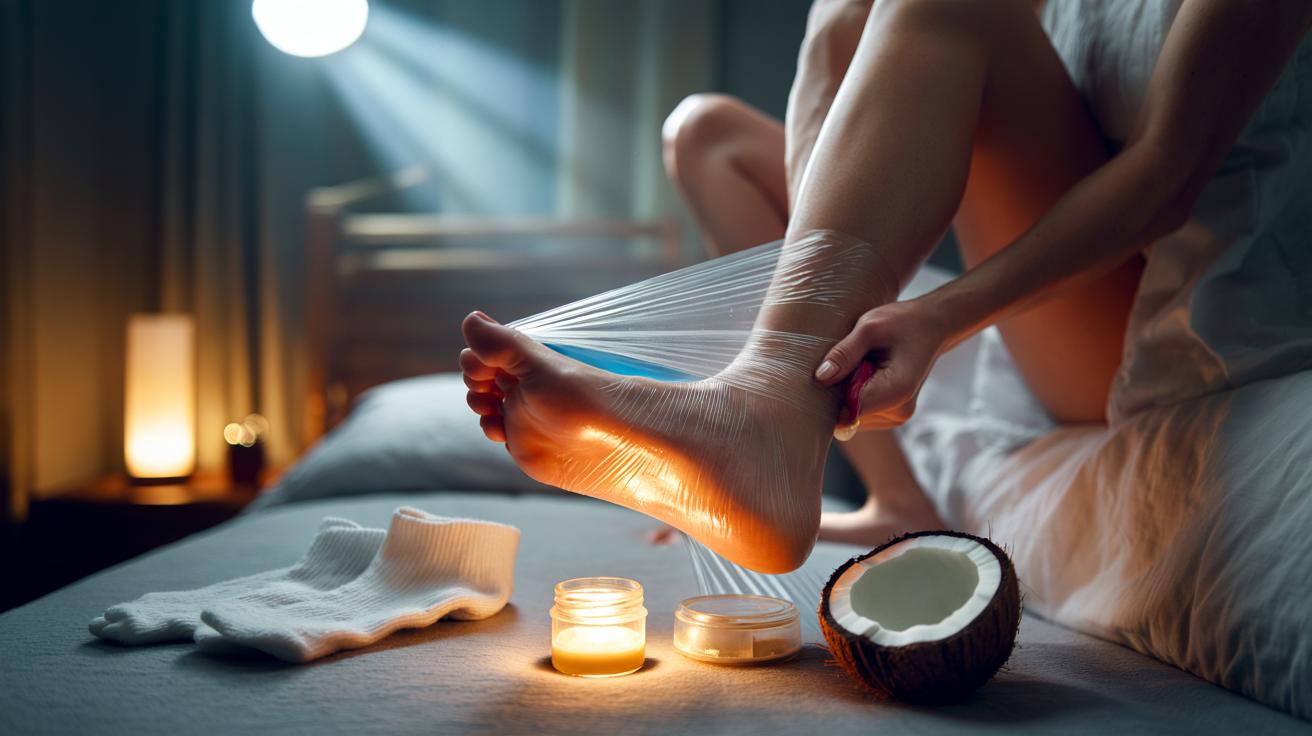
Begin in the evening with clean feet. Soak in lukewarm water for 5–10 minutes, then pat dry—especially between toes. If you have thick callus, gently smooth with a fine foot file; avoid over‑scrubbing. Apply ½–1 teaspoon of coconut oil to each heel, massaging into cracks and the surrounding rim. For very hard skin, you can layer a small amount of a low‑sting keratolytic first (for example, 10% urea cream), then seal with coconut oil. Wrap a strip of cling film around each heel only, overlapping once; avoid wrapping the entire foot.
Secure the wrap with a pair of cotton socks. Sleep with the wrap for 6–8 hours. In the morning, remove the film, wash, and pat dry. Buff lightly if needed, then apply a non‑occlusive moisturiser for daytime. Do not wrap tightly, and avoid this method on bleeding fissures, signs of infection, or if you have diabetes or poor circulation without advice from a healthcare professional. Repeat nightly for 3–5 days, then taper to maintenance 1–2 nights per week.
| Item | Purpose |
|---|---|
| Coconut oil | Emollient lipids to soften and fill microfissures |
| Cling film | Occlusion to reduce TEWL and keep oil in place |
| Cotton socks | Hold wrap comfortably and absorb excess |
| Low‑grit file (optional) | Gentle smoothing of thick callus before sealing |
What to Expect Overnight and Over a Week
After one night, most people notice softer edges, a less “snaggy” feel on sheets, and reduced discomfort when walking. In the morning, the white, waterlogged look fades within minutes as skin equilibrates; that’s normal. A light buff removes lifted scale without provoking new splits, and a daytime moisturiser maintains elasticity. Choose cushioned shoes for 24 hours to avoid re‑opening fissures. The combination of hydration and pressure relief prevents the microtears that keep cracks from closing.
Over 3–7 days, shallow fissures typically “knit” as the softened rim stops pulling apart. Deep cracks take longer and may need cycles of three occlusive nights, then a pause. Keep showers brief and lukewarm, and avoid harsh soaps that strip lipids. Once healed, switch to prevention: moisturise daily, wear supportive footwear, and occlude one night a week during dry weather or after long days standing. If pain, redness, or discharge appears, stop the routine and seek medical advice.
Coconut Oil Versus Other Occlusives
Where does coconut oil sit among heel savers? Petrolatum (petroleum jelly) is the benchmark for blocking TEWL, forming a semi‑occlusive layer that’s hard to beat. Yet coconut oil brings a lighter feel, pleasant scent, and a lipid profile that integrates well with skin, with bonus antimicrobial action. Shea butter and lanolin are rich emollients too, though some find lanolin sensitising. Urea‑based heel balms are not pure occlusives; they’re humectant/keratolytic formulas that draw water in and dissolve compacted scale, pairing well with a thin occlusive layer at night.
Choosing depends on tolerance, climate, and severity. If your heels crack deeply in cold, dry weather, petrolatum under cling film may be more protective; in milder conditions, coconut oil often suffices and feels less greasy. Ethical or fragrance preferences also matter. The best routine is the one you will repeat—consistency, not brand names, delivers durable results.
| Product | Type | Strengths | Best For |
|---|---|---|---|
| Coconut oil | Emollient + mild antimicrobial | Light feel, pleasant scent, skin‑friendly lipids | Moderate cracks, nightly wraps |
| Petrolatum | Occlusive | Max TEWL reduction, very protective | Severe dryness, cold/dry climates |
| Urea balm (10–25%) | Humectant/keratolytic | Softens thick callus, boosts hydration | Thick heels that need de‑scaling |
The overnight coconut oil and cling film wrap works because it treats the root cause of cracked heels: a leaky barrier that can’t hold moisture. By stopping evaporation and feeding the skin lipids while you sleep, it produces rapid relief and steady repair that will outlast any pedicure. Keep the wrap gentle, protect your heels during the day, and convert the method into a weekly habit once healed. If you’ve been battling splits for months, why not try three nights of disciplined occlusion and track the change—then refine the routine to suit your lifestyle?
Did you like it?4.6/5 (24)