In a nutshell
- 🧂 Coarse salt outperforms pumice: its angular crystals deliver self-limiting abrasion as they dissolve, smoothing callused heels and toes without over‑exfoliating.
- 🧪 The science: effective exfoliation balances particle shape, pressure, and time; salt’s solubility tapers grit, while oils improve glide and protect the skin barrier.
- 🧼 Hygiene and safety: salt is single‑use and easy to rinse away; pumice is porous and can harbour microbes. Avoid broken skin; seek advice if you have diabetes or neuropathy.
- 🦶 Routine that works: soak 5–10 minutes, mix 2 tbsp coarse salt with 1 tbsp oil, massage lightly 2–3 minutes per foot, rinse, then apply 10–20% urea cream once or twice weekly.
- 🔁 Smart choices: start with coarse sea salt for heavy build‑up, switch to fine or Epsom salt to polish; salt wins for most homes thanks to control, cleanliness, and consistent results.
Calloused heels and rough toes often shrug off quick fixes. A well-made salt scrub takes a different tack, using coarse grains to shear away dead cells while softening as they dissolve. Unlike a pumice stone—rigid, porous, and easy to overwork—salt’s crystalline edges start assertive then mellow, giving a built‑in safety valve against over‑exfoliation. Blended with nourishing oil, it glides, lifts debris, and leaves skin primed for moisture. For busy readers who want results without salon prices, this is an approachable, hygienic method that respects the foot’s resilient yet delicate barrier. Here’s why coarse salt can outperform pumice, and how to make it work reliably at home.
Why Coarse Salt Outperforms Pumice
Coarse sea salt or rock salt is formed of angular crystals that grip and plane the outermost stratum corneum, breaking up hardened clusters of keratin without digging in. Pumice, by contrast, is a rigid volcanic glass: its voids catch skin, its edges don’t soften, and the pressure is harder to modulate. Salt’s advantage lies in its mutable texture—beginning gritty, then smoothing as the crystals dissolve—so the exfoliation naturally eases before you cross into damage. This self‑moderating action makes salt forgiving for non‑professionals, especially on heels and balls of the feet where callus builds quickly.
Hygiene matters. Salt is inhospitable to many microbes and is used once, then rinsed away. Pumice is porous and can harbour moisture and bacteria unless meticulously cleaned and dried after every use. Blend salt with a light oil—sweet almond or grapeseed—to reduce friction and seal in suppleness. The result is a polish that achieves even abrasion and a clean finish, without the risk of a tool that becomes harsher over time.
The Science of Granules, Pressure, and Solubility
Mechanical exfoliation balances three variables: particle shape, applied pressure, and contact time. Coarse salt crystals have sharp micro‑facets that create high local shear against compacted corneocytes. Because sodium chloride dissolves rapidly in warm water, the granules shrink during use, tapering the abrasive effect. That solubility produces a “throttle” that reduces the chance of over‑thinning, a common issue with rigid implements where the grit never lightens.
Pumice relies on macro‑roughness—ridges and pits—not discrete particles. It can flatten callus but may also snag, creating micro‑tears if used with haste or on dry, unsoftened skin. Salt scrubs, especially after a 5–10 minute soak, distribute force more uniformly across thousands of dissolving grains. The foot’s thick skin responds best to this controlled, diminishing friction, which preserves barrier lipids. Pairing salt with oil improves glide and reduces transepidermal water loss, countering salt’s natural hygroscopicity and leaving the surface smooth rather than tight.
At-a-Glance Comparison: Coarse Salt vs Pumice
| Feature | Coarse Salt Scrub | Pumice Stone |
|---|---|---|
| Abrasion Control | High; dissolves to self-limit | Fixed; risk of overuse |
| Hygiene | Single-use; easy to rinse away | Porous; needs thorough cleaning |
| Learning Curve | Gentle and intuitive | Technique-sensitive |
| Best For | Dry, scaly build‑up and general smoothing | Very thick callus in expert hands |
| Frequency | 1–2 times weekly | Weekly or less |
| Cost | Low; cupboard staples | Low; reusable tool |
| Environmental Impact | Mineral; minimal waste | Durable but needs cleaning agents |
For most home routines, salt’s forgiving profile wins. Choose large crystals—labelled “coarse” or “bath grade”—for the initial pass; fine sea salt can follow to polish. Epsom salts dissolve faster and feel silkier, making them ideal for sensitive areas, while standard sea salt lasts longer under pressure. Pumice still has a role on thick, localised calluses, but the learning curve is real: too much force or time can thin protective skin and invite soreness. With salt, the water does part of the thinking for you.
How to Perform a Safe, Effective Salt Scrub at Home
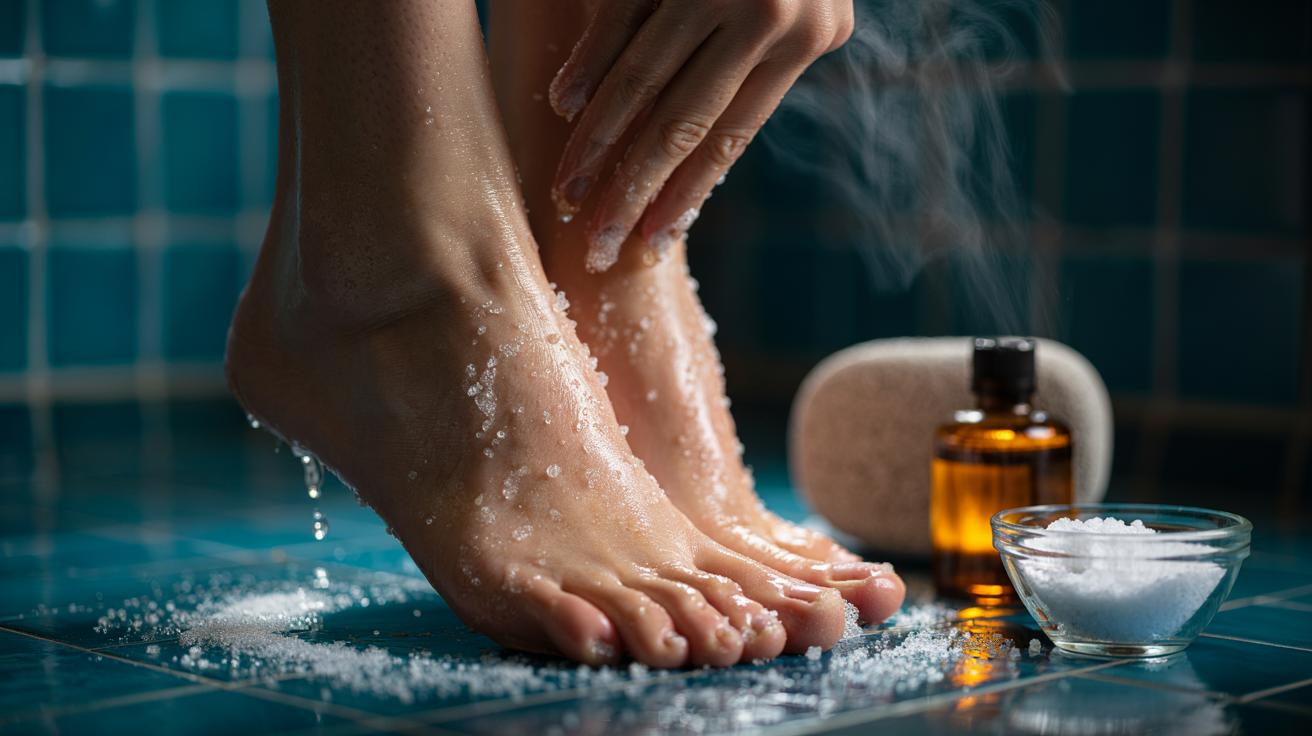
Soak feet in warm water for 5–10 minutes to soften hardened layers. Pat until damp, not dripping. Mix 2 tablespoons of coarse salt with 1 tablespoon of oil (olive, sweet almond, or coconut). Optional: add a drop of tea tree or peppermint for freshness. Work in small circles across heels, sides of the big toe, and balls of the feet for 2–3 minutes per foot. Light pressure beats force—let the crystals do the work.
Rinse thoroughly, then apply a rich moisturiser or a 10–20% urea cream to lock in softness. Slip on cotton socks for an hour to enhance absorption. Repeat once or twice weekly; daily exfoliation risks barrier damage. Avoid broken skin, warts, or fungal flare‑ups, and never use harsh scrubs if you have diabetes, neuropathy, or poor circulation—consult a podiatrist instead. Keep the mixture fresh each time for hygiene, and swap to finer salt when maintenance replaces correction.
Salt scrubs offer a rare mix of precision and restraint: a confident start that tapers before harm is done. The crystals are assertive enough to lift stubborn scales yet courteous enough to bow out as they melt, leaving a clean canvas ready for moisture. For home users who want salon‑level smoothness without the faff, coarse salt gives control, cleanliness, and credible results. What would your ideal routine look like—quick weekly polish with sea salt, or a two‑step ritual pairing coarse and fine grains to refine every contour?
Did you like it?4.5/5 (22)