In a nutshell
- 🧪 The science: Vaseline creates a semi-occlusive layer that slows evaporation, acting as a physical fixative so volatile notes release more steadily on warm pulse points.
- ✋ Application tips: Use a rice-grain amount on wrists, inner elbows, and behind ears; don’t rub wrists; spray perfume 10–15 cm away; prime very dry skin with unscented lotion; avoid fabric transfer.
- 🌡️ Key factors: Skin hydration, temperature, and humidity shape performance; occlusion helps decouple scent behaviour from weather; higher concentrations (EDP/Parfum) inherently last longer.
- 🎯 Suitability: Enhances light styles (citrus, greens, airy musks); extends longevity, not projection; can make heavy ambers/gourmands cloying if overused; effects are milder on oily skin.
- ⚠️ Caveats and myths: It won’t make perfume last forever or “fix” a poor formula; watch for potential breakouts or stains; patch test first and consider a fragrance-free balm as an alternative.
Beauty lore loves a kitchen-cupboard hack, but one trick stands up to scrutiny: dabbing a whisper of Vaseline on your wrists before perfume. It’s not magic, it’s chemistry. Petroleum jelly forms a semi-occlusive film that slows evaporation, so the fragrance molecules stay longer on the skin’s surface. The result is a scent that feels denser and more tenacious, especially on pulse points. Used correctly, this method can markedly extend wear time without altering the character of your perfume. Below, we unpack the science, share technique, weigh caveats, and show when this approach shines—and when to skip it—to help your favourite fragrance linger beautifully through a busy day.
Why Petroleum Jelly Makes Perfume Last
Perfume performance hinges on volatility. The lightest top notes—citrus, greens—evaporate first; heavier base notes—woods, musks, resins—linger. Petroleum jelly is a blend of non-polar hydrocarbons that forms a thin, occlusive layer, reducing transepidermal water loss and slowing the escape of volatile aromatic compounds. In effect, it behaves like a physical fixative, moderating diffusion without chemically reacting with the fragrance. This layer also improves adhesion, so micro-droplets cling rather than dispersing instantly.
On dry skin, where perfume can flash off quickly, the difference is striking. Warmth from pulse points softens the jelly, encouraging a steady, gentle release. Think of it as a speed limiter for evaporation: your scent doesn’t race off the skin, it strolls. That steadier pace can make hearts and bases read more clearly, giving even airy fragrances a touch more persistence without turning them heavy or soapy.
The Science of Skin, Evaporation, and Fixatives
Skin is a dynamic surface with its own oils, moisture, and microbiome. pH, hydration, and temperature decide how a fragrance develops and how long it lasts. Occlusives such as Vaseline reduce evaporation by creating a barrier, while botanical oils can absorb and subtly influence the odour profile. Traditional perfumery fixatives—ambery resins, musks, woods—slow volatilisation inside the formula; a jelly layer acts outside the formula, on the skin. The two effects stack: a resinous base plus occlusion can deliver impressive longevity.
Heat speeds diffusion; humidity slows it. That’s why scent seems punchier on summer evenings and muted in cold, dry air. By adding a light occlusive film, you decouple your perfume’s behaviour from the weather, making it more predictable. The table below summarises key factors and tactics for keeping your fragrance present hours after the first spritz.
| Factor | What It Does | Tip |
|---|---|---|
| Skin Hydration | Prevents fast absorption and fade | Use unscented lotion before scent |
| Occlusion (Vaseline) | Slows evaporation; boosts longevity | Apply a rice-grain amount to pulse points |
| Temperature | Heat accelerates diffusion | Target warm areas; avoid excessive rubbing |
| Fragrance Concentration | EDP/Parfum last longer than EDT/Cologne | Layer cologne over an occlusive base |
How to Apply Vaseline for Maximum Effect
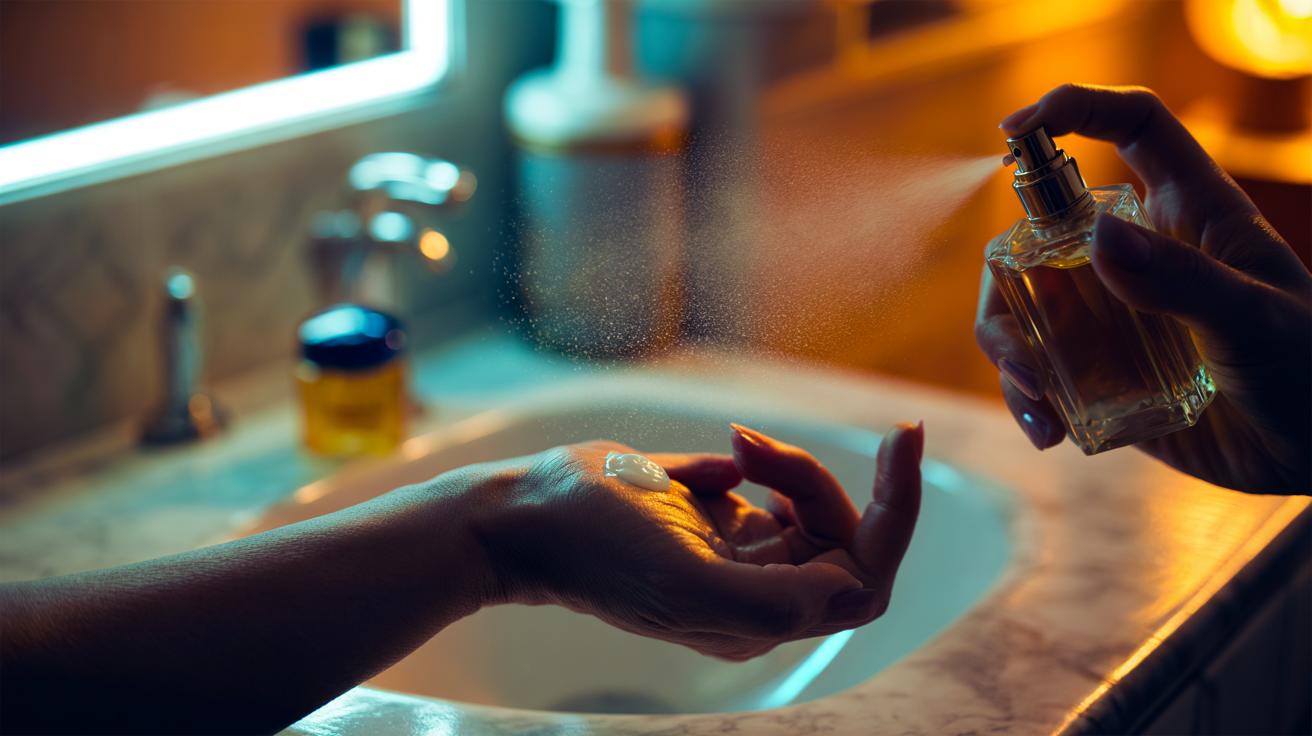
Start with clean, lightly moisturised skin. Tap a tiny amount of petroleum jelly—think rice-grain size—onto pulse points: wrists, inner elbows, the base of the throat, behind ears. Warm it with your fingertip until it disappears into a thin sheen. Spritz your perfume on top, holding the atomiser 10–15 cm away for even distribution. Do not rub your wrists together: friction warms the surface and can distort top notes. If you prefer a “skin scent” aura, use fewer sprays and smaller occlusive dots.
For office wear, stick to wrists and collarbone to keep projection polite. With darker juices, be mindful of fabric: petroleum jelly can transfer and attract pigment. If your skin is very dry, prime first with an unscented lotion, then use the jelly sparingly. Those sensitive to mineral oils can substitute a thick, fragrance-free balm; the principle is the same—create a breathable barrier that moderates evaporation and anchors the scent.
Does It Work for Every Fragrance? Pros, Cons, and Myths
Occlusion flatters many styles—especially citrus colognes, green florals, and airy musks that normally vanish by lunch. It can make resinous ambers and gourmands feel richer for longer, though take care not to overdo it or you risk a cloying trail. This trick increases longevity, not necessarily projection; it keeps molecules near the skin, which can tame sillage while extending wear. On naturally oily skin, the benefit may be modest because sebum already slows evaporation.
Myths persist: petroleum jelly does not “fix” a broken formula, nor does it make a fragrance last “forever.” Heat, concentration, and your skin chemistry still rule. Potential downsides include fabric smudges and, for a minority, breakouts on pore-prone areas. Test on a small spot first and avoid hair or delicate silks. Rule of thumb: if a perfume feels too diffusive, occlusion can refine it; if it’s already heavy, scale back the amount or skip the jelly on neck areas to keep the balance right.
The Vaseline-before-perfume hack endures because it’s simple, cheap, and effective—an elegant application of chemistry to everyday beauty. By forming a light occlusive film, it slows volatilisation, steadies development, and gives your chosen blend longer legs without warping its character. Keep the layer sheer, avoid rubbing, and target pulse points for a discreet, polished aura from morning commute to evening plans. Longevity is only half the story; wearing a scent that feels authentically you is the other half. Which fragrance in your wardrobe would you transform first with a thin veil of petroleum jelly, and how might that change when and where you choose to wear it?
Did you like it?4.5/5 (22)