In a nutshell
- 🍏 Ethylene is a natural ripening gas from climacteric fruit that speeds wilting in sensitive veg; prioritise separation and correct crisper humidity to slow decline.
- 🧪 Myth-busting: Baking soda doesn’t absorb ethylene; it mainly neutralises odours. For real removal, use activated carbon, zeolites, or oxidising filters.
- 🧂 Use baking soda correctly: keep a small open container in the drawer for odour control, replace monthly, and never sprinkle it directly on produce.
- 🧺 Smart storage wins: set crisper settings (high humidity for leaves, low for fruit), use breathable bags, maintain airflow, add paper towels, and clean drawers regularly.
- 🗂️ Follow pairing rules: keep apples/bananas away from greens, store tomatoes and stone fruit separately, and add a fridge-safe ethylene absorber to extend freshness.
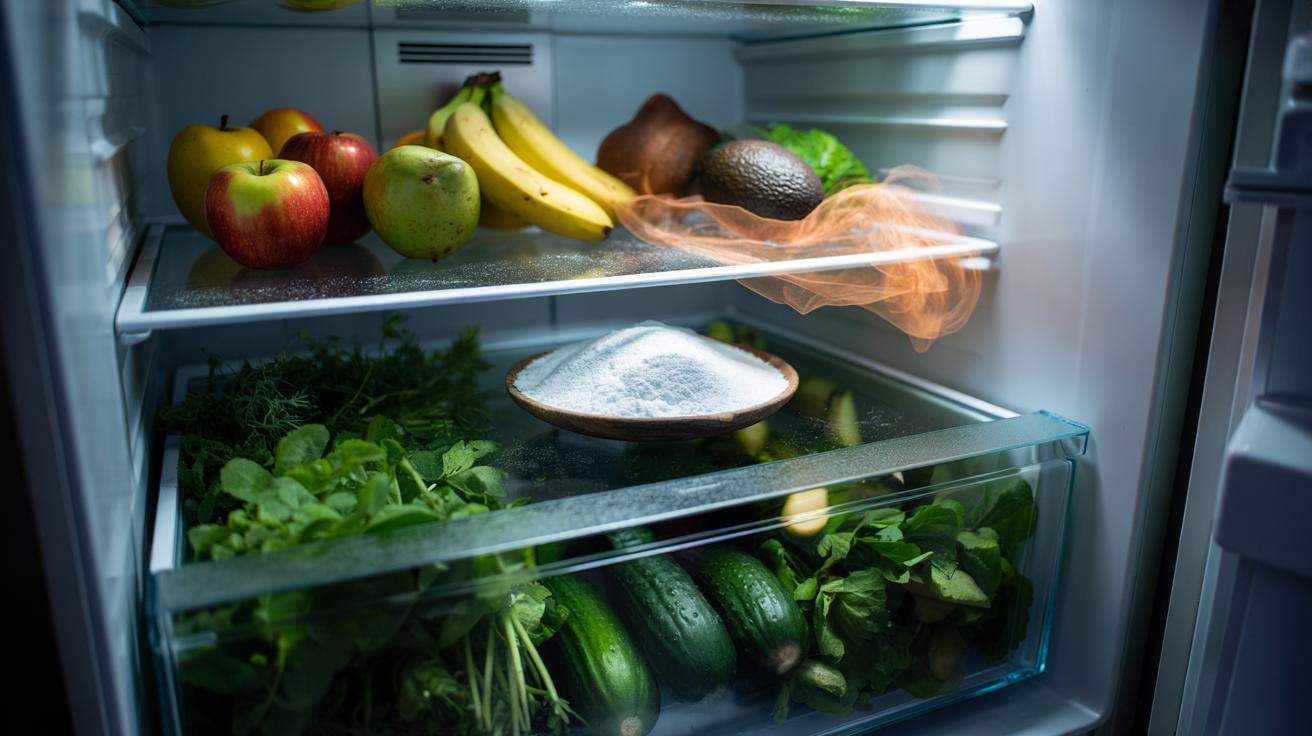
Open a crisper drawer and you’ll often find a humble tub of baking soda sitting beside your greens. Some swear it stops veg from wilting by trapping the invisible ripening fumes that race through the compartment. The idea is rooted in the fight against ethylene, a gas that nudges produce from crisp to limp. Yet the chemistry behind this kitchen hack is less clear-cut than the folklore. Here’s a grounded look at what baking soda can and can’t do inside your fridge, how ethylene really behaves, and the smart steps that genuinely keep vegetables fresher for longer.
Ethylene: The Ripening Gas Lurking in Your Fridge
Plants emit ethylene as a natural hormone that accelerates ripening and senescence. High emitters—classic climacteric fruit like apples, bananas, avocados, and kiwis—produce bursts of this gas, which drifts into drawers and triggers nearby veg to soften, yellow, or turn bitter. Leafy greens, broccoli, cucumbers, and herbs are especially sensitive. Even a single apple stored in the same drawer can speed the decline of a whole week’s salads. Because ethylene works at extremely low concentrations, airflow, temperature, and how tightly food is packed all shape how quickly deterioration sets in.
Understanding the gas explains many fridge mysteries: why cucumbers pit next to tomatoes, why cauliflower browns early, why a ripe banana perfumes an entire shelf. Separation is your first defence. Keep emitters and sensitive veg apart, use high-humidity settings for leaves, and don’t overfill drawers. Low, steady temperatures slow respiration and ethylene responses, buying you precious days of quality. A well-organised crisper is a powerful freshness tool.
Does Baking Soda Really Absorb Ethylene?
Baking soda—sodium bicarbonate—is a champion at neutralising acidic odours and taming fridge smells. But ethylene is a small, nonpolar hydrocarbon gas (C2H4). It doesn’t react with bicarbonate the way acidic vapours do, and it isn’t strongly attracted to the soda’s surface. In plain terms, baking soda does not meaningfully “absorb” or chemically neutralise ethylene. Any freshness gain you notice likely comes from reduced odours and moisture moderation, not from direct ethylene capture. To remove ethylene, you need materials designed for adsorption or oxidation—think activated carbon, zeolites, or filters impregnated with oxidants used in commercial cold chains.
That doesn’t make baking soda useless—far from it. A small open container helps control smells that can mask early spoilage cues and keeps the drawer environment pleasantly neutral. Just be realistic about its role and pair it with proven ethylene management.
| Method | Effective on Ethylene? | How It Works | Home Tip |
|---|---|---|---|
| Baking soda | No (minimal at best) | Neutralises acidic odours; not reactive with ethylene | Use for smell control; replace monthly |
| Activated carbon | Moderate | Adsorbs gases on porous surfaces | Choose fridge-safe sachets or filters |
| Zeolite/clay filters | Moderate to high | Traps ethylene in micropores | Commercial ethylene absorber satchels |
| Oxidising filters | High | Oxidises ethylene to CO2 and water | Use manufacturer-approved fridge inserts |
How to Use Baking Soda in Crisper Drawers the Right Way
If you like the tidy feel of a neutral-smelling drawer, use baking soda purposefully. Decant 2–3 tablespoons into a shallow, open jar or breathable sachet and place it at the rear corner of the drawer so it won’t spill. Keep it dry and off produce—never sprinkle baking soda directly on veg. Swap it every four to six weeks, or sooner if you notice odours returning. Label the container with the date to avoid guesswork, and recycle the used powder for sink or bin cleaning.
Pair that odour control with practices that genuinely slow ethylene’s bite. Store greens in high-humidity drawers in breathable bags, keep fruits that emit strongly in a separate area, and avoid cramming drawers so air can circulate. Paper towels can wick surface moisture from leaves, reducing microbial growth. Think of baking soda as a support act, not the ethylene star; it helps keep the environment pleasant while the real freshness gains come from storage discipline and separation.
Better Ethylene Management: Proven Alternatives and Storage Pairings
To clamp down on ethylene, focus on what sits next to what. Keep apples and bananas away from leafy greens and cucumbers. Tomatoes and pears belong outside crisper drawers or in a dedicated fruit zone. Add a fridge-safe ethylene absorber (activated carbon or zeolite) to the fruit area, and change it as directed. Use the high-humidity setting for leaves, low for fruit. Chill promptly after shopping, but don’t chill items that hate the cold (e.g., whole tomatoes) until they’re ripe enough.
Use this quick pairing guide when loading your drawers:
| Strong Ethylene Producers | Ethylene-Sensitive Veg | Storage Advice |
|---|---|---|
| Apples, bananas, avocados, kiwis, pears | Leafy greens, broccoli, cucumbers, carrots, herbs | Separate drawers; add absorber near fruit |
| Tomatoes, stone fruit | Cauliflower, peppers, asparagus | Keep fruit on a shelf; veg in high-humidity drawer |
| Ripe melons | Spinach, lettuce | Wrap greens loosely; maintain airflow |
Clean drawers regularly, dry thoroughly, and don’t stack damp produce. These steps curb microbes and reduce stress compounds that also speed decline.
The myth of baking soda as an ethylene sponge is persistent, but the science points elsewhere. Bicarbonate is brilliant for odours; targeted filters and smart separation tackle the ripening gas. So keep the soda for a fresher-smelling drawer, then organise like a pro: isolate fruits that emit, protect sensitive veg, and maintain the right humidity. With a few small tweaks, you extend crunch and colour without fuss. Which change will you try first: a dedicated fruit zone, an ethylene absorber, or a new way of bagging your greens?
Did you like it?4.5/5 (22)