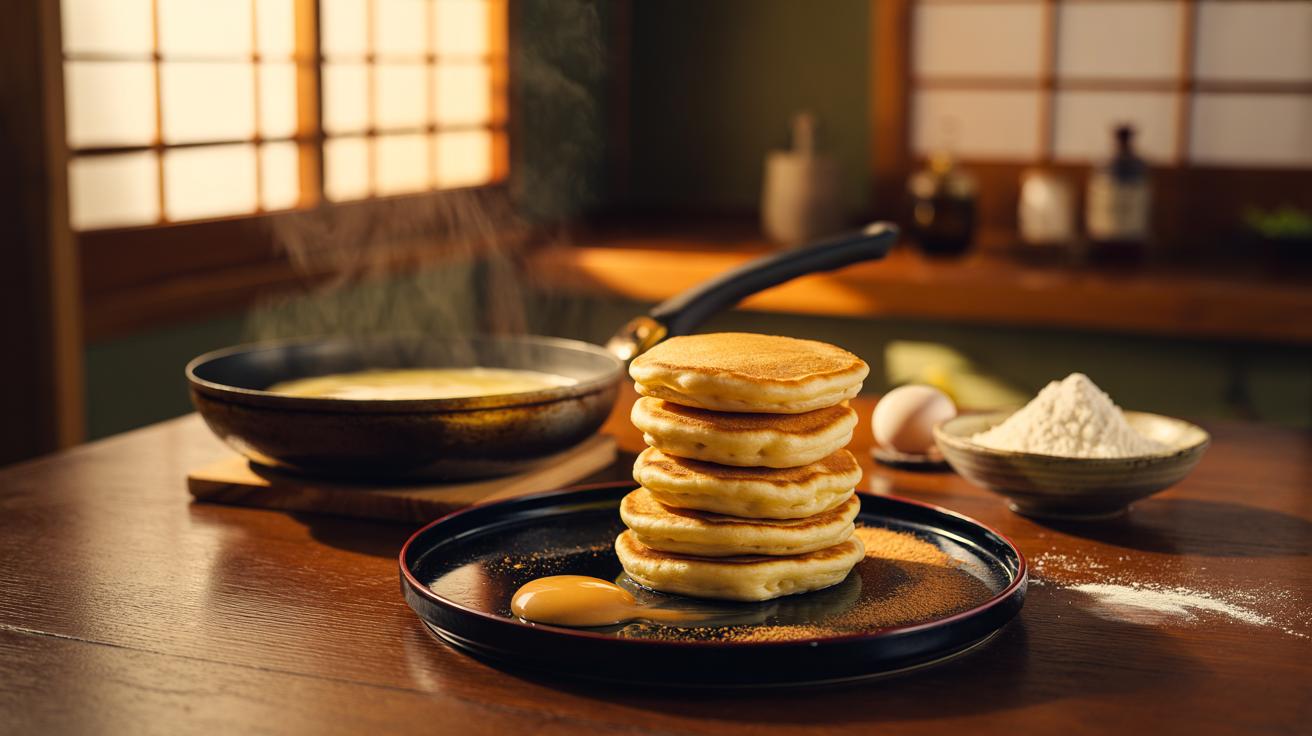
In a nutshell
- 🍳 Built on just mochiko (sweet rice flour) and eggs, the batter delivers a tender, mochi-mochi crumb via amylopectin gelatinization and gentle egg-set structure.
- 📏 The golden ratio is 1 egg : 45 g mochiko; aim for a thick, ribboning batter, rest 5–10 minutes, and scale easily for solo, couple, or family batches.
- 🔥 Technique is grandma-simple: whisk, rest, then cook on low with a lid and modest portions—Low heat, small rounds, and a lid—for natural lift without leaveners.
- 🍽️ Serve simply or dress up with kinako, anko, kuromitsu, butter, or fruit; for extra fluff, separate eggs and fold whipped whites into the yolk–mochiko base.
- 🔄 Can’t find mochiko? Use shiratamako for an airier bite; a well-seasoned pan with a light oil film prevents sticking and preserves that custardy center.
Dawn in a Japanese kitchen rarely needs a long shopping list. Ask any doting obaa-chan and she will tell you the fluffiest, chewiest pancakes can be whisked from just two ingredients. The secret? Mochiko—sweet rice flour prized for its springy crumb—and fresh eggs, whose protein and fat build structure and silk. This minimalist batter creates pancakes that sit between cloud and mochi: tender at the edge, custardy at the center. With a gentle flame and a patient rest, the alchemy happens fast—and reliably. Whether you top them with anko or eat them plain from the pan, these are the unfussy hotcakes Japanese grandmas swear by for busy mornings and impromptu teatimes.
What Makes This Two-Ingredient Batter Work
At first glance, a pancake without milk, sugar, or baking powder seems daring. Yet mochiko (glutinous rice flour) is a starch built for plushness. When warmed, its amylopectin-rich granules gelatinize, delivering that signature mochi-mochi chew. Eggs provide moisture, emulsifiers, and protein that sets into a delicate lattice, giving lift and a custard-like crumb. Because the eggs are the only liquid, the batter is thicker than a Western hotcake—but that’s exactly why the edges brown gently while the center stays pillowy. Resting the mixture hydrates the flour thoroughly, smoothing any graininess without overmixing.
Heat control is everything. A low flame gives the starch time to swell and the proteins time to set before scorching. A lid traps steam, creating pressure that puffs the cakes naturally. No chemical leavener needed: think of it as a cross between a pancake and a steamed bun. The result is subtly sweet, satisfying, and remarkably resilient to overcooking.
The Two Ingredients and the Golden Ratio
Japanese grandmas keep the ratio simple and memorable: about 1 egg : 45 g mochiko. For a small family batch, that means two large eggs to roughly 90 g of sweet rice flour. Whisk the eggs until fluid and frothy, then sift in the flour. Stop mixing the moment the streaks vanish—overworking is unnecessary because mochiko hydrates as it rests. If you can’t find mochiko, shiratamako works beautifully; it’s a coarser, pre-gelatinized glutinous rice flour that delivers an even airier bite, though you may whisk a few seconds longer to smooth the grains.
Egg sizes vary, so treat this ratio as a guide. Aim for a thick, ribboning batter that slowly levels in the bowl. If your eggs are very small, add a teaspoon more mochiko at a time until the batter mounds and relaxes. The table below offers quick cues for scaling and expected yields.
| Batch | Eggs | Mochiko (g) | Yield (8–9 cm) | Texture Cue | Rest Time |
|---|---|---|---|---|---|
| Solo | 1 large | 45 | 3–4 pancakes | Thick ribbon | 5–10 min |
| Couple | 2 large | 90 | 6–8 pancakes | Slowly self-levels | 10 min |
| Family | 3 large | 135 | 9–12 pancakes | Mounds then relaxes | 10–12 min |
Grandma-Approved Technique: From Bowl to Pan
Whisk the eggs vigorously until glossy; the tiny bubbles help tenderness. Sift in the mochiko, stir just to combine, then let the batter rest while you preheat a heavy nonstick pan on low. Patience here is your leavening—hydration and gentle heat create the rise. Spoon small rounds; keep them modest so the centers cook without scorching. Cover with a lid to trap steam. After 60–90 seconds, you’ll see tiny bubbles and matte edges; flip and cook another 45–60 seconds. For a thicker, almost soufflé finish, reduce heat to very low and extend each side by 30 seconds under the lid.
Sticking is the enemy of this delicate crumb. A well-seasoned pan makes all the difference; if yours runs temperamental, wipe it with a barely-there film of neutral oil before the first pour. Stack the pancakes in a warm plate and tent lightly, letting residual steam finish the centers. Low heat, small rounds, and a lid—that’s the trio grandmas repeat like a mantra.
Serving Rituals and Flavor Variations
Purists eat these straight from the pan, enjoying the subtle sweetness of rice and egg. For a classic touch, dust with kinako (roasted soybean flour) and a whisper of sugar, or nestle a spoon of anko alongside. Black sesame paste, a drizzle of kuromitsu (brown sugar syrup), or a lick of salted butter turn them into café-worthy fare. The batter’s neutrality welcomes both sweet and savory partners without losing its mochi-soft soul. For breakfast, pair with seasonal fruit; for teatime, serve with sencha, whose gentle bitterness balances the plush crumb.
You can also play with technique while honoring the two-ingredient rule. Separate the eggs, whisk the whites to soft peaks, and fold them into the yolk–mochiko mixture for extra lift—no baking powder required. For bento boxes, cook coin-sized rounds that reheat tenderly. Leftovers store well in an airtight box and rewarm in a covered pan on low. Simple, adaptable, and comforting—this is the quiet power of grandma cooking.
Two ingredients, one reliable ritual: whisk, rest, and cook low and slow until the kitchen smells like toasted rice and breakfast. It’s the kind of recipe you can teach by feel, not by formula, and still expect perfect results. Once you’ve mastered the ratio and the gentle heat, you can dress these pancakes up or keep them monk-simple. Will you stay loyal to the minimalist, grandmotherly version—or will your signature topping become the twist that turns this humble batter into your household legend?
Did you like it?4.7/5 (20)