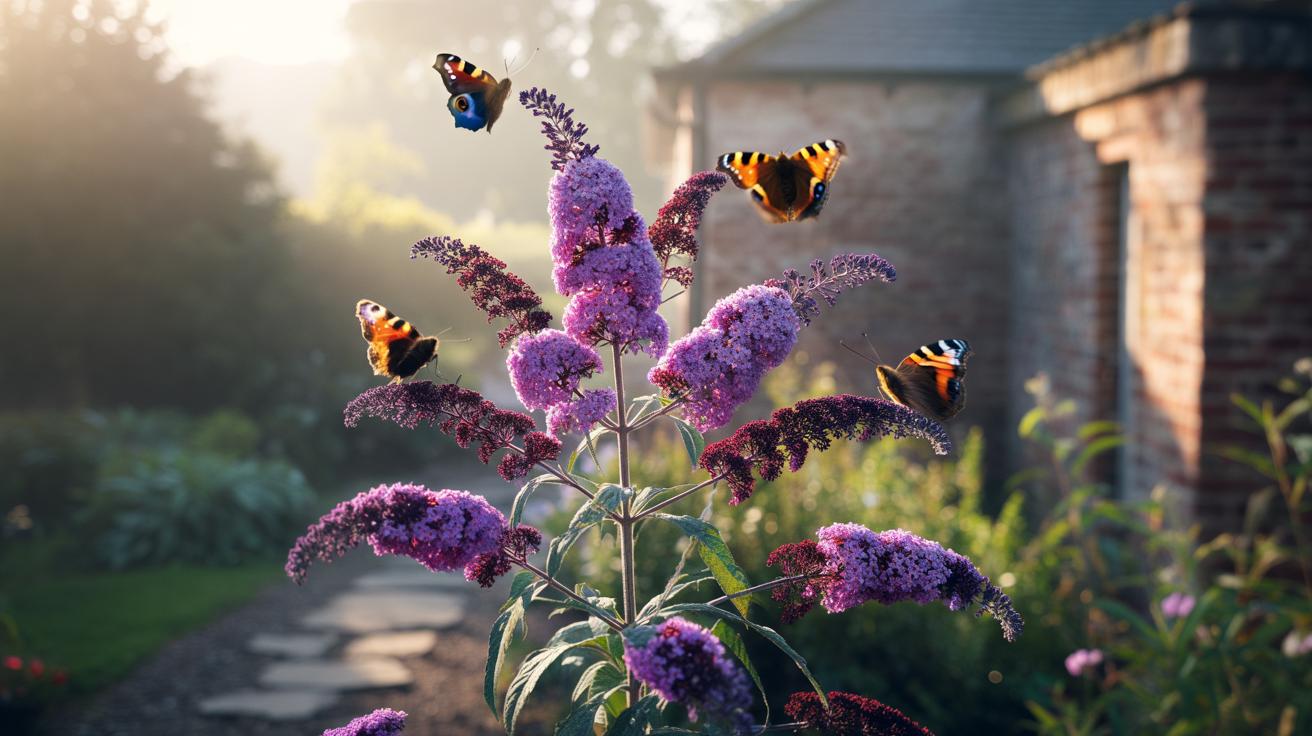
In a nutshell
- 🦋 Buddleia (Butterfly Bush) is the single, nectar-rich choice that can rapidly transform a UK garden into a butterfly hotspot; dense panicles, strong scent, and mid–late summer bloom align with peak butterfly activity.
- 🌈 Choose the right cultivar: ‘Black Knight’ (deep purple), ‘Royal Red’, ‘White Profusion’, or compact ‘Buzz’ series; favour sterile/low-seed, RHS Plants for Pollinators-listed options for maximum attraction without unwanted spread.
- 🛠️ Planting and care: full sun, sharply drained soil (loam-based compost + grit in pots), deep watering during establishment, light spring feed; prune hard in March to 30–60 cm and deadhead to extend flowering.
- 🌿 Create butterfly-friendly conditions: provide shelter and basking spots, a mineral-rich puddling tray, a simple succession of blooms (primroses, lungwort, sedum, ivy), slightly longer turf nearby, and a strictly pesticide-free zone.
- ⚡ Fast, high-impact results: a single well-sited Buddleia can draw peacocks, red admirals, commas, and small tortoiseshells within weeks; low maintenance, big rewards for patios, balconies, and borders.
You want butterflies. You want them fast. There’s an elegant shortcut that works across the UK: plant a single, nectar-loaded Buddleia—the classic Butterfly Bush. Its summer plumes are like neon signs for peacocks, red admirals, commas, and small tortoiseshells. Choose wisely, give it sun, and you’ll see results within weeks of flowering. It’s low effort, high reward. One carefully placed Buddleia can turn a quiet patio or border into a lively, fluttering stage. Below, you’ll find the cultivars that perform, the care that maximises nectar, and simple tweaks that keep butterflies lingering, feeding, and returning all season long.
Why One Buddleia Can Transform Your Garden
Buddleia earns its nickname for good reason. The long, conical panicles drip with nectar, especially in warm, still weather when butterflies are most active. Each bloom cluster offers densely packed florets, so butterflies waste no energy hunting. They land, sip, and stay. That efficiency matters in small gardens where every square metre must work hard. Plant one strong Buddleia in full sun and you concentrate scent, colour, and nectar into a single irresistible beacon.
Fragrance is another weapon. On hot afternoons the sweet, honeyed scent travels, pulling in passing pollinators from surprising distances. The shrub’s height—often 1.5–3 metres depending on variety—creates a visible perch, helping butterflies warm up while scanning for the next feast. Choose single-flowered, nectar-rich forms and you’ll see a diverse cast: peacock, painted lady, small tortoiseshell, brimstone. Timing is ideal, too. Many Buddleia flower from July into September, dovetailing with peak adult butterfly activity across much of Britain when gardens can otherwise run short of nectar.
Choosing the Right Buddleia for UK Gardens
Selecting the right cultivar makes the “one plant” strategy almost foolproof. Look for compact forms if you have a balcony or terrace, and taller, arching varieties to anchor a mixed border. In cooler, windier counties, prioritise sturdy, RHS Plants for Pollinators-listed selections and avoid elaborate doubles that sacrifice nectar for frills. Colour isn’t trivial: deep purple and magenta tones often draw butterflies more readily than pale pastels, though whites can glow at dusk and extend visibility. Pick a reliable, sterile or low-seed cultivar and you’ll get generous bloom without unwanted spread.
| Cultivar | Height | Flower Colour | Bloom Window | Notes |
|---|---|---|---|---|
| B. davidii ‘Black Knight’ | 2–3 m | Deep purple | July–Sept | Strong scent, classic magnet |
| ‘Royal Red’ | 2–3 m | Rich magenta-red | July–Sept | High nectar, vivid colour |
| ‘White Profusion’ | 2–2.5 m | Pure white | July–Sept | Great evening visibility |
| ‘Buzz’ series | 0.9–1.2 m | Mixed colours | July–Sept | Compact, ideal for pots |
If space is tight, the ‘Buzz’ series excels in containers, delivering full-sized panicles on miniature plants. For a dramatic statement, ‘Black Knight’ is time-tested and ridiculously attractive to butterflies. When buying, inspect plants for healthy, flexible stems and avoid those already rootbound; a vigorous start equals stronger flowering in year one.
Planting, Pruning, and Care That Supercharge Nectar
Site Buddleia in full sun with sharply drained soil. Dig in garden compost, set the crown level with the soil, water deeply, and mulch lightly to retain moisture without waterlogging. In pots, choose a peat-free, loam-based compost with added grit and a container at least 35–40 cm wide. Consistent moisture in the first growing season is the single biggest factor determining how well your plant establishes and flowers.
In the UK, hard-prune B. davidii in early spring (March) after the worst frosts. Cut back last year’s growth to 30–60 cm to stimulate robust new shoots and bigger flower spikes. Deadhead through summer to extend bloom and keep nectar flowing. Feed lightly in April with a balanced, organic fertiliser; avoid high-nitrogen regimes that spur leaves over flowers. Stake if your site is exposed, and water during prolonged dry spells—deep, infrequent drinks beat daily trickles. Skip pesticides. They harm pollinators and aren’t needed on a tough shrub built for urban grit and coastal winds alike.
Create the Conditions Butterflies Crave
The flower is your magnet; the setting keeps guests lingering. Provide a sunny, sheltered corner where butterflies can bask. Add a shallow “puddling” tray—just damp sand and rainwater in a saucer—to supply minerals they struggle to find in tidy gardens. Even a single Buddleia works harder when paired with warmth, calm air, and a safe landing zone.
Plant a simple succession of allies to bridge nectar gaps before and after Buddleia peaks: spring lungwort or primroses, and autumn sedums or ivy blossom. Avoid double flowers that hide nectar. Leave a few rough edges—untidy corners provide shelter on breezy days, and seedheads feed wildlife later. Keep lawns slightly longer near the shrub; butterflies prefer short flights between resources. Night-scented whites around your Buddleia can draw in moths, boosting the broader pollinator web. Most crucially, create a pesticide-free zone and the butterflies will remember your garden as safe ground.
Planting a single, well-chosen Buddleia is the easiest, quickest way to turn a quiet plot into a living theatre of wings, colour, and delicate movement. It’s affordable, forgiving, and thrilling for children and seasoned gardeners alike. With smart siting, spring pruning, and steady moisture in year one, the pay-off is dramatic and lasts for years. Let one flower choice do the heavy lifting, then fine-tune the surroundings to keep butterflies coming back. Which cultivar will you try first—and what small tweak could you add this weekend to make your garden even more irresistible to butterflies?
Did you like it?4.4/5 (25)