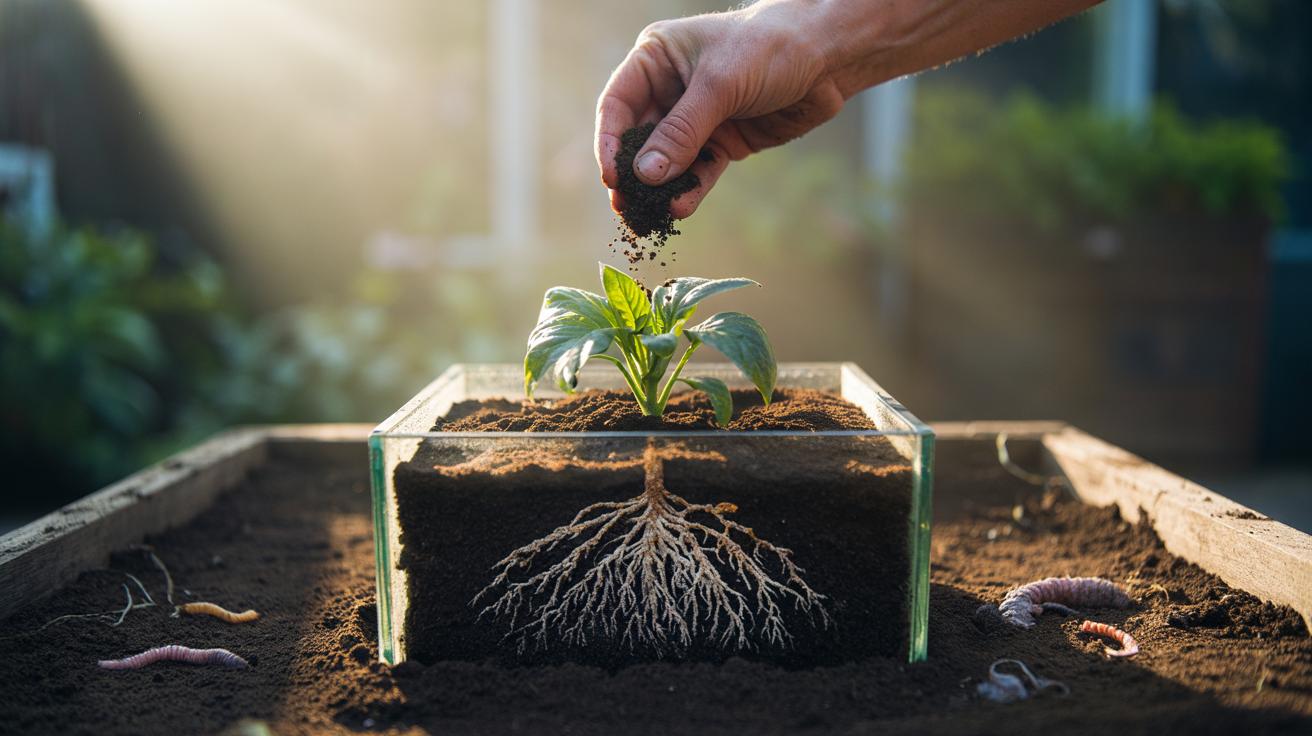
In a nutshell
- 🌱 Coffee grounds add organic matter that improves soil structure, builds stable aggregates, and enhances water retention, enabling deeper, stronger roots.
- 🧪 They offer modest nutrients—especially nitrogen (~1.5–2%)—and are typically near-neutral pH, acting as a soil conditioner rather than a full fertiliser.
- 🪱 Grounds fuel beneficial microbes and fungi, boosting nutrient cycling and creating humic substances that make minerals more available to roots.
- ⚠️ Use safely: apply thinly (5–10 mm), mix into topsoil or compost (~20% by volume), and avoid thick, wet mats that form a hydrophobic crust and can tie up nitrogen.
- 🧰 Myths busted: used grounds are not highly acidic and don’t reliably deter pests; measured, well-mixed applications in beds, containers, and wormeries deliver the best results.
Britain’s coffee habit doesn’t end at the cup. Those fragrant, spent grounds can be pressed into service as a low-cost soil improver that nudges plants towards sturdier, deeper roots. Packed with fine organic particles and trace nutrients, waste coffee acts as a soil conditioner, helping gritty beds hold moisture and clay soils loosen their grip. As it breaks down, it feeds microbial life, building a living matrix that roots can explore. Handled correctly, coffee grounds enrich structure rather than smother it, encouraging resilient, well-anchored growth. Here is how the science stacks up—and how to put the contents of your cafetière to work in borders, veg patches, and containers without inviting pests, mould, or nutrient imbalances.
Why Coffee Grounds Boost Soil Health
Used coffee grounds are rich in organic matter, the raw material for crumbly, well-aerated soil. Their fine particles slip between larger mineral grains, binding into stable aggregates that resist compaction yet keep pores open for air and water. In this improved structure, roots can push further and branch more extensively, drawing from a wider reservoir of nutrients. The fibrous fraction also enhances water retention, smoothing the peaks and troughs between heavy rain and dry spells—a boon for containers and sandy plots where moisture drains fast.
Equally important is the biological effect. Coffee grounds provide a steady feed to beneficial microbes and fungi that secrete glues and gels, literally stitching soil together. As microbes cycle the material, they release plant-available nitrogen over time and produce humic substances that chelate micronutrients. The result is a more connected, breathing soil where roots encounter fewer physical barriers and can form stronger, more efficient networks. Done in moderation, that microbial hum underpins robust root systems without the shock of quick-release fertilisers.
From Waste to Feed: Nutrients and Microbes
While not a full fertiliser, used coffee grounds carry a modest nutrient profile that supports steady growth. Typical analyses show nitrogen around 1.5–2%, with lower phosphorus and potassium. That balance favours early vegetative development and root exploration when paired with a diverse compost. Freshly brewed grounds are close to neutral pH, so they won’t acidify beds in any dramatic way. As they decompose, their carbon-and-nitrogen mix fuels microbial communities which, in turn, make minerals more accessible to roots and bolster disease-suppressive soils.
| Attribute | Typical Value/Note | Why It Helps Roots |
|---|---|---|
| Total Nitrogen (N) | ~1.5–2% | Slow release supports steady root extension |
| Phosphorus (P) | ~0.3% | Assists energy transfer during root growth |
| Potassium (K) | ~0.3–0.6% | Improves water regulation and stress tolerance |
| pH (used grounds) | ~6.5–6.8 | Near-neutral, friendly to most garden soils |
| Organic Matter | High | Builds aggregates; enhances porosity and moisture |
Think of grounds as a microbial starter and soil texturiser rather than a stand-alone feed. Blended through compost or mulched thinly, they create conditions where roots face less mechanical resistance and tap into a richer, living pantry. Partner them with leafy “browns” such as shredded paper or dry leaves to balance moisture and avoid clumping.
How to Use Coffee Grounds Safely
For borders and veg beds, apply a thin surface sprinkle—no more than 5–10 mm—and rake lightly into the top 2–5 cm. Water afterwards to settle particles and discourage crusting. In compost heaps, limit grounds to about 20% by volume, mixing with dry carbon sources so the pile stays aerated and doesn’t slump into an anaerobic mass. Composting first is ideal for heavy feeders and young plants because it stabilises nitrogen and knocks back any compounds that might inhibit germination.
Containers benefit from a modest dose mixed evenly into fresh potting media—roughly one part grounds to nine parts compost—so water doesn’t hit a solid layer. Wormeries will process grounds enthusiastically if you offer small, frequent amounts blended with shredded card to keep bedding fluffy. Do not apply thick, wet mats of grounds around stems or over seedlings; dense layers can repel water, foster mould, and temporarily tie up nitrogen at the surface. Aim for light, frequent additions that keep biology ticking without smothering roots.
Common Myths and Mistakes
One persistent myth is that used coffee grounds are highly acidic. In reality, most of the acidity stays in the brew; spent grounds hover near neutral, so they won’t swing soil pH on their own. Another claim is that coffee deters slugs and cats. Evidence is patchy at best, and you risk over-application chasing a repellent effect that rarely holds. The bigger hazard is physical: when grounds dry in thick layers they form a hydrophobic crust that blocks irrigation and suffocates the topsoil.
There’s also concern about caffeine harming plants. Levels in used grounds are low and drop further during composting, which is why blending before use is sensible. The real mistake is treating coffee as a miracle fertiliser or dumping it in clumps. Keep proportions modest, mix with structurals like straw or leaf mould, and rotate applications across beds. Paired with balanced nutrition, this steady approach strengthens root architecture without tipping your soil ecosystem off-kilter.
Coffee grounds are a pragmatic bridge between kitchen and garden: a steady stream of organic matter that builds structure, feeds microbes, and sets the stage for deeper, more resilient roots. When applied lightly or composted first, they help soil breathe, hold moisture, and deliver nutrients at a pace plants can use. Used well, they turn a daily habit into long-term soil capital. What trial will you run this season—thin mulches on thirsty containers, a measured share in the compost heap, or a wormery blend—to see how your plants’ roots respond?
Did you like it?4.7/5 (23)