In a nutshell
- 🌱 Leftover cooking water carries starches and minerals that feed soil microbes, gently boosting root health and nutrient cycling (including traces of N, P, K and possible silica).
- 🌡️ Always let water cool, keep it unsalted and oil-free, and dilute about 1:3 to 1:10 depending on thickness and plant sensitivity; use within 24 hours and water the soil, not leaves.
- 🪴 Best for herbs, leafy houseplants, and container veg; avoid for succulents and if relying heavily on egg-water with calcium for acid-loving plants; reduce use in winter.
- ⚠️ Skip any water that smells sour or looks slimy; never pour hot water; watch for white crust or musty odour as signs to flush with plain water and space applications.
- 📊 Quick reference: pasta/rice water = starch + trace K; veg water = potassium, magnesium; egg water = calcium (may raise pH); potato water = starch + K—dilute accordingly.
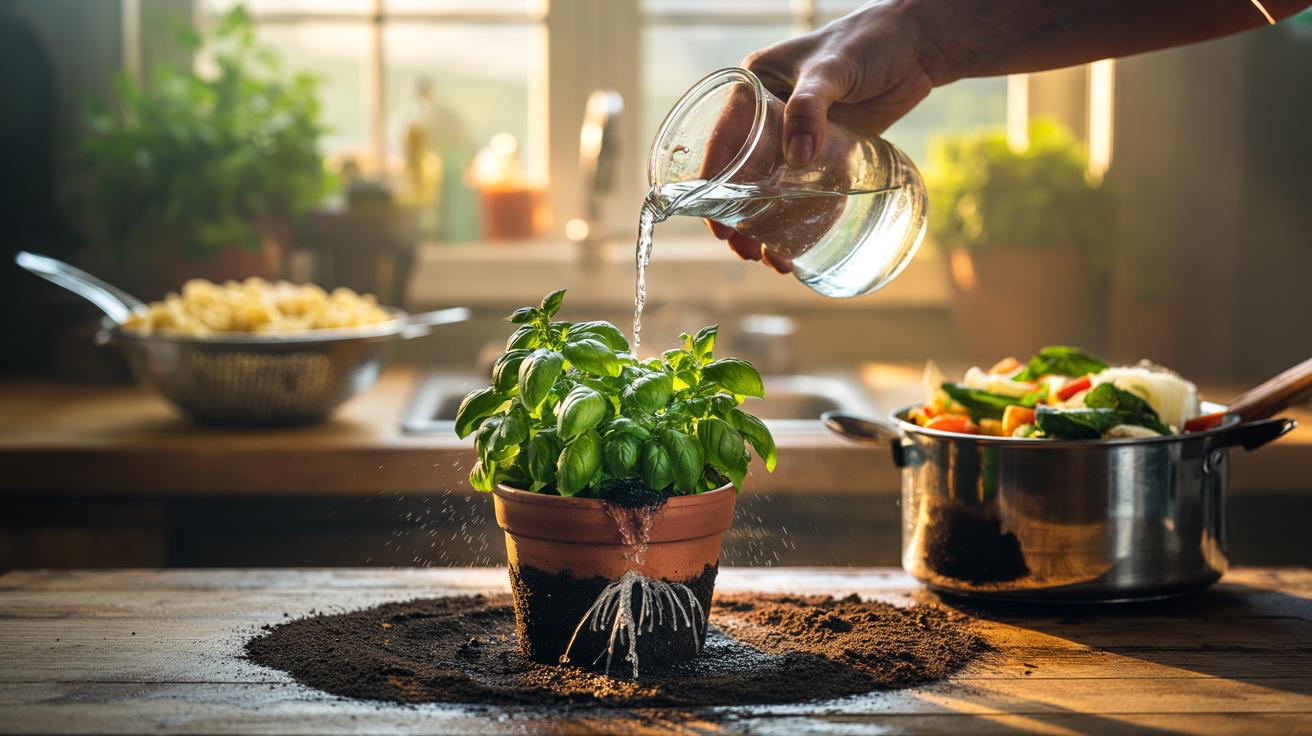
Pouring leftover cooking water on your plants sounds like a thrifty hack, but there’s sound science behind it. When you boil pasta, rice, potatoes, or vegetables, trace starches and dissolved minerals leach into the water. These compounds can gently enrich potting mixes and garden beds, supporting root health and soil life. Used correctly, they act as a light tonic rather than a full feed, saving money while keeping waste down. Always let cooking water cool and avoid anything salted or oily. Done with care, this simple habit supports a living soil and helps houseplants and herbs grow with a bit more verve between regular fertilising.
Why Starchy and Mineral-Rich Water Helps Plants
Starch from pasta, rice, and potatoes is a complex carbohydrate. Plants don’t sip starch directly, but soil microbes do. When you add small amounts of starchy water, you feed beneficial bacteria and fungi that cycle nutrients, releasing mild pulses of nitrogen, phosphorus, and potassium held in organic matter. That microbial bustle encourages finer root growth, improving the plant’s ability to capture water and minerals. Think of starch as a microbe snack that primes the soil ecosystem rather than a fertiliser on its own. Rice water may also contain a touch of silica, linked to stronger cell walls and better stress tolerance in some species.
Mineral-rich vegetable or egg-boiling water contributes trace calcium, magnesium, and potassium—the same ions plants absorb through their roots. Calcium helps strengthen cell walls and root tips; magnesium sits at the heart of chlorophyll molecules; potassium regulates stomata and water balance. These are not heavy doses, but they can bridge gaps between feeds, especially in containers where nutrients leach. Used occasionally and in modest amounts, cooking water acts as a gentle supplement that complements, not replaces, a balanced fertiliser. The key is clarity: no salt, no fats, no sauces—just the clean, cooled water from boiling.
How To Collect, Cool, and Dilute Cooking Water
Strain pasta, rice, or veg into a clean bowl or pan to catch the water. Let it cool to room temperature—tepid water protects root hairs from shock. Never pour hot water onto soil; it can scald roots and sterilise the very microbes you want to encourage. Check the source: it must be unsalted, unseasoned, and free of oil, butter, dairy, or sugar. Skim any floating starch film. If the water seems cloudy or viscous, a proper dilution helps prevent anaerobic pockets in potting mix.
As a rule of thumb, dilute starchy water at 1:3 to 1:10 with fresh water depending on thickness and plant sensitivity; lighter for seedlings and orchids, stronger for leafy herbs or mature houseplants. Water the soil, not the leaves, and stop when you see a little runoff from containers. Use the water within 24 hours to avoid fermentation odours and microbial imbalance. In warm weather, keep a jug in the fridge and let it return to room temperature before use. A monthly clear-water flush can prevent any gradual residue build-up.
When To Use It — And When Not To
Moderately hungry plants in pots—basil, parsley, spider plants, pothos, peace lilies—respond well to a weekly or fortnightly splash of diluted cooking water. Leafy veg in containers and herbs on a windowsill benefit from the extra potassium and magnesium. For veg plots, drench the soil near the root zone in the evening to reduce evaporation. Alternate with your usual fertiliser routine; this is a supplement, not a complete feed. In winter, reduce frequency as growth slows and evaporation drops indoors.
Avoid using it on succulents, cacti, or plants that demand sharply draining, lean substrates; excess carbohydrate can encourage rot if the mix stays damp. Skip for acid-loving species—azaleas, camellias, blueberries—if your cooking water is repeatedly rich in calcium (e.g., from eggshells), as it may nudge pH upward. Discard any water that smells sour or appears slimy. Never use salted or seasoned water; sodium damages soil structure and burns roots. If pests are an issue, keep surfaces clean—sticky residues come from sauces, not plain cooking water, which should be clear.
Quick Reference: Best Uses and Cautions
Clarity and moderation make this practice work. Choose sources with simple profiles: pasta or rice water for mild starch, veg water for extra minerals. Dilute more for seedlings and delicate ornamentals; use a little stronger for leafy, fast growers. Apply to moist soil so nutrients distribute evenly. Rotate with plain waterings to prevent build-up, and always keep the liquid free of salt and fat. If your tap water is hard, alternate with rainwater to balance calcium input.
For gardeners juggling many pots, a quick log helps: note what you boiled and which plants received it. Over a month, you’ll see which respond with richer colour or new leaves. Stop and reassess if you notice a white crust on the soil surface, drooping unrelated to dryness, or a musty smell. These are signs to flush with plain water and space out applications. The table below summarises good sources and simple cautions so you can act with confidence.
| Water Source | Main Nutrients/Traits | Best For | Avoid/Caution |
|---|---|---|---|
| Pasta/rice water (unsalted) | Starch; trace K, some silica (rice) | Herbs, leafy houseplants, container veg | Dilute 1:5–1:10; not for succulents |
| Vegetable boiling water | Potassium, magnesium, micronutrients | Most ornamentals and edibles | Avoid if seasoned; use within 24 hours |
| Egg-boiling water | Calcium carbonate traces | Tomatoes, peppers, brassicas | Limit for acid-lovers; potential pH rise |
| Potato water (unsalted) | Starch; potassium | Hungry annuals and leafy greens | Dilute 1:5; avoid on water-sensitive plants |
Using leftover cooking water is a small, satisfying act of circular living: you capture gentle nutrition, cut waste, and support the soil microbiome that underpins healthy roots. Keep it simple—cool, clear, and diluted—and you’ll see brighter foliage and steadier growth between main feeds. The goal is steady vitality, not a shortcut to heavy feeding. With a little observation, you can match the right water to the right plant and season, keeping containers thriving on a modest budget. Which of your plants will be first to trial a carefully diluted splash from tonight’s pasta pot?
Did you like it?4.4/5 (29)