In a nutshell
- 🌸 Roses rely on potassium (K) to regulate water use, move sugars, and sustain bud formation, delivering richer colour and longer-lasting blooms than nitrogen-heavy feeds.
- 🍌 Banana peels decompose into gentle potash, best used chopped, dried, brewed as “peel tea,” or fully composted—while avoiding whole peels that attract pests or rot near crowns.
- 🕒 Apply small, regular doses: about one peel or 1–2 tbsp dried peel per bush every 3–4 weeks at the dripline, scaling down for pots, and stopping in late summer for plant hardening.
- 🧪 For precise boosts, use sulphate of potash or high-K tomato feed; be cautious with wood ash on alkaline soils and prioritise targeted interventions in sandy beds and containers.
- 🔧 Combine K with good culture: consistent watering, deadheading, airflow, and disease control; diagnose imbalances—too much nitrogen reduces flowers, while leaf scorch and weak buds signal K deficiency.
Every rose grower knows the thrill of seeing a shrub erupt in petals, yet few household tricks spark as much debate as the banana peel. Buried beneath mulch, the skin of yesterday’s snack is said to send roses into overdrive. The heart of the claim is simple: potassium, the bloom-boosting nutrient in most NPK feeds, underpins flower quality and longevity. But how does a peel in the soil turn into non-stop colour? What is myth, what is method, and what actually works in a British garden? Used wisely, banana peels can complement a sound feeding plan and deliver incremental gains, but the science of potassium—not folklore—does the heavy lifting.
Why Potassium Makes Roses Relentless Bloomers
Roses crave potassium (K) because it manages water flow, sugar transport, and stress responses inside the plant. K regulates stomata, so leaves hold enough water to keep blooms turgid during warm spells. It helps move carbohydrates from foliage to buds via the phloem, fuelling petal production and scent compounds. Enzymes activated by K support energy use and disease tolerance, so plants keep flowering instead of stalling after the first flush. Where nitrogen pushes leafy growth, potassium focuses the show on flowers, colour intensity, and vase life. If your roses form buds that fail to open, or blooms brown early, a K shortfall is often the culprit.
Soil dynamics matter. Potassium isn’t built into petal tissue; it is mobile, sliding in and out of solution with rainfall and irrigation. Sandy beds and containers leach K quickly, while heavy clays may lock it to clay particles. This is why consistent, modest inputs beat occasional binges. Use a balanced rose fertiliser in spring to build structure, then tip the scales slightly towards K as repeat-flowering varieties push successive waves. Think rhythm: feed lightly, water deeply, deadhead promptly, and keep potassium available as buds queue up. A banana peel will not rescue poor soil alone, but it can be one useful nudge.
Banana Peels: Myth, Mechanism, and Method
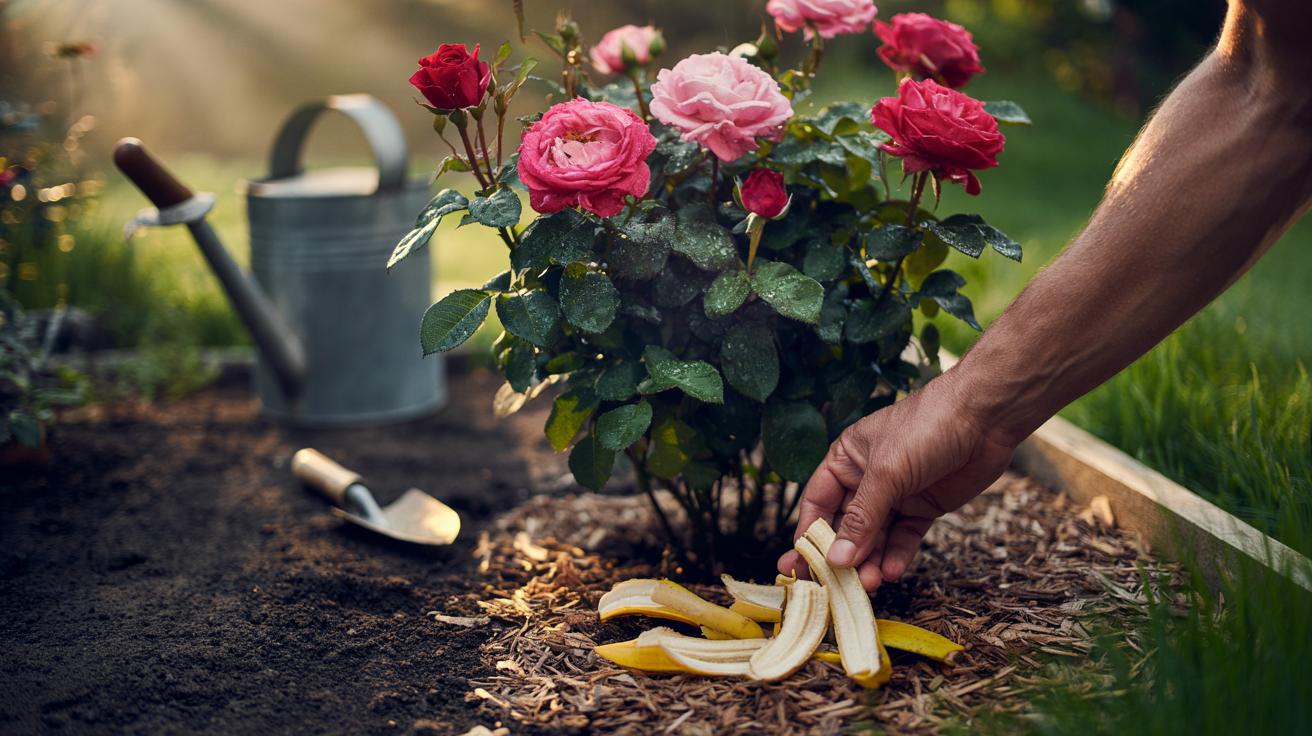
The peel’s reputation stems from its natural mineral load and fast breakdown. As the peel decomposes, its water-soluble potassium salts dissolve into the root zone, where roses can intercept them. You also get a smidge of calcium and magnesium, plus organic matter that feeds soil microbes. But there are caveats. Whole peels stuffed around a crown rot slowly, attract foxes or rats, and may turn slimy in heavy soils. The smarter move is to chop, dry, or compost peels to speed their transformation. Mix small amounts into the top 5–8 cm of soil and mulch over, or brew a quick “peel tea” for watering during a bloom cycle.
Done well, peels act as a gentle potash trickle. They are not a replacement for a tested sulphate of potash or a high-K liquid feed, but they can top up levels between scheduled fertiliser rounds. Here’s a clear look at practical options and their pros and cons for UK gardeners.
| Method | How to Do It | Pros | Watch-outs |
|---|---|---|---|
| Chopped peel under mulch | Dice 1 peel, scratch into topsoil around dripline, cover with mulch. | Steady release; feeds microbes; minimal smell if covered. | Can tempt wildlife if left exposed; slow in cold soil. |
| Dried peel flakes | Oven-dry peels, crumble 1–2 tbsp per plant monthly in season. | Compact, cleaner handling; quicker breakdown. | Easy to overdo; still organic, not precise dosing. |
| Peel “tea” | Soak chopped peel in water 24–48 hrs; water at root zone. | Fast-acting; no solid waste to attract pests. | Use promptly; can ferment if stored warm. |
| Composted peels | Add to compost heap; apply mature compost as mulch. | Safest, balanced nutrients; improves soil structure. | Slower route to blooms; needs a working heap. |
Smart Application: Quantities, Timing, and Safety
Think small and regular. For a mature bush rose, use one small peel (or 1–2 tablespoons of dried peel) every 3–4 weeks from late spring to mid-summer. Bury lightly in the feeder roots’ zone—roughly the dripline—and water in. Never pile banana waste against stems or crowns, and do not bury peels deeply in heavy clay where air is scarce. In pots, scale down: a teaspoon of flakes, or a half peel, is ample. Pair this with your spring feed (balanced NPK) and a mid-season top-up of potash if repeat flowering slows.
Good hygiene keeps problems away. Cover peels with mulch to mask scent. Avoid peels treated with sticker sprays or waxes; rinse first if unsure. If you’ve had rodent issues, prefer peel tea or fully composted material. Stop feeding in late summer so plants harden before winter pruning. Watch for tell-tale signals: lush leaves with few flowers imply excess nitrogen, while marginal leaf scorch and weak buds hint at a K deficit. Adjust the ratio—less N, a touch more K—and blooms typically rebound within a couple of weeks.
Alternatives and Quick Fixes When Blooms Stall
If roses hesitate despite good care, reach for precise tools. A teaspoon of sulphate of potash scratched in and watered can deliver a clean K boost without extra nitrogen. Liquid tomato feed suits pots and patio roses during peak flushes, offering readily available K with trace elements. Seaweed extracts won’t supply much potassium but can aid stress tolerance. On alkaline soils, avoid heavy wood ash unless you test pH; while ash contains K, it can push pH upwards and disrupt micronutrient uptake. Targeted interventions beat guesswork, especially in containers and sandy beds.
Do not ignore cultural tweaks. Consistent watering—deep, infrequent—reduces bud drop. Deadhead to re-route energy into new buds, and thin congested growth to improve light. Magnesium (Epsom salts) supports chlorophyll but is not potassium; use only if leaves yellow between veins while veins stay green. If blackspot or mildew sap vigour, flowers fade early; tidy leaves, improve airflow, and consider resistant cultivars. When blooms stall, check water, light, and disease first, then dial in potassium so the plant can perform.
In short, the humble banana peel can be a neat, low-cost nudge—especially when chopped, dried, or composted—yet it shines most as part of a measured programme that keeps potassium flowing just as buds line up. The secret to “exploding” roses isn’t a miracle peel but steady K, clean cultivation, and timing. Used with judgement, peels help sustain colour between formal feeds without upsetting soil chemistry. Will you tuck a discreet peel beneath your mulch this season, or will you opt for a precise potash feed and compare the results across your favourite rose varieties?
Did you like it?4.6/5 (27)