In a nutshell
- 🍌 Banana peels are a fast compost booster: high moisture, simple sugars, and potassium energise microbes and speed decomposition, especially in cool UK heaps.
- 🛠️ Practical methods include chop-and-layer, bokashi pre-fermentation, and trench composting; always bury peels to deter pests and odours.
- 📊 Nutrient profile: high K, moderate P, useful Ca and Mg, low N; aim for ~30:1 C:N and pair peels with true greens for brisk breakdown.
- ⚠️ Pitfalls to avoid: slimy, anaerobic mats—chop small, mix with browns, remove stickers, rinse peels, and add sparingly to wormeries to prevent overheating.
- 🌱 Pay-off for plants: peel-rich compost delivers balanced, biologically active nutrition for flowering and fruiting crops; finish with a mulch to lock in moisture and microbial life.
Gardeners searching for a quick, low-cost nutrient kick for their compost heaps have long sworn by banana peels. Soft, moist, and brimming with potassium and helpful micronutrients, they energise the decomposers that turn kitchen scraps into dark, crumbly gold. In cool UK climates, where heaps can stall, peels act like kindling for microbial fires, speeding up the process without harsh additives. Used well, banana peels are a smart, sustainable way to boost activity and feed soil life. Below, we explore what makes them effective, how to use them for best results, and the small mistakes to avoid when chasing that coveted quick nutrient release.
How Banana Peels Turbocharge Compost
Banana peels are a near-perfect “green” input: high in moisture and simple carbohydrates that feed bacteria and fungi quickly. Their soft tissue breaks down fast, helping a sluggish heap warm up and maintain the microbial momentum essential for rapid decomposition. Potassium dominates their nutrient profile, supporting overall plant vigour and stress tolerance once the compost is mature. While their nitrogen content isn’t spectacular, it’s sufficient to spur activity when backed by a good balance of carbon-rich browns.
Speed is the secret. Cut peels into small strips and intersperse them with shredded cardboard, autumn leaves, or straw. This structure invites air into the heap, preventing claggy mats that turn anaerobic. Small pieces, good airflow, and steady moisture are the fastest route to nutrient-rich compost from banana peels. You’ll see peels disappear within weeks in an active, well-aerated pile, especially in a closed bin that holds warmth.
The benefits extend beyond raw nutrients. Peels bring calcium, magnesium, and trace elements that support root health and microbial diversity. Their sugars kickstart microbial communities that fragment tougher materials nearby, so even woody stems and paper break down more efficiently. Think of banana peels as a natural accelerator: a quick spark that helps the whole heap burn brighter.
Practical Methods: From Chop-and-Drop to Bokashi
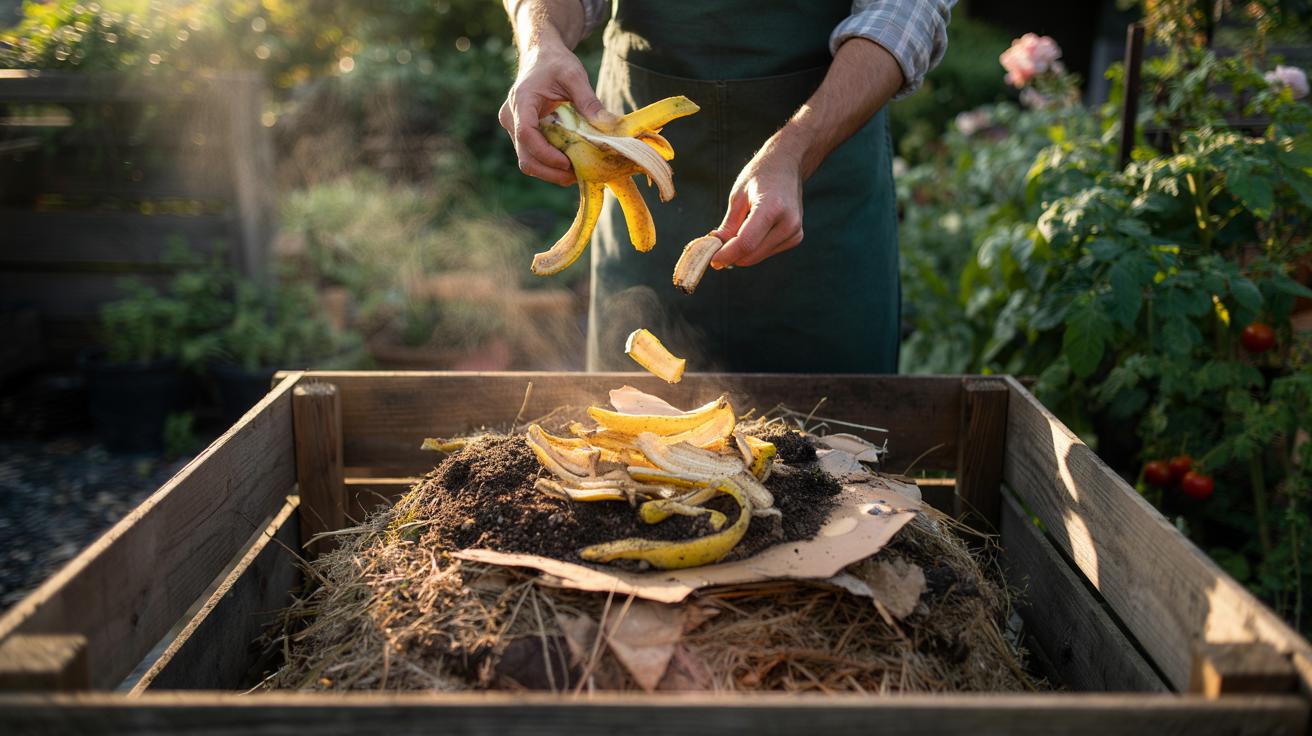
For the standard heap, the simplest method is chop-and-layer. Slice peels into 2–3 cm pieces and distribute them through the heap with equal volumes of browns. This evens out moisture and avoids slimy layers. If pests are a worry, freeze peels first to burst cell walls, then compost them—this both speeds decay and reduces odour. Always bury peels within the middle of the pile rather than leaving them exposed on top.
In small gardens or flats, bokashi pre-fermentation is ideal. Add peels to a bokashi bucket with bran, drain the liquid for dilute feed, and then bury the fermented material in a compost bin or trench for speedy mineralisation. Trench composting also works: bury chopped peels 20–25 cm deep along a row of heavy feeders such as tomatoes or courgettes, giving them a slow, local boost as the peels break down.
Drying or lightly toasting peels in a low oven reduces fruit-fly interest and creates a brittle material that crumbles into the heap. Some gardeners make “banana peel tea”, but the nutrient yield is mediocre and inconsistent. Composting peels is more reliable than soaking them, with a broader spectrum of nutrients and organic matter returning to the soil. Finish with a light turn of the bin to bring oxygen into the mix and quicken the process.
Nutrient Profile and What It Means for Plants
Banana peels are renowned for their potassium (K), with moderate phosphorus (P) and useful amounts of calcium and magnesium. Once composted, these elements contribute to stronger stems, improved water regulation, and resilient flowering—handy for roses, tomatoes, peppers, and container crops that frequently show potassium hunger. The real win is balanced nutrition in a biologically active form, not a harsh, quick-fix fertiliser.
| Nutrient | Relative Content in Peels | Plant Benefit | Release Pattern |
|---|---|---|---|
| Potassium (K) | High | Flowering, fruit quality, stress tolerance | Fast once composted; steady thereafter |
| Phosphorus (P) | Medium | Root growth, early establishment | Moderate |
| Calcium (Ca) | Medium | Cell strength, reduces blossom-end rot risk | Moderate to slow |
| Magnesium (Mg) | Low–Medium | Chlorophyll formation, leaf colour | Moderate |
| Nitrogen (N) | Low | Leaf growth, protein synthesis | Fast but modest |
Because nitrogen is limited, pair peels with true green sources—fresh grass clippings, coffee grounds, or manure—to keep decomposition brisk. Aim for a rough 30:1 carbon-to-nitrogen balance across the whole heap. Use banana peels to complement, not replace, a rounded compost recipe. After curing, apply the finished compost around fruiting crops or mix it into potting blends for containers that demand regular potassium.
Pitfalls to Avoid and Sustainability Notes
Rotting peels can tempt rodents and fruit flies if exposed. Always bury them, cap with browns, and keep the heap moist like a wrung-out sponge. Too many peels at once may create a sticky, low-oxygen layer that smells. Break quantity into small, frequent additions and combine with shredded paper or dry leaves to prevent anaerobic pockets. In wormeries, add peels sparingly at first; their sugars can cause overheating if your colony is small.
Rinse peels to remove any surface residues and always peel off stickers; adhesives and plastics persist in compost. Choose Fairtrade and organic bananas where possible to shorten the chain of chemical inputs. If black mould appears on peels in the kitchen caddy, don’t worry—fungi will continue the job in the bin. Composting is resilient, and minor imperfections rarely derail the process when airflow and moisture are right.
Finally, manage expectations. Peels are powerful accelerators, not a silver bullet for all deficiencies. For heavy feeders, blend peel-rich compost with well-rotted manure or a balanced organic fertiliser. Mulch afterwards to lock in moisture and keep biology thriving. With that system in place, the humble banana skin becomes a reliable, circular tool in any UK garden aiming for healthier soil and abundant harvests.
With a sharp knife, a steady supply of browns, and a little bin discipline, banana peels can lift a compost heap from sluggish to sprightly—and repay you with nutrient-dense humus that plants love. Use them frequently, bury them well, and let microbes do the heavy lifting. As you refine your routine through the seasons, which method—layering, bokashi, or trenching—fits your space and delivers the quickest, cleanest results in your own garden?
Did you like it?4.4/5 (23)