In a nutshell
- 🌹 Potassium’s role: K regulates stomata, improves water use, strengthens stems, and boosts colour and vase life—supporting reliable bud set and better disease tolerance in roses.
- 🍌 Banana-peel soak method: Chop peels, steep 24–48 hours, strain, and dilute 1:5; use within 3–4 days and avoid long fermentation or undiluted application to protect roots and prevent pests.
- ⏱️ Application and timing: 300–500 ml per established plant every 2–3 weeks onto moist soil; do not feed drought‑stressed plants and stop 6–8 weeks before frost to prevent soft, vulnerable growth.
- ⚖️ Balance and limits: The soak is a gentle top-up, not a full fertiliser; pair with balanced feeds and compost, consider a soil test, and watch for K–Mg antagonism that can trigger interveinal yellowing.
- 📊 Alternatives at a glance: Sulphate of potash (precise, high K), high‑K tomato feeds (convenient), wood ash (raises pH), and compost (soil health); each offers trade-offs on strength, cost, and soil impact.
Gardeners have long whispered about the banana-peel soak as a thrifty elixir for roses, promising sturdier growth and richer blooms without chemical fanfare. There is genuine plant science behind the folklore: banana skins are naturally high in potassium, a macronutrient linked to colour, resilience, and water balance. As households cut waste and costs, this simple extract is enjoying a revival across UK plots. What matters is using it safely, within a balanced feeding regime, and at the right moments in the season. Done well, a homemade soak can complement conventional feeds, adding a sustainable boost while keeping soil life in mind.
Why Potassium Powers Rose Performance
Potassium (K) is not a builder of tissues like nitrogen; instead, it acts as a regulator. It helps control stomata, the pores that manage water loss and gas exchange, keeping petals turgid and colours vivid under summer glare. It also assists enzymes that move sugars from leaves to developing buds, effectively fuelling repeat flowering. With adequate K, roses typically show thicker canes, sturdier stems, and tighter petals that hold longer in a vase. Consistent potassium supply translates into more reliable bud set and improved disease tolerance, especially when humidity invites blackspot and mildew.
In practical terms, K allows plants to use water and nutrients more efficiently, which is critical during erratic UK weather. It fortifies cell walls, helping roses shrug off stress and minor pest pressure. By contrast, a deficiency often reveals itself as weak growth, dull foliage, and lacklustre blooms even when watering seems adequate. Keep in mind that potassium does not replace a balanced feed; it complements nitrogen and phosphorus to complete the nutritional picture.
Making a Banana-Peel Soak Safely
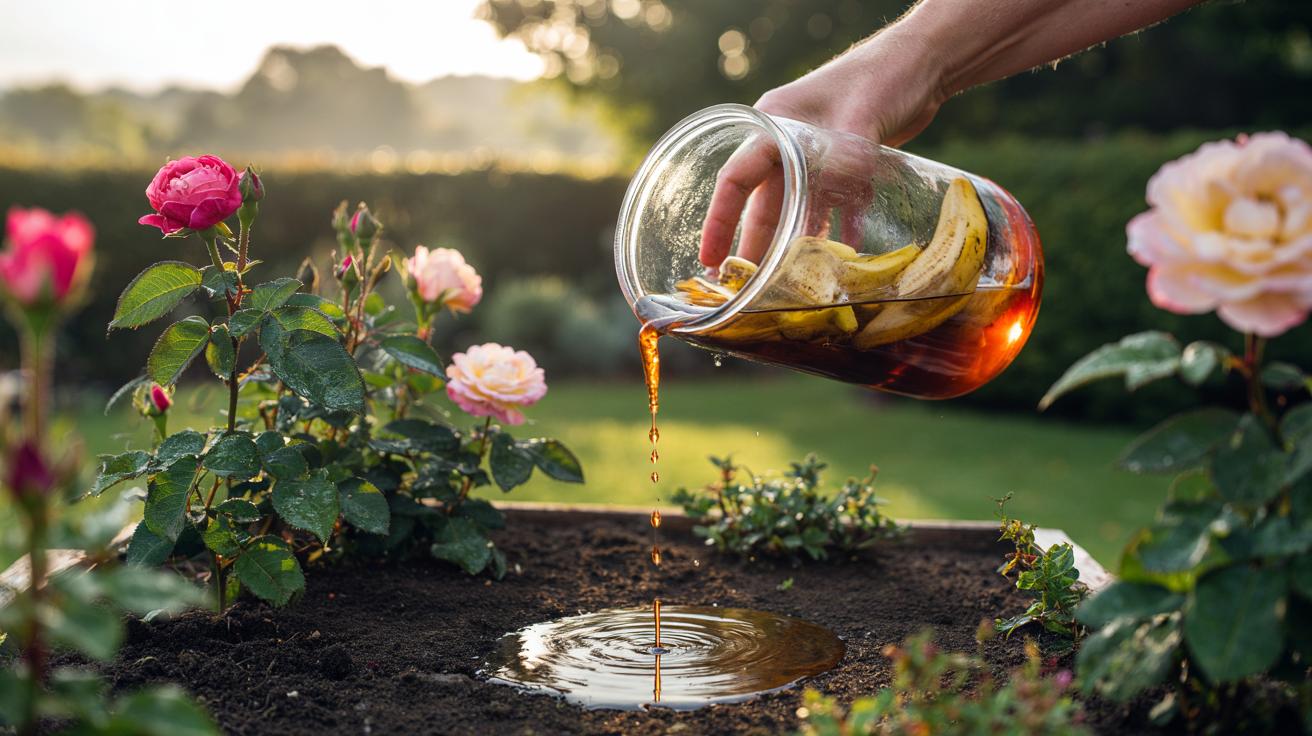
Gather three to four fresh banana peels, rinse to remove any residue, and chop them into small pieces to increase surface area. Add to a clean jar or jug with 2 litres of rainwater or dechlorinated tap water. Cover loosely and steep for 24–48 hours at room temperature. Strain thoroughly to remove solids; these can be composted. For a clearer extract, a gentle 10-minute simmer followed by cooling before straining reduces odour and microbial fizz. Do not leave peels soaking for days on end, as fermentation can attract pests.
Use the liquid within three to four days, storing it chilled if possible. Before use, dilute the extract; a safe starting point is one part soak to five parts water. Never pour undiluted soak around young roots, which can be sensitive to sudden osmotic shifts. Label your container and keep it out of direct sun to prevent spoilage. The aim is a light, supplementary feed that supports plant health without overwhelming the root zone.
How to Apply and When to Feed
Apply the diluted soak to moist soil at the base of each plant, aiming for 300–500 ml per established rose and 150–250 ml for container specimens. Avoid wetting foliage to reduce disease risk. Feed every two to three weeks during active growth, pausing in very hot, dry spells. Do not feed drought-stressed plants; water deeply first, then apply the soak once leaves have perked up. For most UK gardens, begin light applications after spring pruning and resume after the first flush of flowers.
Timing matters. Stop feeding six to eight weeks before the first expected frost to avoid soft, late growth that winter can damage; for northern regions, this often means early September. Pair the soak with a balanced rose fertiliser in spring to supply nitrogen and phosphorus, and maintain organic matter with compost or mulch. If your soil is already rich in K—common in some clays—reduce frequency. A basic soil test prevents guesswork and keeps nutrition proportionate.
Evidence, Limits, and Alternatives
Banana peels are indeed potassium-rich—roughly 3–5% K by dry weight—but extraction via soaking is variable. The method delivers a modest, useful top-up, not a concentrated fertiliser. This feed is not a silver bullet. It works best as part of an integrated plan: good soil structure, adequate watering, sensible pruning, and disease hygiene. If burying peels, expect slower nutrient release and potential fruit-fly interest; the soak sidesteps that by delivering a quick, diluted pulse. Where measurable results are essential, consider proven sources like sulphate of potash or high-K liquid feeds used for tomatoes and roses.
Balance remains crucial. Excess K can antagonise magnesium uptake, leading to interveinal yellowing. Seaweed extracts contribute micronutrients but little K; wood ash provides plenty of K yet also raises pH, which chalky soils hardly need. The banana soak sits in the “gentle nudge” camp—cheap, easy, and eco-conscious—best paired with compost and a targeted feed when buds are forming. The table below outlines common options.
| Source | Primary Nutrient | Pros | Cautions |
|---|---|---|---|
| Banana-peel soak | Potassium (light) | Free, sustainable, quick to make | Variable strength; short shelf life |
| Sulphate of potash | Potassium (high) | Predictable dose, fast-acting | Can overapply; check soil K levels |
| Tomato feed (high-K) | Balanced NPK with extra K | Convenient, consistent results | Cost over season; follow label |
| Wood ash | Potassium and lime | Recycles waste, raises K quickly | Raises pH; avoid on alkaline soils |
| Well-made compost | Broad nutrients, humus | Soil health, moisture retention | Slow release; variable K content |
The banana-peel soak is a small, clever tweak rather than a miracle cure, adding potassium in a gentle, garden-friendly way. Used with balanced feeding, mulch, and timely watering, it can help roses hold colour, resist stress, and repeat-flower with confidence. As with all home brews, the watchwords are dilution, cleanliness, and sensible timing. If you try it this season, why not measure your results—counting blooms and noting vase life—against a standard potash feed to see which shines in your soil and climate?
Did you like it?4.6/5 (30)