In a nutshell
- 🌡️ Thermal shock at 100°C denatures proteins and ruptures plant cell walls, delivering rapid top-kill with no chemical residue; annuals die quickly while deep-rooted perennials may reshoot.
- 🧱 Best for hardstanding—paving cracks, kerbs, gravel paths—and at the seedling stage; avoid lawns and prized borders as it’s non-selective; choose a dry, still day for maximum effect.
- ☕ Pour fast from a kettle or narrow-spout can, spout close to foliage; use ~250–500 ml for small weeds, up to 1 litre for clumps; skip the watering rose; expect visible collapse within hours.
- 🛡️ Prioritise safety: wear boots and gloves, keep children and pets away until surfaces cool, avoid drains and soft tarmac, and repeat light treatments every 7–10 days for stubborn perennials.
- 🌍 Residue-free and gentle on soil life, but energy use matters (about 0.1–0.2 kWh per kettle); integrate with cultural controls—sweeping joints, topping up gravel—to cut regrowth; ineffective on woody weeds.
Reaching for a kettle might sound like an old wives’ tale, yet pouring boiling water on unwanted plants is a quick, clean and surprisingly effective way to keep hard surfaces clear of weeds. By delivering a burst of heat straight to leaves and stems, this simple technique causes catastrophic damage to plant tissues without leaving chemical residues behind. On UK patios, driveways and allotment paths, it offers an immediate, low-cost fix that suits busy gardeners and eco-conscious households alike. Used carefully, it can be a dependable ally against small outbreaks and path-side invaders while sparing beneficial soil life just beneath the surface.
Why Boiling Water Works So Fast
The secret is thermal shock. Plant cells are built from delicate membranes and proteins that begin to unravel above about 60°C. When 100°C water hits foliage, it rapidly denatures proteins, ruptures cell walls and collapses internal water transport. The visible “scald” is not cosmetic; it’s structural failure. Leaves lose turgor, stems blister, and within hours the plant wilts. This is a contact method: any tissue touched by the hot water is damaged. Because heat dissipates quickly, upper roots and crowns may be injured, while deeper roots usually survive a single treatment.
That explains the speed—and the limits. Annual weeds and shallow-rooted seedlings often die outright because their growing points sit near the surface. Deeper or established perennials may brown off and then reshoot. In those cases, repeat applications exhaust the reserve energy stored in roots. Compared with systemic herbicides, boiling water is residue-free and immediate, but it lacks long-term systemic action. Think of it as an efficient “top-kill” that can be timed and targeted with precision.
Where and When to Use It
Boiling water excels on hardstanding—between paving slabs, along kerbs, in gravel paths, and at the base of walls where hand-pulling is awkward. It’s also useful in vegetable beds before sowing or transplanting to knock back a flush of seedlings. Avoid lawns and densely planted borders unless you can shield desirable plants, because the method is non-selective. Early growth stages are ideal: tiny weeds succumb with far less water. Choose a dry, still day so heat isn’t lost to wind or rain splash, and keep pets and children away from the work area until surfaces cool.
| Site / Weed Type | Immediate Effect | Likely Regrowth | Notes |
|---|---|---|---|
| Annuals in paving cracks | Severe scald within minutes | Low | Often one treatment is enough |
| Seedlings in bare beds | Rapid collapse | Moderate | Soil seed bank may re-sprout; repeat as needed |
| Perennials (dandelion, plantain) | Top-kill | High | Plan multiple douses to drain root reserves |
| Woody weeds | Minimal | Very high | Use cutting or extraction instead |
Avoid fresh tarmac and bitumen-based surfaces, which may soften under intense heat. For moss and liverwort on steps, hot water works but take care: the slick residue can create a temporary slip hazard as it cools. Sweep debris after treatment.
How to Pour Safely and Effectively
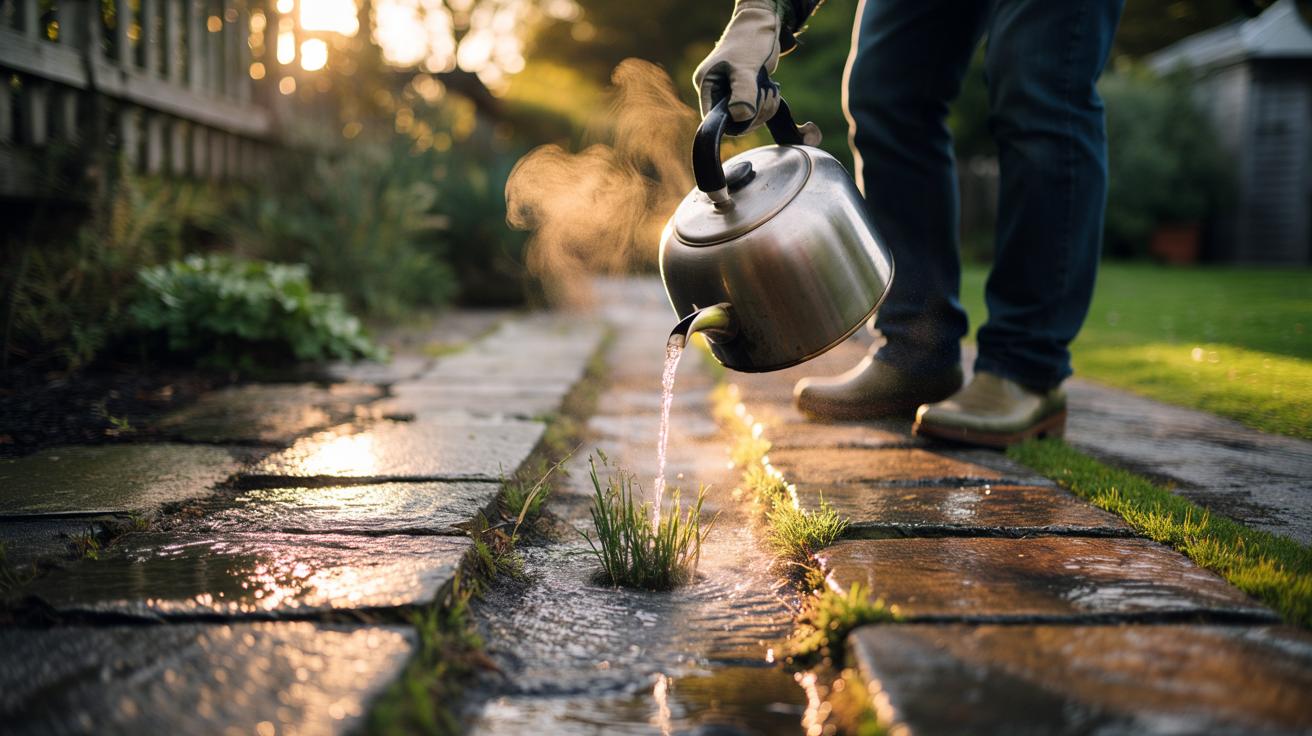
Speed preserves heat. Boil the kettle, then walk directly to the target and pour within seconds. Hold the spout close to foliage to limit splash and heat loss, directing a thin, steady stream onto the crown of each plant. For small weeds, 250–500 ml is ample; established clumps may need up to a litre. Do not use a watering rose, which cools water rapidly. A kettle or narrow-spout metal watering can keeps temperatures higher where it counts. Expect visible collapse within hours and a crisped, straw-brown finish by the next day.
Think safety first. Wear boots, long trousers and gloves; plan your path so you never step back over hot puddles. Keep children and pets away until surfaces are cool to the touch. Angle the pour away from yourself, and avoid drains where sudden heat could warp plastic fittings. Boiling point is 100°C, but contact temperatures drop fast, so precision matters. Repeat light applications every 7–10 days on stubborn perennials to starve roots without wasting water or energy.
Environmental Impact and Limitations
Unlike chemical herbicides, hot water leaves no residue and poses minimal risk to groundwater. The heat pulse is shallow; soil organisms a few centimetres down remain insulated, making this method friendly to worms and microbes. Energy use is the main environmental cost. A standard UK kettle uses roughly 0.1–0.2 kWh per boil; consolidating jobs and reusing water boiled for tea (once cooled slightly, then reboiled) trims waste. Targeted treatment beats blanket dousing: reserve boiling water for cracks and edges while hand-hoeing larger open areas to save energy.
There are limits. Large infestations over wide surfaces can be time-consuming, and woody or deep-rooted weeds resist top-only scalds. Some paving jointing compounds may degrade faster if repeatedly shocked by heat. Be cautious around prized perennials; any splash can scorch leaves. Integrate boiling water with cultural controls: brush and sweep joints to remove debris that shelters seedlings, top up gravel depth, and edge regularly. This combined approach reduces weed pressure so each kettle does more work with fewer repeats.
For small-scale, targeted jobs, pouring boiling water offers a fast, chemical-free way to topple weeds and keep paths looking sharp. It excels on annuals and seedlings, requires no storage or spraying gear, and leaves nothing behind but steam. Its Achilles heel is persistent perennials, which may demand a patient, repeated campaign. Pair it with good hygiene—regular sweeping and prompt removal of debris—and you’ll see longer gaps between treatments. Where could this low-tech tactic fit into your garden routine, and which tricky corners or paving joints will you tackle first?
Did you like it?4.5/5 (24)