In a nutshell
- 🌿 Cardboard mulch delivers long-lasting weed suppression by blocking light, while feeding soil life and supporting a no-dig approach for easier maintenance.
- 🧱 Step-by-step layering: mow low, overlap cardboard by 10–15 cm, soak thoroughly, add 5–8 cm compost and 5–8 cm mulch, then plant through “X” slits for immediate use.
- 📦 Smart materials: choose plain corrugated cardboard (no plastic tape), use 40–60 L compost/m², and avoid contaminated inputs (watch for aminopyralid in manure or straw).
- 🔧 Seasonal care: secure edges, re-pin after storms, manage slugs, and double-layer for bindweed or couch grass; expect cardboard to break down in 3–9 months.
- 💧 Big gains: improved moisture retention, moderated soil temperature, fewer weeds and less watering, with annual top-ups keeping the system reliably low-maintenance.
Weeds steal time and nutrients, yet the solution may already be stacked in your delivery pile. Using cardboard mulch as a light-blocking layer, gardeners can smother unwanted growth while building healthier soil. This low-cost tactic can block light to weeds for months and cut routine maintenance dramatically. By layering cardboard with compost and organic mulch, you create a living blanket that feeds the soil food web and stabilises moisture. In the UK’s stop-start growing season, this approach offers resilience: fewer weed flushes, less watering, and far less digging. Here’s how to turn boxes into a reliable, no-dig ally for beds, borders, and pathways.
Why Cardboard Mulch Works
Cardboard is a simple tool for powerful weed suppression. It prevents light from reaching annual weeds and weakens perennials by exhausting their stored energy. Overlapping sheets disrupt rhizomes and stifle seed germination. By excluding light while allowing air and water to pass, cardboard starves weeds without compacting the soil. Choose plain, brown, corrugated sheets; avoid glossy prints, heavy inks, and plastic tapes. When overlapped by 10–15 cm, the barrier makes it difficult for recurrent offenders—like couch grass—to push through, especially under a deep organic top layer that further shades the surface.
Beyond weed control, cardboard supports soil life. Earthworms are drawn to the moist, dark interface and drag fibres below, aerating and mixing organic matter. The material breaks down into carbon-rich humus, helping structure and water retention. Under a mulch, soil temperatures fluctuate less, safeguarding microbes during cold snaps and summer heat. Think of it as a slow-release carbon blanket that feeds biology while reducing evaporation. This synergy underpins successful no-dig systems and makes each subsequent season easier to manage.
Step-by-Step Layering Method
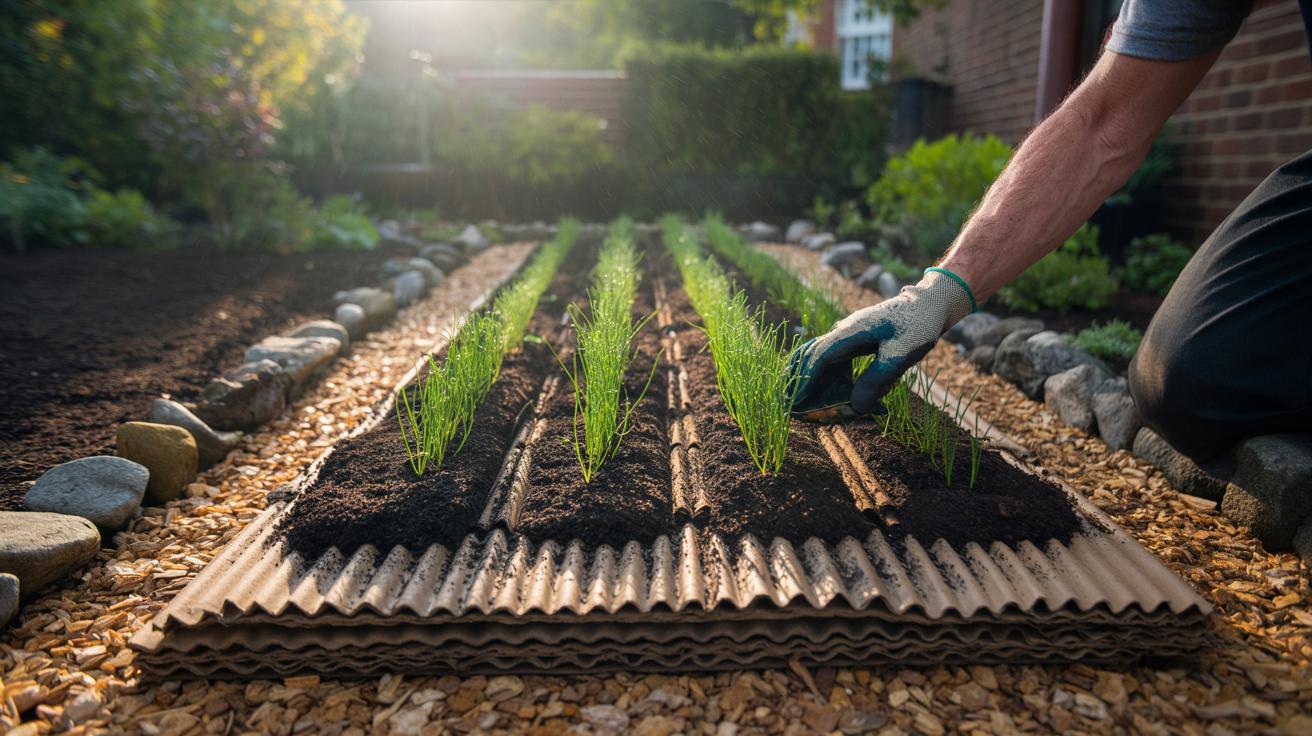
Start by flattening the area: cut or mow existing growth low, leaving roots in place to decompose. Water the ground if it’s dry. Lay down plain, tape-free cardboard with 10–15 cm overlaps to eliminate light leaks, and soak it until saturated. Moisture is the catalyst that knits layers together and invites soil life to get to work. Add 5–8 cm of mature compost or well-rotted manure, then top with 5–8 cm of woody mulch, leaf mould, or straw. Secure edges with stones or pegs to prevent wind lift, and keep mulch a few centimetres away from stems to avoid rot.
For immediate planting, slice an “X” in the cardboard, tease open a pocket, and set transplants into the compost layer. Direct sowing works after decomposition—usually within a few months in warm, wet conditions. On paths, use a double layer of cardboard under wood chips for long-lasting weed suppression. Where perennial weeds are entrenched, extend the overlap and build a thicker top layer for a season-long block. The result is a tidy, low-maintenance bed that settles into a fertile, workable surface by the next planting cycle.
Choosing Materials and Quantities
Use corrugated, non-waxy cardboard and remove all plastic tapes and labels. Aim for approximately 1–2 layers over the surface; double up on problem patches. As a guide, plan for 40–60 litres of compost per square metre, topped with an equal depth of mulch. A thick, even cover is more effective than sporadic top-ups. When sourcing straw or manure, confirm they’re free from persistent herbicides such as aminopyralid, which can damage crops. Leaf mould and wood chips are forgiving choices for paths and perennials; finer compost suits vegetables and annual flowers.
| Layer | Material | Recommended Thickness | Purpose | Weed Block Duration |
|---|---|---|---|---|
| Base | Cardboard | 1–2 sheets, overlapped 10–15 cm | Light exclusion, moisture retention | 3–6 months |
| Middle | Compost or well-rotted manure | 5–8 cm (2–3 in) | Nutrients, seedbed for transplants | Feeds soil as it breaks down |
| Top | Wood chips, leaf mould, straw | 5–8 cm (2–3 in) | Shade, moisture hold, tidy finish | 6–12 months |
Match the top layer to your goal: coarse chips for durable paths, finer mulch for beds. Replenish the top layer annually to maintain weed suppression and soil health.
Seasonal Maintenance and Troubleshooting
Check edges each month and top up where light might creep in. After stormy weather, re-wet and re-pin any lifted corners. Slugs may enjoy the cool, damp refuge, particularly under wood chips; lure them with traps and encourage predators like frogs and ground beetles. Keep mulch slightly back from stems and trunks to prevent rot and pest hideaways. For bindweed or couch grass, add a second cardboard layer and extend overlaps; pull any shoots that find a gap. In windy sites, use heftier chips and additional pins around the perimeter.
As cardboard decomposes, the soil surface knits into a dark, crumbly tilth, perfect for a no-dig regime. Expect full breakdown in 3–9 months, faster in warm, wet conditions. Fungal blooms on chips are normal and beneficial. If sowing seeds, wait until the cardboard softens or switch to transplants in the first season. By converting waste cardboard into structure and moisture control, you reduce watering, weeding, and compaction all at once. Annual top-ups keep the system reliable, creating a garden that improves rather than exhausts you.
Cardboard mulching turns an everyday material into a long-lasting ally: it smothers weeds, conserves water, and steadily enriches soil life. The method aligns with no-dig principles, making beds easier to manage year after year while repurposing packaging that might otherwise be binned. With thoughtful layering and a couple of seasonal top-ups, your garden stays productive and remarkably low-maintenance. Ready to trial a bed, a border, or your busiest path with this simple system—and track how many hours of weeding you save by midsummer? What tweaks will you make to adapt the layers to your own soil, climate, and planting plans?
Did you like it?4.4/5 (27)