In a nutshell
- 🔥 Molasses water delivers simple sugars that spark a rapid microbial surge, igniting a hotter, faster thermophilic phase and accelerating the breakdown of greens into a crumbly mix.
- 🧪 Mix 15–30 ml unsulphured molasses per litre of warm water; apply 5–10 L to a 1 m³ heap and always pair with turning for strong aeration and moisture like a wrung‑out sponge.
- 🌡️ Expect a temperature rise to the thermophilic zone (55–65°C), a visible slump in volume, fewer recognisable scraps, and emerging crumb structure within two weeks, then move into curing.
- ⚠️ Prevent anaerobic stink by maintaining a solid C:N balance, keeping moisture near 50–60%, and, if sour/alcoholic odours appear, adding coarse browns and turning vigorously.
- 🪱 Adjust for systems and safety: use half‑strength in wormeries, cap with dry carbon to deter pests, stop sugary run‑off, and remember sugar accelerates all biology—good or bad—so steer with structure and air.
Gardeners whisper about it like a trade secret: a splash of molasses water turns a sleepy heap into a hotbed of life. When you add diluted sugar to compost, you hand microbes an instant energy bar, and the result can be dramatic—temperature spikes, faster breakdown of greens, and a crumbly texture within a fortnight. Used wisely, sugars act as a clean, cheap accelerator rather than a gimmick. This isn’t magic; it’s microbiology in action. Below, we unpack why sugars supercharge decomposition, how to mix and apply molasses water safely, and what a realistic two‑week transformation looks like in a UK garden.
Why Sugars Supercharge Compost Biology
Compost microbes need carbon for energy and nitrogen for protein. Molasses delivers readily available simple sugars—sucrose, glucose, and fructose—plus trace minerals like potassium and iron. Bacteria metabolise these sugars quickly, respiring carbon into CO₂ and heat. That surge in energy triggers cell division and enzyme production, which speeds the breakdown of tougher plant tissues. In practical terms, sugar is the fuse that ignites a hotter, faster thermophilic phase. The effect mirrors the “priming” described in soil science: an easy carbon snack wakes dormant communities and boosts overall activity.
Fungi and actinomycetes also benefit. Sugars help them generate exopolysaccharides, sticky compounds that bind particles into aggregates, improving airflow within the heap. Better structure means more oxygen, and more oxygen means sustained aerobic decomposition. The caveat? Without enough bulking material and turning, added sugar can tip a pile into oxygen debt. Keep a healthy C:N balance by pairing sugary feeds with dry “browns” (straw, shredded cardboard, wood chips) so microbes don’t strip nitrogen and stall.
How to Make and Apply Molasses Water
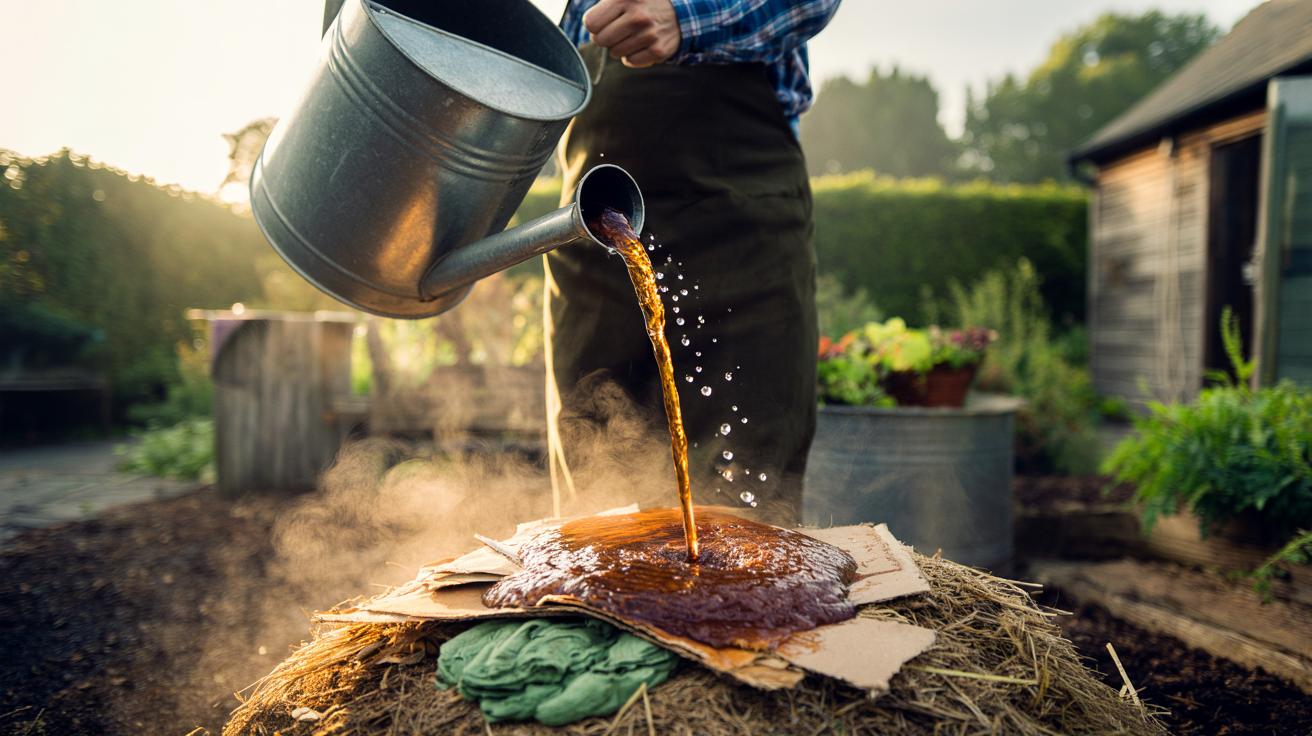
Mix 15–30 ml (1–2 tbsp) of unsulphured molasses per litre of warm water and stir until fully dissolved. Use a watering can with a rose to distribute evenly across layers as you build or refresh the heap. Aim for a moisture level akin to a wrung‑out sponge. Always aerate after feeding sugars—turn the heap or stab ventilation holes—so microbes get the oxygen they need. For a typical 1 m³ pile, 5–10 litres of solution is ample for one application; repeat once a week for two weeks if the structure remains open and temperatures fall back.
On day one, apply the solution and add a fluffy cap of straw or dry leaves to lock in heat while letting air circulate. Turn the heap within 24–48 hours to redistribute the hot centre. If the pile smells sweetly alcoholic or sour, you’ve gone too far. Stop feeding, add browns, and turn vigorously to restore aerobic conditions. Wormeries prefer lower doses; use half strength to avoid stressing the worms.
| Purpose | Dilution (ml/L) | Amount for 1 m³ | Frequency | Notes |
|---|---|---|---|---|
| Kick‑start cold heap | 30 | 8–10 L | Once | Turn after 24 h; add straw for airflow |
| Maintain heat | 15–20 | 5–7 L | Weekly × 2 | Use only if structure stays fluffy |
| Wormery top feed | 7–10 | Light sprinkle | Fortnightly | Never drench; keep bedding dryish |
Science, Timing, and What Two Weeks Really Delivers
Feed microbes sugar and they switch gear. Within 24–72 hours, a well‑built heap can rise to 55–65°C, the thermophilic zone where pathogens and weed seeds are neutralised. Enzymes chew through proteins and hemicellulose; volume drops as CO₂ and water vapour escape. Expect a visible slump, a richer colour, and a clean, earthy aroma rather than a sour note. As fast bacterial bursts taper, fungi thread through the mass, stabilising aggregates and extending the hot phase if oxygen is plentiful.
After two weeks, you won’t have finished compost in the strict sense, but you should see accelerated transformation: greens dulled and softened, crumb structure emerging, and fewer recognisable kitchen scraps. Many UK gardeners then shift into a curing stage of four to eight weeks, with occasional turns. The “explosion” promised by molasses water is best read as a controlled burn: a short, intense push that sets up a cleaner, quicker finish. The key variable is oxygen—heat without air equals trouble.
Common Pitfalls and How to Avoid Them
Overdo sugars and the heap can go anaerobic, turning slimy and smelly. Signs include sour or alcoholic odours and a greasy sheen. If this happens, stop feeding, fork in coarse browns (wood chips, twigs), and turn until the smell clears. Avoid drenching; moisture should sit around 50–60%. In warm spells, smaller, more frequent applications are safer. Molasses isn’t a fix for a poorly built heap; you still need a balanced mix of greens and browns and pieces no larger than a few centimetres for airflow.
Critters and flies can be drawn to sweet solutions on the surface. Bury food scraps, cap with dry carbon, and rinse watering cans to deter wasps. For wormeries, stick to half‑strength feeds and monitor closely—worms dislike sudden osmotic shocks. Protect waterways: keep heaps on soil, not paving, and prevent sugary run‑off. Remember: sugars accelerate whatever biology is present, good or bad—your job is to steer it with air, structure, and restraint.
The charm of molasses water is its simplicity: a kitchen‑cupboard tweak that turns up the microbial tempo without fancy kit. When paired with oxygen and structure, it delivers a rapid, clean burn that can shrink and sweeten a heap inside two weeks, setting the stage for quicker curing and finer tilth. The art lies in dosing lightly, reading the signals, and letting biology do the heavy lifting. Will you trial a measured sugar feed on your next heap—tracking heat, smell, and texture—to dial in the recipe that works for your garden and climate?
Did you like it?4.6/5 (28)