In a nutshell
- 🔬 A natural soap spray works via contact action, dissolving the waxy coatings of soft-bodied pests like aphids, whitefly, mealybugs and young scale; it doesn’t affect eggs, so thorough coverage is essential.
- 🧪 Simple recipe: 1 litre of soft water + 5–10 ml fragrance-free castile soap (up to 15 ml for stubborn infestations), avoiding detergents, perfumes and additives that can scorch foliage.
- ⏱️ Application: spray in early morning or evening, target leaf undersides to near runoff, and repeat every 3–4 days for two weeks; wipe heavy mealybug clusters first and keep pets away until leaves are dry.
- 🌿 Sensitivities: patch-test one leaf for 24–48 hours, go gentler on Calatheas, ferns, palms and succulents, and note that Monstera, Pothos, Ficus and spider plant are usually more tolerant.
- 📊 Quick guide: aphids (5–10 ml/L), spider mites (10 ml/L), mealybugs (10–15 ml/L), whitefly (10–15 ml/L); pair with sticky traps or light neem/water blasts to break the pest life cycle.
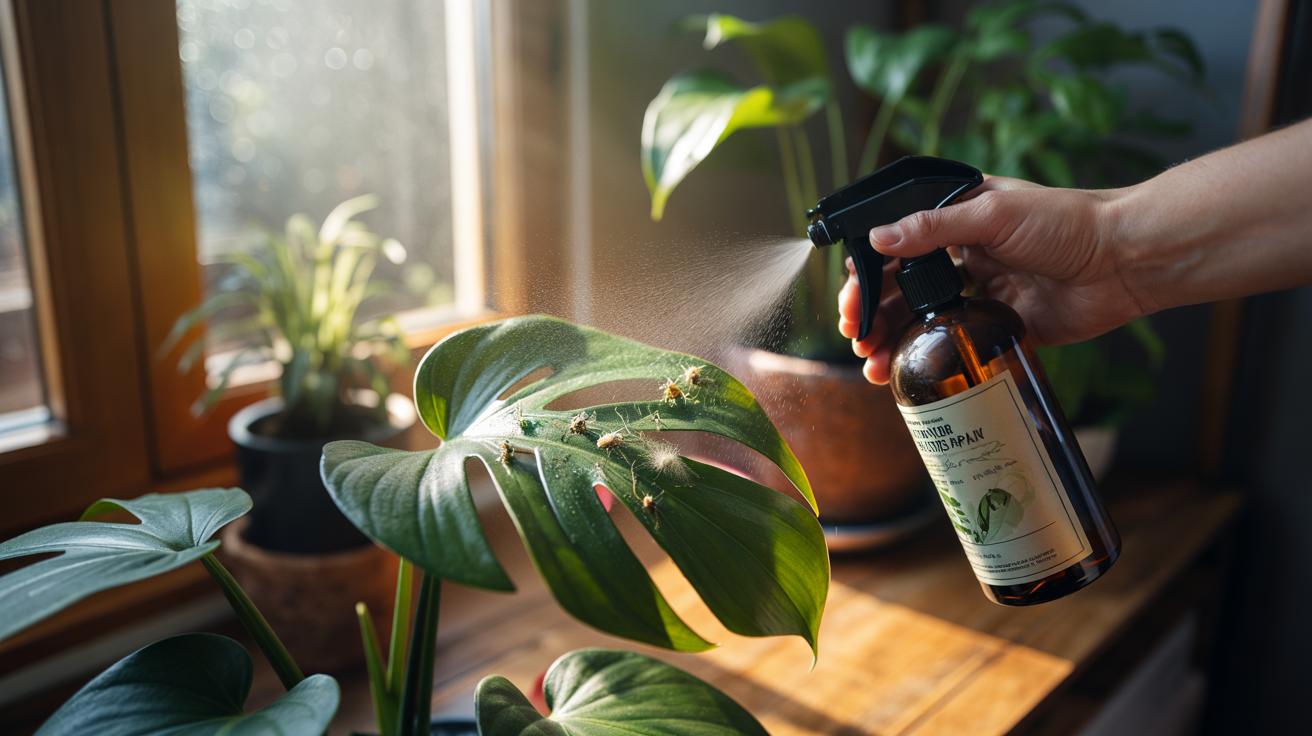
Houseplants bring calm, texture, and a lift in winter light. Then come the uninvited guests: aphids clustering on tender tips, spider mites stippling leaves, mealybugs nesting in crevices. You could reach for synthetics, but there’s a gentler fix hiding in the kitchen cupboard. A natural soap spray—made in minutes—can keep pests in check while preserving your indoor jungle’s delicate balance. It’s cost-effective. It’s simple. It works. Used correctly, this spray targets pests without lingering residues or harsh odours. Below, you’ll find how it works, how to mix it, and how to apply it like a pro.
How Soap Sprays Work on Pests
The magic is chemistry, not mysticism. True soap—potassium salts of fatty acids—disrupts the waxy coatings that protect soft-bodied pests. Contact is crucial. The spray dissolves that protective layer, causing desiccation and collapse in whitefly, aphids, mealybugs, and juvenile scale. It won’t pierce eggs, and it doesn’t “fume out” bugs. It’s not a repellent; it works on contact. That’s why coverage matters. Think leaf undersides, stems, and the crown where pests hide in plain sight.
When mixed properly, soap sprays leave minimal residue and break down quickly, making them a tidy option for flats and conservatories. No heavy chemical smell. No long withholding periods. Still, plants differ. Thin-cuticle species can spot or scorch if concentrations or timing are off. Always observe your plant’s response after the first treatment. For best results, treat consistently over several days, interrupting pest life cycles without overwhelming your plant with stress.
The Simple Recipe and Mixing Tips
Use a mild, fragrance-free liquid castile soap or a pure soap labelled for plants. In a clean trigger bottle, combine 1 litre of soft water (rainwater or distilled is ideal) with 5–10 ml (1–2 tsp) soap. For stubborn infestations, you can briefly step up to 15 ml (3 tsp) per litre—test first. Use pure soap, not detergent. Avoid products with degreasers, antibacterial additives, bright dyes, or heavy perfumes; they can scorch foliage. Label the bottle clearly and shake gently before each use.
Hard water common in many UK regions can reduce efficacy by binding soap. If your kettle furs up, use rainwater or filtered water. A tiny pinch of bicarbonate-free water softener isn’t necessary if rainwater is on hand. Want extra spread? Add 2–3 drops of a light vegetable oil, but proceed with care—oils increase the risk of leaf burn. Mix only what you’ll use within a fortnight, store cool and dark, and keep out of children’s reach.
Application Timing, Coverage, and Safety
Timing matters as much as recipe. Spray in the early morning or evening when light is gentle and temperatures steady. Bright midday sun plus soap can amplify heat on leaves. Work methodically: lift leaves, mist the undersides, and wet stems until just shy of runoff. Wipe heavy clusters of mealybugs with a cotton bud first; then spray. Repeat every 3–4 days for two weeks to catch new hatchlings. Eggs survive; your schedule breaks the cycle. Quarantine new arrivals and clean windowsills to limit reinfestation.
Protect fabrics and wood finishes; soap marks can be sneaky. Keep pets away until foliage is dry. If you garden on a balcony or patio, treat plants away from beneficial insects, then bring them back once dry. Avoid open flowers and tender new growth on sensitive species. Patch-test one leaf and wait 24–48 hours. If you see spotting, reduce concentration, rinse after two hours, and lengthen intervals between treatments.
Troubleshooting, Plant Sensitivities, and Alternatives
Some houseplants bruise easily. Fussy foliage such as Calatheas, some ferns, and young palms may mark if the mix is too strong or light is intense. Succulents can be sensitive too; use lighter solutions and dab rather than drench. Robust candidates include Monstera, Pothos, Ficus, and Spider plant (test anyway). If residues build, rinse with tepid water after a few hours. Less is more when leaves are thin, variegated, or newly unfurled. If pests persist, rotate with a plain water blast or a gentle neem-based product on alternate weeks.
Below is a quick-glance guide to typical pests, dilutions, and cadence. Use it as a starting point, not a rigid script; your microclimate, water hardness, and plant mix will nudge the dial. Keep notes. Adjust. That’s how you move from firefighting to prevention and keep the indoor ecosystem balanced without reaching for harsher chemistry.
| Pest | Visible Signs | Dilution (per litre) | Treatment Interval | Notes |
|---|---|---|---|---|
| Aphids | Sticky honeydew, curled tips | 5–10 ml soap | Every 3 days, 2 weeks | Wipe stems first for heavy clusters |
| Spider mites | Fine webbing, stippled leaves | 10 ml soap | Every 3–4 days, 2 weeks | Boost humidity; focus on undersides |
| Mealybugs | Cottony tufts in nodes | 10–15 ml soap | Every 4 days, 2–3 rounds | Dab with alcohol on stubborn pads, then spray |
| Whitefly | Cloud of tiny white adults | 10–15 ml soap | Twice weekly, 2 weeks | Pair with yellow sticky traps |
A natural soap spray is not a silver bullet, but it’s a sharp, reusable tool. Fast to mix. Honest about its limits. Used with thoughtful timing and light-touch housekeeping, it can keep most houseplant pests from ever gaining a foothold. Start mild, spray smart, and observe closely. You’ll save money, save leaves, and sidestep heavy chemicals in the place you breathe and sleep. What’s your current pest pinch point—and which plant will you trial with a carefully mixed litre this week?
Did you like it?4.6/5 (29)