In a nutshell
- 🔬 Tannins in used tea act as weak organic acids, gently lowering soil pH and improving iron/manganese availability for acid-loving plants like blueberries, azaleas, and camellias.
- 🧪 Use loose tea leaves in compost as a “green” input (balance ~1:2 with browns), apply a 5–10 mm leaf mulch, or make a mild “tannin tea” drench; pair with ericaceous compost for sustained acidity.
- ⚠️ Check bags for plastics and discard shells to avoid microplastics; skip milky or flavoured teas, note herbal infusions are low in tannins, and avoid using tea around lime-loving plants or in seed trays (caffeine risk).
- 📊 Target pH ranges: blueberries 4.5–5.5; azaleas/camellias ~5.0–6.0; test regularly and remember tea is a nudge, not a magic wand—use elemental sulphur for larger corrections.
- 🌧️ Prefer rainwater to prevent alkaline drift from hard tap water; keep a simple pH log and expect benefits such as stronger leaf colour, steadier nutrient uptake, and better fruit set.
Britain’s love affair with a proper brew leaves mountains of spent tea bags each week, and many gardeners are now putting them to work. The idea is simple: used tea introduces gentle acidity and organic matter to beds and containers, nourishing acid-loving plants while reducing waste. The secret weapon is tannins—naturally occurring polyphenols that can nudge soil pH lower and help unlock nutrients such as iron. Handled correctly, tea becomes a slow, steady soil conditioner rather than a blunt chemical fix. Here’s how the “tea bag compost trick” really works, the science behind tannins, and the safest ways to use those leftovers from your morning cuppa to get azaleas, blueberries and camellias thriving.
Why Tannins Help Acid-Loving Plants
Tannins in black and green tea are weak organic acids that gradually release hydrogen ions, gently lowering soil pH. This matters for ericaceous species—blueberries, rhododendrons, camellias, pieris—which evolved in acidic, low-lime habitats. In slightly alkaline ground, these plants struggle to take up iron and manganese, leading to tell-tale yellowing leaves (chlorosis). By contributing mild acidity and complexing metals, tannins make micronutrients more available in the root zone. Tea adds a soft, self-regulating acidity, not a shock dose, so it’s well suited to gradual care rather than emergency rescue.
Tea leaves also add fine organic matter that boosts microbial life and improves moisture retention around fibrous ericaceous roots. Think of tannin-rich amendments as part of a programme: target a pH around 4.5–5.5 for blueberries and roughly 5.0–6.0 for azaleas and camellias. Tea will not bulldoze a chalky soil into submission, but it can offset alkaline drift from hard tap water and keep containers or prepared beds comfortably acidic through the season.
How to Use Tea Bags and Leaves in Compost
Start by checking the bag. Some brands use plastic or heat-sealed mesh that won’t break down. If in doubt, slit the bag and add only the loose leaves to your heap, binning staples and synthetic casings. Avoid tea with milk or sugar, which invites pests and mould. Used tea leaves count as a “green” (nitrogen-rich) input, so balance them with “browns” like shredded cardboard and dry leaves at roughly 1:2 green-to-brown by volume. Mix thoroughly to prevent clumping and keep the heap just moist, not soggy.
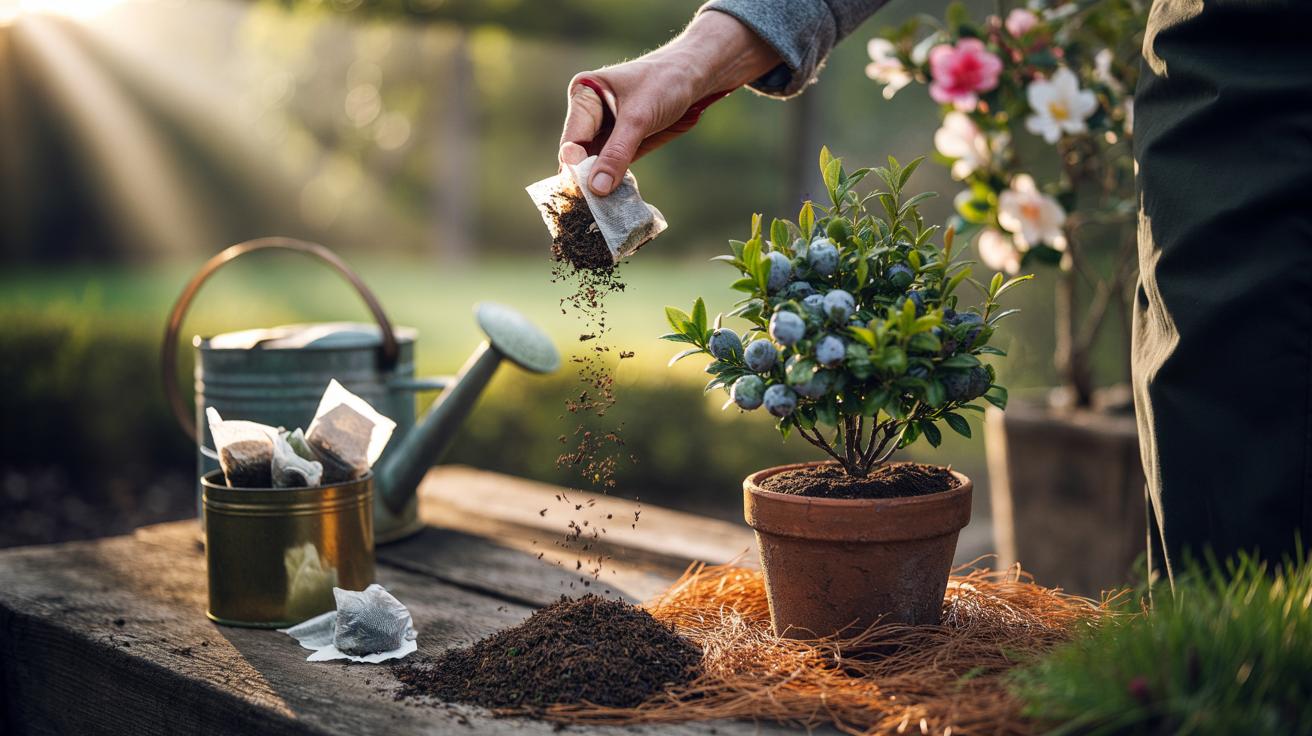
For direct feeding, sprinkle a thin 5–10 mm layer of spent leaves around ericaceous plants and cap with bark or pine needle mulch to suppress odours and hold moisture. You can also make a mild “tannin tea”: steep 5–6 used bags in 5 litres of rainwater overnight, cool, and drench the soil monthly in spring and summer. Never pour hot tea onto plant crowns or roots. Pair this with ericaceous compost in containers for a reliable pH buffer.
Mistakes to Avoid and Safety Notes
Don’t assume every teabag is compostable. Look for paper or PLA-marked bags, or empty the contents and discard the shell to avoid microplastics. Skip heavily flavoured blends: some contain oils and additives that can disrupt compost biology. Herbal infusions have fewer tannins, so they offer less acidifying effect; black or green tea is the workhorse here. Never add milky tea; dairy slows decomposition and attracts vermin.
Keep expectations realistic. Tea won’t fix a lime-rich clay on its own, and over-application can push pH too low in small pots. Test soil or compost monthly with a simple kit and aim for 4.5–5.5 for blueberries and 5.0–6.0 for azaleas and camellias. When in doubt, test the soil before you treat. Avoid dosing seed trays: residual caffeine may inhibit germination. And don’t use tea amendments around lime-loving plants such as lavender, clematis or most brassicas, which prefer neutral to alkaline conditions.
Quick Reference: pH Targets and Tea-Based Amendments
Use this table to match plants with pH targets and a sensible “tea tactic”. Remember, tea is a complement to ericaceous compost, pine-based mulches, and—if you need a bigger correction—elemental sulphur. Tea is a nudge, not a magic wand.
| Plant | Ideal pH | Tea-Based Amendment | Typical Frequency |
|---|---|---|---|
| Blueberries (in pots) | 4.5–5.5 | Spent leaves as thin mulch + tannin tea drench | Mulch monthly; drench monthly (growing season) |
| Azaleas/Rhododendrons | 5.0–5.8 | Compost enriched with tea leaves | Top up spring and late summer |
| Camellias | 5.0–6.0 | Tea-leaf mulch under bark | Twice per season |
| Hydrangea (blue) | 5.2–5.5 | Tea leaves + rainwater irrigation | Monthly check; adjust as needed |
| Pieris | 5.0–6.0 | Small amounts in compost mix | At potting and mid-season |
In hard-water areas, collect rainwater to prevent alkalinity creeping back; tap water rich in bicarbonates can undo your work. A handheld pH meter or colour-strip kit will tell you when to reapply. If your soil starts above pH 7, prepare a dedicated ericaceous bed or use containers and correct with sulphur before relying on tea to maintain. The reward is steadier nutrient uptake, stronger leaf colour and better fruit set on blueberries, backed by a light-touch, low-cost routine that turns kitchen waste into soil health.
The tea bag trick isn’t a silver bullet, but it is a clever, circular practice: you’re feeding the soil with mild organic acids and carbon, encouraging microbes that suit ericaceous roots, and nudging pH exactly where these beauties thrive. Used alongside rainwater, bark mulches and ericaceous compost, tea delivers a subtle but measurable lift in plant vigour. Keep a simple pH log, watch leaf colour, and adjust by season rather than by whim. Which of your acid-loving plants will you trial with tannin-rich amendments first, and how will you track the change in their soil pH over time?
Did you like it?4.6/5 (25)