In a nutshell
- 🌿 The vinegar-spray trick lowers leaf-surface pH, making conditions hostile for fungi like powdery mildew and helping lift sooty deposits.
- 🧪 Acetic acid is the active agent: acidity disrupts spore germination and enzyme activity, offering a tactical surface treatment, not a systemic cure.
- 🧴 Safe mix: use 5–10 mL per litre for prevention and 10–15 mL per litre for early outbreaks; spray in cool hours and avoid strong sun to prevent scorch.
- ⚠️ Precautions: test on one leaf, avoid sensitive plants (e.g., begonias, ferns), never use as a soil drench, and don’t mix with bicarbonate remedies.
- 🔄 Integrate with good care: prioritise air circulation, pruning, base watering, and balanced feeding; escalate to approved fungicides if infections advance.
British gardeners battling the white dusting of powdery mildew or the sooty film of mold often reach first for cupboard standbys. One low-cost, quick fix is the vinegar-spray trick, which relies on kitchen vinegar’s mild acidity to tip the balance against fungal growth on leaves. When used in the right dilution, it can help suppress spores and clean up early infestations without resorting to harsher chemicals. Always test on a single leaf before treating the whole plant. This approach is not a silver bullet, but it can be a useful part of integrated care for houseplants, herbs, roses, and veg, especially during humid spells that favour fungal flare-ups.
Why Vinegar Works Against Leaf Mold
Vinegar contains acetic acid, a weak acid that lowers the surface pH on leaves. Many common foliar fungi, including powdery mildew, germinate and spread best in a near-neutral microclimate. By shifting the leaf surface towards acidic conditions, vinegar can disrupt spore germination and the enzymes fungi use to colonise tissue. There’s also a detergent-like effect: a diluted spray can loosen biofilms and light sooty deposits, improving airflow across the leaf cuticle. Acidity is the mechanism; cleanliness is the bonus.
The science is simple but the practice is nuanced. Vinegar’s antifungal action depends on concentration, contact time, and the plant’s own tolerance. Too strong a mix risks phytotoxicity—the brown speckling and scorch that follow chemical stress. Too weak and results are fleeting. In trials and home use, gentle dilutions applied consistently reduce visible mildew and slow spread on many ornamentals. Think of vinegar as a tactical surface treatment, not a systemic cure. Pairing it with pruning, spacing, and dry watering habits gives the best results.
How to Mix and Apply a Safe Vinegar Spray
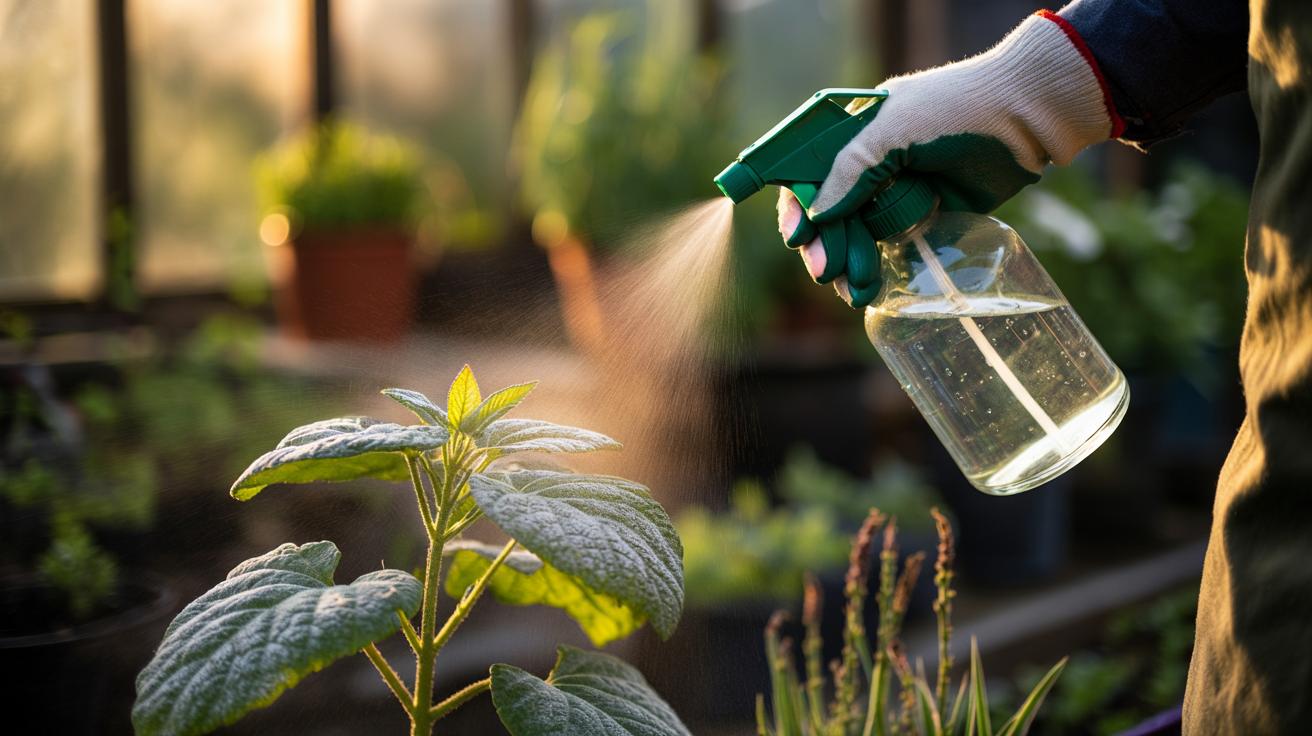
Start with standard 5% white vinegar. For prevention and light mildew, mix 5–10 mL per litre of water (about 1–2 teaspoons). For early outbreaks, 10–15 mL per litre can be used on robust foliage. Add a drop of mild liquid soap to improve coverage, shake, and strain if your bottle clogs. Spray in the cool of early morning or evening to avoid leaf burn, coating upper and lower leaf surfaces until just shy of runoff. Keep the nozzle fine; larger droplets can pool and mark tissue. Never apply during strong sun or heatwaves, and avoid open blooms on roses and tender annuals.
| Target | Vinegar Dilution (per litre) | Frequency | Notes |
|---|---|---|---|
| Preventive mist | 5 mL | Weekly in humid spells | Test first on one leaf |
| Early powdery mildew | 10 mL | Every 3–4 days, 2–3 rounds | Wipe off heavy patches |
| Stubborn spots (robust leaves) | 15 mL | Once, then reassess | High scorch risk on tender plants |
| Sensitive foliage | 2–3 mL | One trial spray | Increase only if no damage |
Do not use vinegar as a soil drench; it can harm roots and beneficial microbes. If rain follows application, repeat once leaves are dry. Avoid mixing with bicarbonate or milk remedies—the acid will neutralise the base, blunting both. Keep bottles labelled and out of reach of children and pets.
Plants, Problems, and Precautions
Many herbs (thyme, rosemary), hardy ornamentals (geraniums, ivy), and veg leaves (courgette, cucumber) tolerate low-strength vinegar well. Thin-cuticle plants—ferns, begonias, African violets, and some succulents—can mark easily, as can new growth on roses. Always begin with the weakest dilution and inspect after 24 hours. If you see bronzing or dry speckles, stop. When in doubt, treat one hidden leaf and wait. Remember that advanced infections, especially on crowded, shaded plants, will outpace any foliar wash; prune out the worst and dispose of debris in the bin, not the compost heap.
Vinegar can tidy sooty mold linked to sap-sucking pests, but it won’t fix the cause. Check for aphids, whitefly, and scale; treat those with targeted measures, then use vinegar to clear the residue so leaves can breathe. Indoor growers should mind overspray on varnished wood or limestone, which acid can dull. If you keep misting orchids or air plants, skip vinegar entirely; these species resent acids on their delicate tissues.
Integrating Vinegar Into a Wider Plant Health Routine
The best defence against mold is a drier, breezier microclimate. Space pots, thin congested stems, and water at the base in the morning so leaves dry by nightfall. Combine this with a light vinegar regimen during risk periods—warm days, cool nights, and high humidity. Air circulation is the hero; acidity is the helpful sidekick. Clean secateurs between plants to prevent transfers. Indoors, a small fan on low can transform mildew-prone corners. Good hygiene turns occasional sprays into rare ones.
Feed plants judiciously: soft, nitrogen-rich growth is mildew’s playground. Aim for balanced nutrition and steady light. If a case escalates despite care, step up to approved fungicides or bio-controls appropriate to the crop, following UK label guidance. Vinegar has a place as a first response, a cosmetic clean-up, and a preventive nudge—but it is not a replacement for cultural fixes. Keep a log of what you sprayed, when, and how leaves reacted; your own notes are the best guide for the next season.
Used thoughtfully, a vinegar spray can keep fungal films at bay, brighten tired leaves, and buy time while you improve airflow and pruning. Stay conservative with dilution, avoid hot, bright hours, and stop at the first sign of scorch. Pair the tactic with cleanliness and spacing and you’ll reduce outbreaks without heavy chemistry. As the weather turns humid again, what adjustments—dilution, timing, or plant placement—will you try to keep your leaves clean and resilient?
Did you like it?4.3/5 (30)