In a nutshell
- 🕒 A 10-second tongue scrape removes odour-causing biofilm and VSCs, delivering fresher breath that lasts all day.
- 🪥 How-to: place the scraper at the back, use 5–7 gentle strokes, rinse between passes; scrape first, then brush and floss; breathe through your nose to curb the gag reflex.
- 🛠️ Tools: stainless steel, copper, or plastic—pick a comfortable width; metal lasts longer, plastic is gentler; best used first thing in the morning.
- 🔬 Evidence: scraping cuts VSCs by up to 70–75%, outperforming toothbrush tongue-brushing (~30–45%); it works via mechanical removal, not masking.
- ⚠️ Limits: ongoing halitosis may indicate gum disease, dry mouth, tonsil stones, or sinus/reflux issues—seek dental or GP advice.
There’s a simple, startlingly fast ritual that can transform your morning routine: a 10-second tongue scrape. In the time it takes to stir your tea, you can clear the odour-causing film that clings to the back of the tongue and quietly fuels office-hour embarrassment. Unlike mints and mouthwash, which perfume the problem, scraping removes it at source. Dentists call the culprit a biofilm—a sticky layer where anaerobic bacteria produce volatile sulphur compounds (VSCs). Strip it away and you win the day. The method is almost insultingly simple, costs pennies, and, done right, can keep breath fresh until lights out. Here’s how it works, what to use, and the science behind it.
Why a 10-Second Scrape Works
The back third of the tongue is a rugged landscape of papillae that traps food debris and dead cells. In that oxygen-poor niche, bacteria thrive and churn out VSCs—the rotten egg and cabbage notes people recognise as halitosis. Brushing and rinses miss much of this terrain. Scraping dislodges the film physically, lowering the bacterial load and the sulphur gases in one swift move. That’s why results feel immediate. Do it once in the morning and you remove the substrate that would otherwise feed odour all day.
There’s a second benefit. A clean tongue surface improves saliva flow over the tissue, which naturally buffers acids and helps maintain a healthier oral microbiome. Think of the scraper as a squeegee for your mouth: a couple of passes from back to tip and the surface is reset. Ten concentrated seconds is typically enough, particularly if you focus on the posterior tongue where the smell originates.
How to Do the 10-Second Tongue Scrape
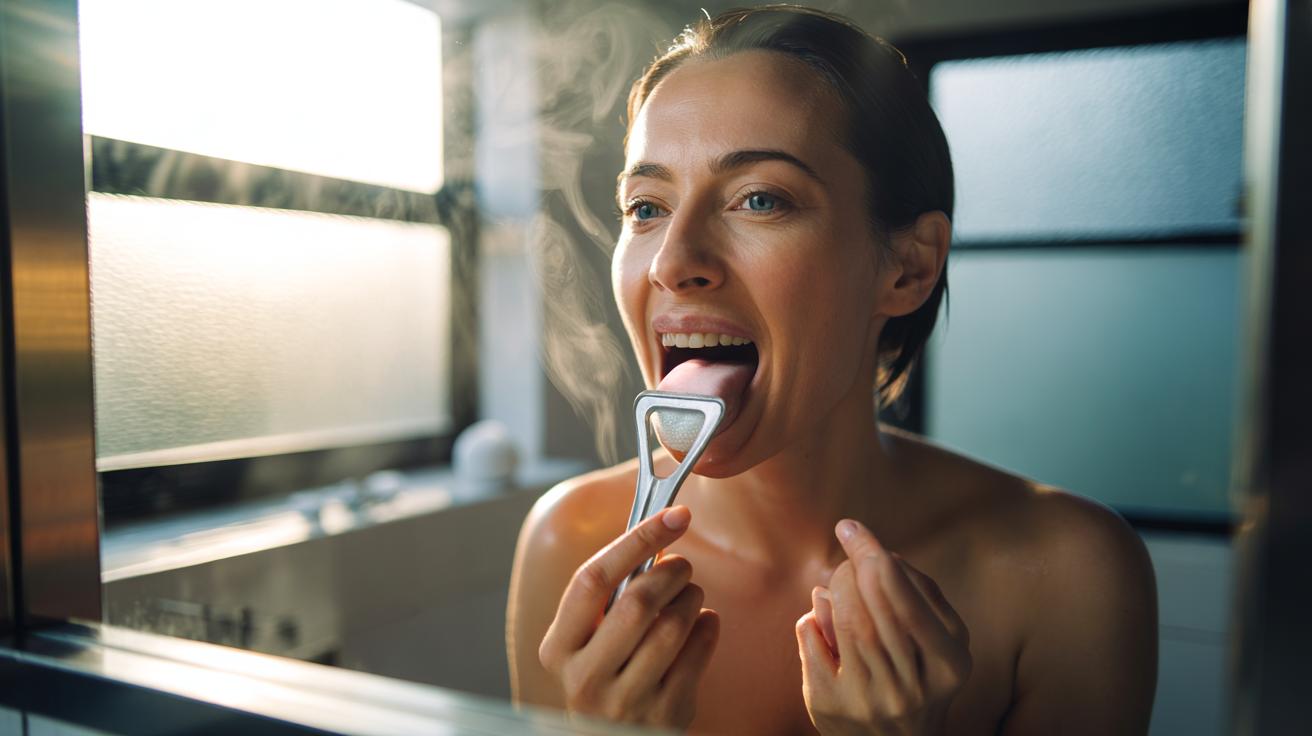
Stand before a mirror, extend your tongue, and place a tongue scraper gently at the back—far enough to reach the textured zone, not so far you gag. Press lightly and draw the scraper forward in a smooth, steady pass. Rinse the tool under the tap and repeat five to seven times, adjusting your angle to skim across the centre and sides. Breathe through your nose and relax your shoulders; tension triggers the gag reflex. The whole routine takes about 10 seconds once you find your rhythm.
Avoid force; red streaks or soreness mean you’re pressing too hard. If you’re new to it, try placing a teaspoon upside down as a temporary tool, then upgrade to a purpose-made scraper. After scraping, spit and rinse your mouth, then brush and floss as usual. Order matters: scrape first to remove the sludge, then brush to polish. Finish with water or alcohol-free mouthwash if you like, but the heavy lifting is done by the scraper.
Choosing the Right Tool and When to Use It
Most scrapers are simple loops or arcs made from stainless steel, copper, or moulded plastic. Metals tend to be firmer and last longer; plastics are gentle and travel-friendly. Pick a width that matches your tongue and a shape you find comfortable; what matters most is that you’ll use it daily. If a tool feels awkward, you won’t reach the crucial back third effectively. As for timing, the gold standard is first thing in the morning before food or coffee, when overnight build-up is at its worst. Many people add a quick evening pass if dinner was garlicky or wine-heavy.
Consistency beats perfection. One brisk session can deliver all-day freshness for most healthy mouths, particularly when paired with good oral hygiene and hydration. Replace plastic scrapers when edges nick or warp. Metal versions can last for years with a simple rinse and dry. Children and people with a strong gag reflex may prefer a narrower head and gentler pressure, building tolerance gradually over a week.
| Tool | Pros | Typical Cost (UK) | Care |
|---|---|---|---|
| Stainless steel scraper | Durable, firm control, easy to sterilise | £6–£12 | Rinse, dry; occasional soap wash |
| Copper scraper | Natural antimicrobial surface, sturdy | £7–£14 | Rinse, dry; patina is normal |
| Plastic scraper | Lightweight, gentle, travel-safe | £3–£8 | Rinse; replace every few months |
What Science Says About Halitosis and Scraping
Independent trials consistently show that tongue cleaning reduces organoleptic (smell) scores and suppresses VSCs. Studies suggest a scraper can cut sulphur compounds by up to about 70–75% immediately after use, while brushing the tongue with a toothbrush achieves roughly 30–45%—a meaningful difference on a first date or a pitch. The mechanism is mechanical removal of the odour-producing biofilm, not chemical masking. That’s why results last: with the fuel stripped away, bacteria take time to rebuild the layer.
Scraping isn’t a cure-all. Persistent bad breath can point to gum disease, dry mouth from medications, tonsil stones, sinus issues, or reflux. If halitosis lingers despite diligent scraping, brushing, interdental cleaning, and hydration, see your dentist or GP for assessment. Used alongside twice-daily brushing with fluoride toothpaste and daily flossing or interdental brushes, the 10-second scrape is a low-cost, high-impact habit—precisely the sort of pragmatic fix British dentistry quietly champions.
This tiny ritual rewards consistency: a clean tongue, calmer nerves, and the confidence to lean in close. Keep a scraper near the toothbrush, make it the first move each morning, and reserve a second pass for curry nights or coffee marathons. Ten seconds, zero faff, genuine results. After a week you’ll notice flavours sharpen and breath stay steady from commute to commute. Will you give the 10-second tongue scrape a place in your routine and see how far one small habit can carry your day?
Did you like it?4.5/5 (26)