In a nutshell
- 🔥 Act in the first minute: use cool running water to create a safe heat sink that rapidly lowers tissue temperature and pain.
- ❄️ Never apply ice directly: shock cooling can cause vasoconstriction and additional tissue injury—steady, moderate cooling is safer and more effective.
- 🫧 Prevent blisters: prompt cooling slows enzyme activity and inflammation, limiting depth progression; don’t pop blisters, cover and monitor for infection.
- 🧯 Practical steps: move from heat source, remove rings/clothes, cool for up to 20 minutes, keep the rest of the body warm, then cover with cling film or a sterile non-fluffy dressing.
- 🚑 Seek urgent medical help for large/deep burns or those on the face, hands, genitals, or joints, and for chemical/electrical injuries; avoid ointments and home remedies initially.
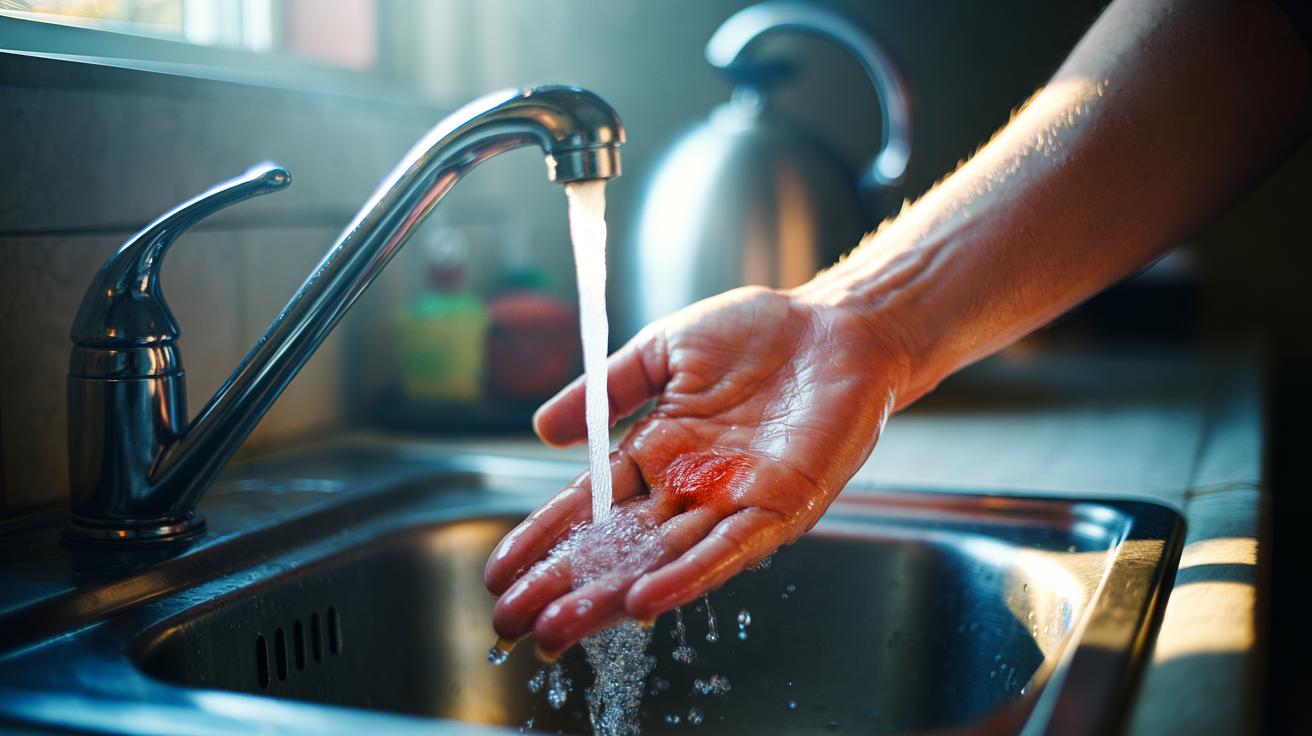
When skin meets a hot pan, curling tongs, or scalding tea, the tissue damage continues even after contact ends. What you do in the first minute shapes whether a small red patch becomes a painful blister. Many people reach for an ice cube, assuming colder is better. Yet current UK first-aid guidance is clear: never place ice directly on a burn. The best early intervention is cool running water, which draws out residual heat and limits injury. Here’s the science behind why cold stops damage so quickly, how to apply it safely, and the precise steps that make the difference between a minor mishap and a dressing that lingers for days.
The Physics of Heat and Why Seconds Matter
Burns are a race between heat diffusion and your ability to remove energy from the skin. Above roughly 45°C, proteins in the epidermis begin to denature; the hotter and longer the exposure, the deeper the injury. In the first moments after contact, residual heat continues to conduct into surrounding tissue. Rapid cooling creates a “heat sink,” lowering tissue temperature and slowing cellular disruption. Every second you reduce temperature, you reduce the radius of damage.
Running water excels because it constantly replaces warmed fluid at the skin interface, accelerating heat transfer away from tissue. By contrast, an ice cube can overshoot the target, risking cold-induced vasoconstriction and additional tissue injury, particularly in thin or fragile skin. Pain signals also ease as nerve endings are cooled, helping the casualty keep the area under the tap long enough for effective first aid. The goal is steady heat removal, not shock cooling.
In short, the physics favours consistent, moderate cooling over extremes. Targeted temperature reduction in the first minute mitigates deeper burns, reduces inflammatory signalling, and cuts the odds of blistering.
Cold Application: What Helps, What Hurts
The gold standard is cool or lukewarm running water over the burn for up to 20 minutes. This safely wicks away heat and preserves the skin’s microcirculation. Do not use ice directly; it can cause vasospasm, worsen tissue injury, and increase pain once removed. Avoid greasy ointments and home concoctions that trap heat, and remove rings, watches, or tight clothing before swelling sets in. For infants, older adults, or large burns, beware chilling the person—keep the rest of the body warm while cooling only the burn.
If a tap is unavailable, a clean, cool compress is a useful stop-gap, refreshed frequently to maintain heat transfer. Commercial burn gels can soothe, but they are secondary to water in the first minute. After cooling, cover loosely with cling film or a sterile, non-fluffy dressing. Seek urgent medical help for deep, large, facial, airway, chemical, or electrical burns.
| Method | Main Benefit | Key Risk/Note |
|---|---|---|
| Cool running water | Best heat removal, lowers tissue damage | Protect from overall chilling |
| Ice applied directly | Intense cold | Do not use: may cause further tissue injury |
| Cold compress (wrapped) | Practical when no tap available | Refresh often; don’t press hard |
| Ointments/butter | Feels soothing | Traps heat; not recommended initially |
Preventing Blisters: The Role of Rapid Cooling
Blisters form when thermal injury disrupts the junction between the epidermis and dermis, and inflammatory mediators draw fluid into the gap. By cooling promptly, you slow enzyme activity and capillary leakage, curbing the cascade that produces a tense, painful bubble. Early temperature control can keep a superficial burn from progressing in depth, preserving intact skin that acts as a natural dressing.
Clinical research supports this: immediate cooling reduces pain scores, limits oedema, and is associated with better healing and fewer interventions. Think of cooling as damage control—you are stabilising the zone of injury before it spreads. While blisters can still occur, they are often smaller and easier to manage if the burn is cooled effectively. Do not deliberately burst blisters; intact roofs protect against infection. If a blister opens, keep it clean, cover with a sterile, non-stick dressing, and watch for signs of infection such as increasing redness, warmth, or pus.
Remember, the aim is to preserve viable tissue and shorten recovery time. Strategic cooling delivers that advantage.
Practical Steps in the First 60 Seconds
Act fast, but act right. Move the person away from the heat source and check for hazards. Start cooling the burned area under cool running water immediately—ideally within seconds—and keep it going. If water pressure is uncomfortable, let it flow gently; constant turnover matters more than force.
Strip off rings, bracelets, watches, or tight clothing near the burn to prevent constriction as swelling develops. Avoid adhesives over the wound. If water is unavailable, apply a clean, cool cloth and refresh it frequently until you can get under a tap. Never apply ice or iced water directly to the skin, and do not use creams, toothpaste, or butter.
Once initial cooling is underway, consider pain relief following the packet instructions, and protect the rest of the body from getting cold. After cooling, cover the area loosely with cling film or a sterile dressing. Seek professional advice if the burn is larger than the casualty’s palm, involves the face, hands, genitals, joints, or is deep, chemical, or electrical in nature.
In a burn, time and temperature are the variables you can control. The science is unambiguous: steady, cool running water in the first minute removes heat, limits tissue death, and lowers the odds of a blister that slows life for days. Ice is not the shortcut it seems; it risks turning a simple burn into a more complex wound. Will you rethink the reflex to grab the ice tray—and make a tap your first treatment tool the next time heat meets skin?
Did you like it?4.6/5 (25)