In a nutshell
- 🧵 Choose quality towels: GSM 500–700 and long-staple cotton; avoid rigid borders; prep with low detergent, a vinegar reset, and bicarbonate of soda; shake before drying.
- 🚿 Wash smart at 40°C cotton, load two-thirds, spin 800–1000 rpm, use minimal detergent; consider water softening or a powdered detergent in hard‑water areas.
- 🔥 Dry for loft: medium heat with wool dryer balls (or clean tennis balls), stop at “just dry,” add a 5‑minute cool‑down; line‑dry plus short tumble to reduce stiffness.
- 📐 Fold hotel‑style: classic tri‑fold along the length, then book fold; follow the nap, tuck labels, aim for 22–25 cm shelf width; tweak for bath sheets and hand towels.
- 🗄️ Store like pros: ventilated cupboard, stacks ≤ six, finished edge out, first‑in, first‑out rotation; manage humidity with dehumidifier or silica gel, avoid plastic bins.
Hotel bathrooms make a simple towel feel like a treat: lofty, springy, and folded so neatly you hesitate to touch it. You can recreate that effect at home without any secret industrial kit. It’s a blend of fibre choice, precise laundering, and a disciplined fold that guards the pile. Get the basics right and the plushness lasts, not for days, but for weeks. The trick is preventing compression at every stage, from wash drum to cupboard shelf. Here’s how to win back that spa-level bounce and a presentation that winks “five-star”.
Choose the Right Towels and Prep Them
The journey to long-lived fluff starts before the fold. Select towels with a medium-to-high GSM (500–700) and long-staple cotton such as Turkish or Egyptian. These fibres loop generously, trap air, and recover well after pressure. Avoid decorative borders that act like rigid belts; they crease and crush the pile. White or light colours also let you launder a touch hotter when needed, a quiet boost to freshness. Quality loops are your insurance policy against flat, weary towels.
Preparation matters. Wash new towels to remove mill coatings. Use less detergent than you think—too much leaves residue that stiffens the nap. As a monthly reset, add a cup (250 ml) of clear vinegar in the rinse to dissolve build-up and restore softness. Skip liquid fabric softener; it coats fibres and flattens them. Opt for a tablespoon of bicarbonate of soda in the wash when odours linger. Before drying, snap and shake each towel briskly to lift the loops. No silicone softeners; no compromise on fluff.
Wash and Dry for Lasting Loft
Load the drum loosely—about two-thirds full. Choose 40°C with a standard cotton programme and a moderate spin (800–1000 rpm). Excess heat and aggressive spins beat air out of the pile. A tiny detergent dose is key for loft; residue is your enemy. If water is hard, consider a softening unit or a powdered detergent with built-in softeners. Clean fibres breathe, and breathing fibres bounce.
Drying defines texture. Tumble on medium with wool dryer balls (or two clean tennis balls) to separate layers and circulate warm air. Stop when towels are just dry—no more. Over-drying scorches softness. If you prefer line-drying, finish with 10 minutes in the dryer to break stiffness. Always cool briefly in the drum before removing. Fold only when fully dry—trapped moisture flattens fast and invites mustiness.
| Step | Setting | Why It Works |
|---|---|---|
| Wash | 40°C, low detergent | Preserves fibres; reduces residue that mats loops |
| Spin | 800–1000 rpm | Removes water without crushing pile |
| Dry | Medium heat + dryer balls | Injects air; prevents clumping and hard edges |
| Finish | Cool-down 5 minutes | Sets loft and reduces creasing before folding |
Master the Hotel Tri-Fold
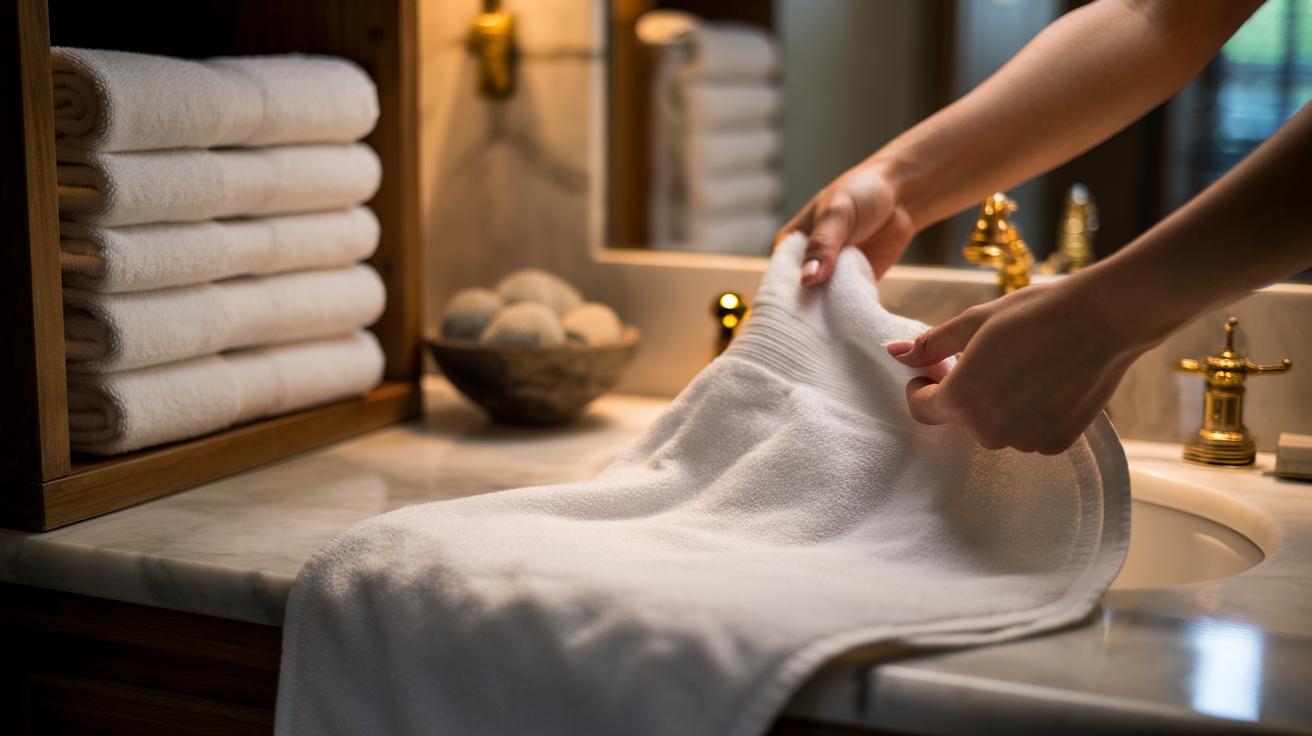
Lay the towel flat with the decorative side down. Smooth gently; don’t press. Fold one long side in by a third, then the other long side over it—this is the classic tri-fold. You now have a long, neat strip with clean edges hidden inside. Fold the strip in half, then in thirds to create a compact “book” with a finished edge facing out. Keep hands light. Always follow the nap of the terry; folding against it crushes loops and telegraphs creases.
Consistency breeds that hotel look. For shelves 30–35 cm deep, aim for a final folded width of 22–25 cm; adjust the thirds slightly to hit your target. For bath sheets, add one extra fold across the short side before the book fold. For hand towels, keep the tri-fold but finish in half rather than thirds to avoid bulk. Tuck labels inward so nothing snags. Uniform dimensions mean even pressure, which keeps the pile standing proud for weeks.
Store Like Housekeeping Professionals
Storage makes or breaks fluff. Reserve a ventilated cupboard and avoid cramming. Stack no higher than six bath towels; beyond that, weight compacts the bottom layers. Align the finished edge—the “spine”—outwards for a tidy, accessible face. Leave a finger’s width of air between stacks if space allows. Rotate on a simple first-in, first-out rule so no towel becomes the permanent cushion for the rest. Airflow beats aroma sachets; let the cupboard breathe.
Humidity sabotages softness. Keep the bathroom door open after showers, or stash towels in a drier hallway cupboard. If moisture is persistent, add a passive dehumidifier or silica gel canister on the shelf. Avoid plastic bins; they trap damp and compress fabric. Instead, line shelves with cotton or linen to wick stray moisture. When transporting from dryer to cupboard, cradle rather than hug—squeezing expels the very air you’ve worked to add. Light handling preserves loft long after laundry day.
Once you’ve nailed fibre choice, gentle laundering, the tri-fold, and breathable storage, you’ll notice a quiet magic: towels that feel newly laundered long after the wash. The bathroom looks sharper, the daily routine a notch more indulgent. Small rituals, big dividends. Think of the fold as a protective case for the fluff inside. Ready to put your linen cupboard on hotel setting—and which tweak will you try first: the dryer balls, the vinegar reset, or the precision fold?
Did you like it?4.4/5 (27)