In a nutshell
- 🧊 The freezer trick works because wax contracts more than glass when chilled, breaking the bond so residue pops off cleanly with minimal effort.
- 🧪 Follow a precise method: freeze jars for 30–60 minutes, twist the wax disc with a plastic card, wipe residue with cooking oil or alcohol, and let glass acclimatise before washing.
- 📊 Compared methods: the freezer trick = low risk for most jars; warm water suits soft soy blends (watch thermal shock), while a hairdryer is quick but messy.
- ⚠️ Safety essentials: avoid metal tools and boiling water, protect painted or gilded glass, refreeze to loosen stubborn wick tabs, and equalise temperature to prevent cracks.
- ♻️ Smart finishes: deodorise with bicarbonate or vinegar, dry with microfibre, then refill or repurpose jars for storage, diffusers, or gifts—clean glass burns better and looks curated.
There’s a domestic hack so simple you’ll kick yourself for not trying it sooner: use the cold. The so-called freezer trick turns stubborn candle remnants into brittle flakes that lift from glass in seconds. No boiling water. No scorched fingers. Just a little patience and a clean finish. For Britons who love a scented jar on a winter evening, this method is a lifesaver when it’s time to repurpose those vessels. It’s quick, tidy, and surprisingly satisfying. Cold makes wax contract away from glass, and that change is your ticket to a spotless jar. Here’s how it works and how to do it without a scratch.
Why the Freezer Trick Works
At the heart of the freezer trick is a neat bit of physics: wax shrinks more than glass when chilled. That differential causes the bond between residue and vessel to fail, letting the wax pop off or slide out in one clean piece. You’ll often hear a faint tick as it loosens. It’s contraction, not force, that does the heavy lifting. Paraffin, soy, and beeswax all contract, though paraffin tends to release fastest because it becomes more brittle at low temperatures. The result? Rapid removal without abrasives or heat stress.
Glass is tough but not invincible. Thermal shock is the enemy, not the cold itself. Because you’re cooling both wax and glass slowly, the stress is manageable. The payoff is dramatic: residue turns crumbly, wick tabs lift with a nudge, and perfumed oils stop smearing. For vintage jars or coloured glass, the method is gentle enough to preserve finishes, logos, and that pleasing clarity collectors prize.
Step-by-Step Method for Pristine Glass
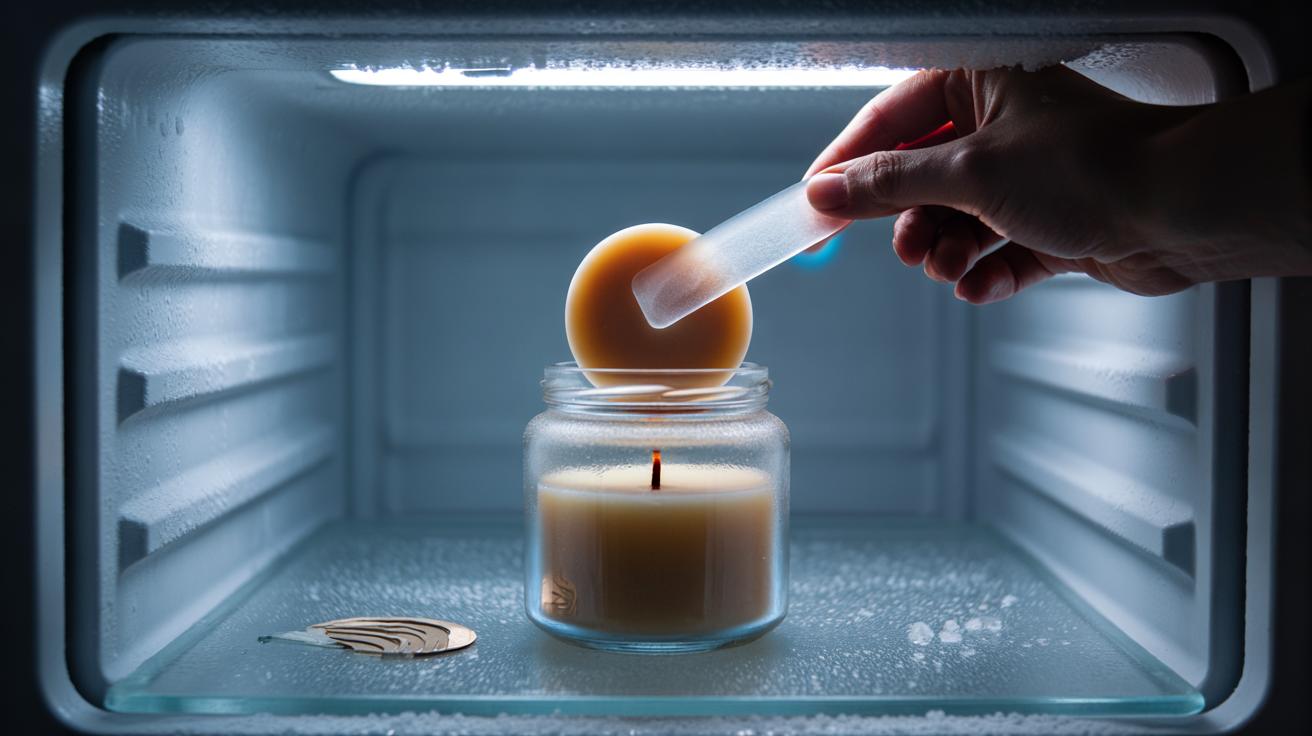
Start with a cool jar. Snuff the candle and let it rest to room temperature. Remove the lid and any loose debris. Place the jar upright on a small tray or plate (to catch flakes) and slide it into the freezer. Wait 30–60 minutes; thicker wax pools may need up to 90. Remove the jar and tap the base lightly with your palm. Twist the wax disc with a plastic card or silicone spatula. Never pry with metal—you’ll scratch the glass and risk chips. Most wax lifts cleanly; stubborn spots will flick off with minimal pressure.
Deal with residue next. Dab a cotton pad with a drop of cooking oil or rubbing alcohol, then wipe the film. Wash the glass in warm, soapy water and let it air-dry on a rack. Avoid sudden temperature jumps. Let the jar acclimatise before introducing hot water, particularly if it’s thin-walled or decorative. Pop the loosened wick tab using a thumbnail or plastic scraper. Finish with a microfibre cloth for a streak-free gleam. You’ll have a jar ready for storage, refill, or a new life as a tidy caddy.
| Method | Time | Best For | Risk Level |
|---|---|---|---|
| Freezer Trick | 30–60 mins | Most glass jars; thick wax discs | Low |
| Warm Water Bath | 10–20 mins | Soft soy blends; light residue | Medium (thermal shock if rushed) |
| Hairdryer (Low Heat) | 5–10 mins | Thin film; precision areas | Medium (messy, hot wax) |
Safety Notes, Materials, and Pitfalls to Avoid
Use common-sense kit: a tray, a plastic scraper, kitchen roll, and mild washing-up liquid. If fragrance oils have pooled, lay a sheet of paper towel beneath the jar before freezing to catch drips later. Avoid boiling water shocks and sharp tools; they’re the quickest routes to clouded glass and chips. Painted or gilded vessels deserve extra care—test a hidden corner with oil on a cotton bud before heavy cleaning. When handling from the freezer, grasp the base; condensation can make the glass slippery.
Don’t bin the wax just yet. Collect flakes into a silicone mould for firelighters or stash them for a future melt pot. Watch for glued wick tabs that cling; a five-minute refreeze often loosens adhesive. If labels leave gummy patches, switch to a citrus adhesive remover sparingly, then rinse. The one big no-no: heating a cold jar straight away. Always let temperature equalise, especially with thin soda-lime glass, which hates extremes. Patience preserves both clarity and safety.
Finishing Touches and Smart Reuse
Once clean, banish lingering odour by swirling a teaspoon of bicarbonate of soda with warm water, then rinse. For cloudy film, a splash of white vinegar works wonders. Dry with a lint-free cloth to avoid fibres. If you plan to refill, measure the internal diameter and pick an appropriately sized wick; the old wax ring is a handy guide. Clean glass burns better and smells truer, because residue no longer interferes with airflow or fragrance throw. That matters if you’re blending your own scents at home.
Not refilling? Repurpose. Turn squat jars into desk pots for bulldog clips, or tall ones into reed diffuser sleeves. Pantry fans love uniform glass for spices; add labels for a crisp, editorial look. For bathrooms, decant cotton buds or bath salts—elevated, orderly, fuss-free. The secret is consistency: matching lids, matching labels, minimal visual noise. The humble freezer trick isn’t just a cleaning hack; it’s a gateway to neat, design-forward storage that costs nothing and looks curated.
There you have it: a clean jar, no scalding, no scratches, no fuss—just basic physics and a dash of patience. The freezer trick suits busy homes, collectors, and anyone who hates mess. It’s kinder to glass, lighter on effort, and tidy enough for a quick reset after dinner. Cold does the work so you don’t have to. What will you do with your freshly cleared vessels—refill them with a new blend, reorganise a shelf, or turn them into gifts that look shop-bought but cost pennies?
Did you like it?4.5/5 (24)