In a nutshell
- 🧪 The science: citric acid drops pH to ~2–3, disrupts bacterial energy balance, chelates metals, and loosens biofilms; peel oils aid cleaning, cutting viability of E. coli, Salmonella, and Listeria with proper contact time.
- 🍋 Practical method: Scrape and rinse, add coarse salt or bicarbonate of soda, rub with a lemon half, rest 5–10 minutes, then rinse and dry upright; finish wooden boards with food-safe mineral oil.
- 🛡️ Safety limits: Lemon cleans but isn’t disinfection; after raw meats, run plastic boards through the dishwasher or apply ~1,000 ppm chlorine (about 1:50 thin bleach) for 5 minutes, then rinse and dry.
- 🧰 Care by material: Adjust technique for hardwood, bamboo, plastic, and composite; avoid acids on porous stone; check for deep grooves and sand or retire damaged boards.
- 🌿 Sustainability: A low-cost, biodegradable option that cuts VOCs and keeps odours at bay, best used as a routine maintenance clean between heavier sanitising steps.
Reach for a lemon and a battered chopping board and you’ve got a quietly effective cleaning duo. The sharp bite of citric acid cuts through greasy residues, lifts lingering odours, and knocks back common kitchen bacteria without harsh chemicals or artificial fragrances. A sliced lemon, rubbed across the grain of wood or the etched surface of plastic, spreads natural acids and aromatic oils that do real work. What feels like an old-fashioned trick is grounded in modern microbiology, not myth. This is a low-cost, low-waste method that suits everyday maintenance, and with a few practical tweaks, it can keep boards fresh between deeper cleans while respecting materials and food safety.
The Chemistry Behind Citric Acid’s Antibacterial Power
At the heart of a lemon’s cleaning prowess is citric acid, a weak organic acid that creates a low pH environment hostile to many microbes. Most kitchen pathogens thrive near neutral pH; push that down towards 2–3 and cells face “acid stress”. Hydrogen ions flood bacterial membranes, collapsing the proton motive force that powers essential processes. Citric acid also acts as a chelating agent, binding calcium, magnesium, and iron. By starving enzymes of these ions and loosening the matrix that protects biofilms, it makes bacteria easier to dislodge.
Lemon peel contributes trace essential oils such as limonene that behave like mild surfactants, helping to break surface tension and lift grime. In lab studies, pathogens including Escherichia coli, Salmonella, and Listeria show reduced viability after exposure to citric acid, especially with adequate contact time. Citric acid doesn’t scorch bacteria on contact; it stacks the conditions against them until they can no longer maintain balance. That combination—acidification, chelation, and gentle solvent action—explains why lemon performs far beyond its fragrance.
How to Use Lemon Slices to Clean and Deodorise Boards
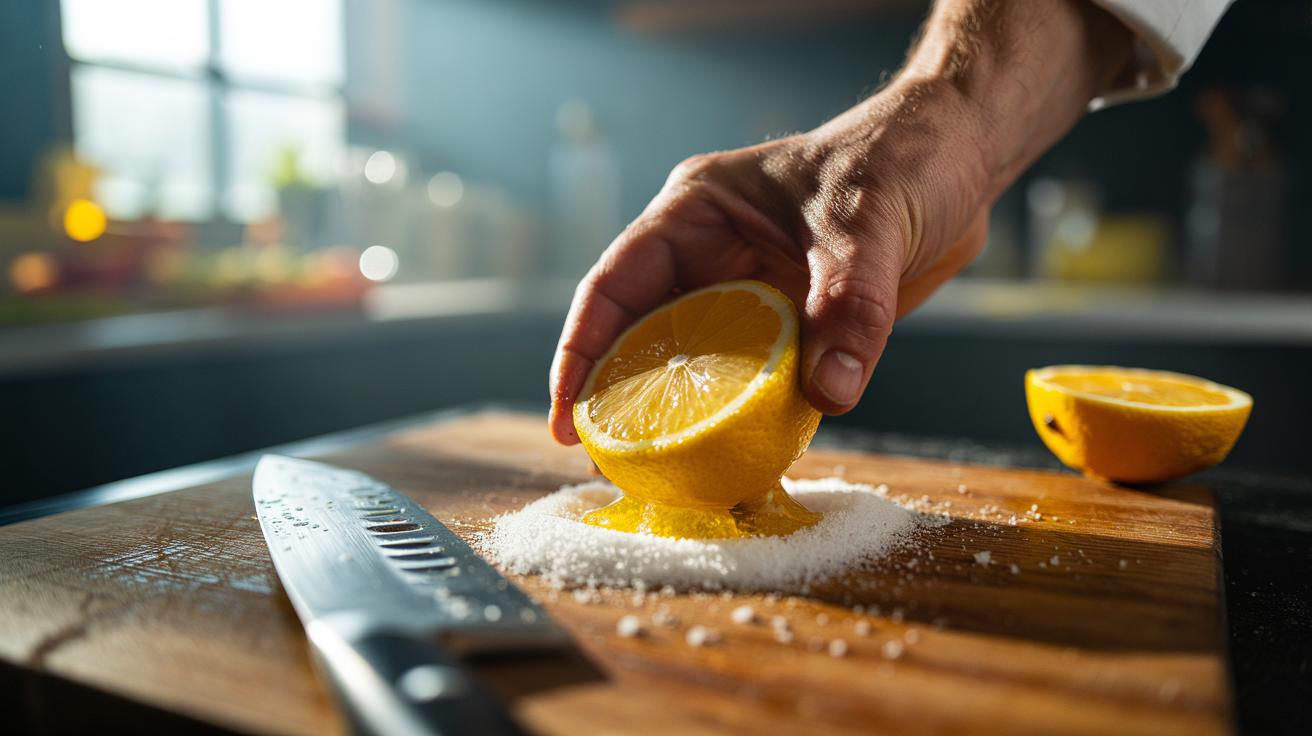
Begin by scraping away crumbs and rinsing the board with hot, soapy water. Sprinkle the surface with coarse salt or bicarbonate of soda if you need extra abrasion, then rub a fresh lemon half across the board, squeezing as you go to flood the grain or knife scars. Let the juice sit for 5–10 minutes to allow the low pH to work, then rinse thoroughly and dry upright to prevent warping. For wooden boards, finish with a light coat of food-safe mineral oil once fully dry. The key is steady, routine use: lemon excels as a maintenance cleaner between heavier disinfecting jobs.
| Board Type | Suggested Method | Contact Time | Aftercare |
|---|---|---|---|
| Hardwood (maple, beech) | Lemon rub with salt for abrasion | 5–10 minutes | Rinse, air-dry, oil monthly |
| Bamboo | Lemon rub, minimal water | 5 minutes | Dry promptly, light oiling |
| Plastic | Lemon rub, optional bicarb | 10 minutes | Dishwasher-safe for deep clean |
| Composite | Lemon rub only | 5–7 minutes | Rinse and stand to dry |
Avoid prolonged soaking, which swells wood and encourages splits. Don’t use lemon on porous stone counters beneath the board; acids can etch marble and limestone. If onion or fish smells persist, repeat the lemon treatment or follow with a hot-water wash, then dry thoroughly. Drying is non-negotiable: lingering moisture, not the board material, is the usual culprit behind stubborn odours and microbial regrowth.
Safety, Limitations, and When to Disinfect Properly
It’s important to separate cleaning from disinfection. Lemon is a superb everyday cleaner that reduces microbial load, but it isn’t a registered biocide. After high-risk tasks—cutting raw poultry or handling juices from minced meats—use a proven method: a dishwasher cycle for plastic boards, or a food-safe disinfectant on surfaces that can tolerate it. For a chlorine solution around 1,000 ppm (commonly used in kitchens), dilute thin household bleach roughly 1:50, apply for 5 minutes, then rinse and dry. When safety is paramount, treat lemon as a complement to, not a substitute for, disinfection.
Inspect boards regularly. Deep knife grooves trap residues that even citric acid can’t fully penetrate; sand wooden boards smooth or retire them when scars persist. People with sensitive skin may prefer tongs or gloves when rubbing lemon. Be mindful that citrus oils can dull certain finishes; stick to plain wood, plastic, or composite boards. As a sustainable habit, lemon shines: it’s biodegradable, low-cost, and avoids volatile organic compounds found in many sprays, while still delivering a measurable hygiene boost between heavy-duty cleans.
Used wisely, lemon slices bridge the gap between a quick wipe and a full disinfect. Citric acid lowers pH, chelates metals, and softens biofilms, while peel oils help lift stains and smells—an elegant answer to everyday board care that aligns with a low-waste kitchen. Keep expectations in check: sanitise thoroughly after high-risk prep, dry boards promptly, and maintain surfaces so acids can reach where they need to. In an era of crowded cleaning cupboards, a humble lemon remains a sharp, science-backed tool. How will you fold this simple, natural method into your routine without sacrificing hygiene for convenience?
Did you like it?4.6/5 (24)