In a nutshell
- 🔬 Wood loves natural oils: olive oil’s oleic-rich triglycerides penetrate fibres via capillary action, subtly plasticising them and boosting sheen by matching the wood’s refractive index.
- 🧪 Choose wisely: olive oil for gentle refresh, linseed (raw/boiled) for deeper curing warmth, tung oil for tougher, water-resistant films, and oil‑wax blends for quick satin touch-ups—always test on a hidden area.
- 🪵 Application that works: clean and dry, apply a whisper‑thin coat, allow short absorption, then buff thoroughly with the grain; avoid vinegar-oil mixes on varnish and keep the room dust-free.
- 🛡️ Ongoing care: light quarterly refreshes, weekly dusting, and for hard‑use surfaces switch to a polymerising oil; avoid over-application and consult experts for unknown antique finishes.
- ⚠️ Safety and myths: oil‑soaked rags can self‑ignite—dry flat outdoors or soak before disposal; rancid smells stem from thick, unbuffed films—minimal oil, maximum buffing keeps furniture fresh.
There’s a quiet magic in watching a tired oak table regain its lustre after a few careful passes with olive oil. Far from a gimmick, this old-world remedy taps into how wood behaves and what it craves. Wood is a living material long after the tree is felled; its fibres expand, contract, and absorb. Natural oils replenish those fibres, softening roughness and restoring depth to the grain. Used sparingly and correctly, olive oil can enliven finishes without smothering them. For households seeking a low-tox, budget-friendly polish, it’s a compelling option—though not a cure-all. Understanding the science and technique ensures you coax out a gleam that lasts.
The Science of Natural Oils and Wood Fibres
Wood’s cellular structure—rich in cellulose, hemicellulose, and lignin—acts like a network of microscopic tubes. When applied in a thin film, olive oil, dominated by oleic acid triglycerides, migrates into those tubes via capillary action. This subtle penetration helps plasticise dry fibres, reducing micro-roughness that scatters light. The result is a warmer sheen, as the oil’s refractive index bridges scratches and open pores. This is why a parched walnut sideboard looks richer after an oil treatment: light is guided, not diffused. It’s nourishment in the tactile sense—supple, not sticky—when the dose is right.
Unlike polymerising oils, olive oil is classed as a non-drying oil. It does not harden into a tough film, which is both benefit and limitation. The benefit: it stays flexible and easy to refresh; the limitation: it offers modest protection and can attract dust if overused. Balanced application matters. A whisper-thin coat keeps fibres conditioned, complements existing finishes, and mitigates the worry about rancidity. Problems typically arise from puddling, not from prudent polishing.
Choosing the Right Oil: Olive vs Linseed vs Commercial Blends
Picking the best oil hinges on the wood species, existing finish, and how the piece is used. Olive oil excels as a gentle rejuvenator on dry, lightly finished furniture that sees daily touch. Raw linseed and tung oil cure to tougher films, suiting tabletops and handles that demand resilience. Commercial blends marry oils with wax for a quick, satin finish. Always test on a hidden area to check colour shift, sheen, and drying behaviour. On pale timbers like ash or maple, you may prefer a clear, low-yellowing option such as refined tung oil or a neutral wax blend.
| Oil Type | Key Traits | Best For | Caveats |
|---|---|---|---|
| Olive Oil | Non-drying; soft sheen; food-safe feel | Light refresh, dry fibres, quick buff | Low protection; avoid heavy build-up |
| Raw Linseed | Slow curing; deepens tone | Traditional finishes; antique warmth | Can yellow; long drying times |
| Boiled Linseed | Faster drying additives | Utility furniture; workshop pieces | Additives not food-safe |
| Tung Oil | Polymerising; water-resistant | Tabletops; high‑touch areas | More coats; higher cost |
| Oil-Wax Blends | Easy application; satin feel | Quick spruce-ups | Periodic re-waxing needed |
Steer clear of flavoured or blended cooking oils, which can include additives that gum or smell. For chopping boards or nursery furniture, stick to food-contact-safe finishes and apply with restraint.
Step-by-Step Method: From Dusty Dresser to Satin Glow
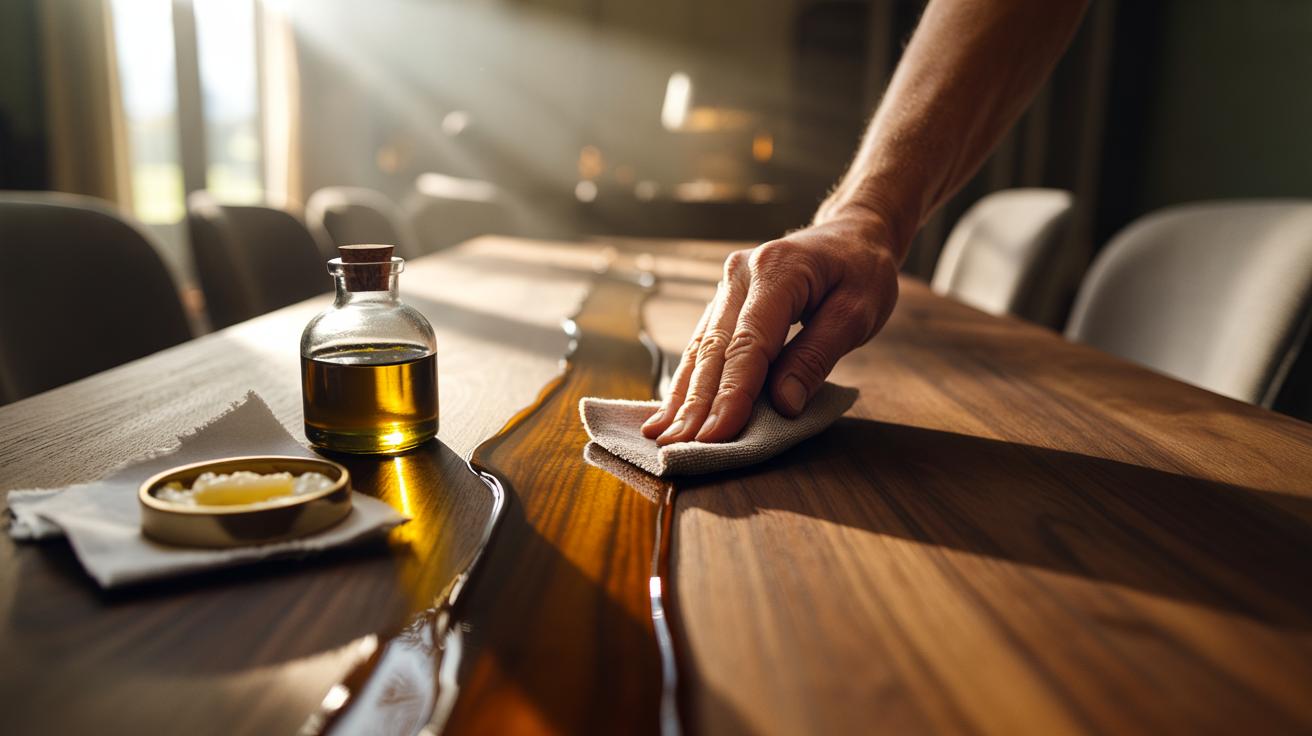
Start by removing dust with a soft brush or microfibre cloth. If grime lingers, wipe with a damp cloth lightly moistened with a mild soap solution, then let the wood dry fully. Never trap moisture under oil. Decant a teaspoon of olive oil onto a clean, lint-free cloth. Dab, don’t drench. Work with the grain in small sections, massaging the oil until the surface looks evenly refreshed rather than wet.
Allow 15–20 minutes for absorption. Buff thoroughly with a fresh cloth, again following the grain, until your rag slides easily and no residue transfers. Buffing is non-negotiable: it prevents dust capture and the “tacky” feel people fear. For thirsty timber, repeat once more after an hour. To elevate the sheen on dull patches, finish with a whisper of beeswax or an oil‑wax blend, then buff. Avoid vinegar-oil mixes on varnished furniture; use vinegar only for targeted cleaning, not as a leave-on finish.
Mind your environment. Choose a dust-free, temperate room and avoid direct sunlight during application, which can speed oxidation unevenly. Felt pads under ornaments protect the renewed surface, while a coaster habit spares your finish from rings.
Care, Safety, and Common Myths
Maintenance is light-touch. A quarterly olive-oil refresh suits sideboards and bookcases; high-use tables may prefer a polymerising oil top-up every six months. Dust weekly with a dry cloth to reduce abrasion. If the wood looks flat rather than dry, buff before adding more oil. Over-application is the enemy, not the oil itself. For heirlooms with unknown finishes, consult a conservator, and on modern polyurethane or high-gloss lacquers, stick to a dedicated polish rather than oiling.
Safety matters. Oil-soaked rags can self-heat and ignite. After use, lay them flat to dry outdoors or submerge in water before disposal in a metal container. Myth-busting: “Olive oil always goes rancid on furniture.” In reality, rancid odour stems from thick, unbuffed films catching dust. Apply sparingly and buff hard, and you’ll get a clean, mellow glow with no smell. Water rings and deep scratches? Those need separate remedies—steam for rings on shellac, careful sanding and refinishing for gouges.
Handled with care and restraint, olive oil remains a reliable ally for reviving wooden furniture, enriching the grain and easing the dryness that makes pieces look tired. It won’t replace a full refinishing job, yet it offers immediate, low-cost elegance for everyday surfaces. The secret is simple: minimal oil, maximum buffing, and regular, gentle care. As homes shift toward low-chemical upkeep, this humble staple earns its place in the toolkit. Which piece in your home is calling out for a quiet restoration—and how will you choose to bring its story back to the surface?
Did you like it?4.5/5 (30)