In a nutshell
- ⚡ Leverages static electricity and the triboelectric effect to attract and clump pet hair quickly from upholstery, stairs, and car seats.
- 🧤 Choosing the right glove matters: natural rubber/latex for strong static, silicone with textured nubs for lifting embedded strands; ensure a snug fit.
- 🌀 Proven technique: prime the glove, use short strokes to build charge and long sweeps to gather clumps; adjust motion for fabrics and humidity.
- 🚀 Outperforms lint rollers and complements vacuums: fast, silent, residue-free, and waste-free—ideal for awkward seams and late-night clean-ups.
- 🧽 Easy upkeep: keep the glove clean and dry, avoid oils and softeners, store flat; durable gloves deliver eco-friendly, low-cost fur removal.
Pet owners in the UK know that the daily drift of fur across sofas, car seats, and stair treads can feel relentless. There’s a deceptively simple tool that cuts through the fluff: the humble rubber glove. Used dry, it summons static electricity to pull hair into neat clumps within seconds, even where rollers and vacuums miss. Because static thrives on contact and movement, you harness a physical force rather than brute scrubbing. Below, we unpack the science of triboelectric attraction, show how to pick the best glove, and share newsroom-tested techniques for faster, cleaner results. Expect fewer consumables, less noise, and a tool that slips into a kitchen drawer yet delivers professional-grade de-furring.
How Static Electricity Makes Rubber Gloves Grab Hair
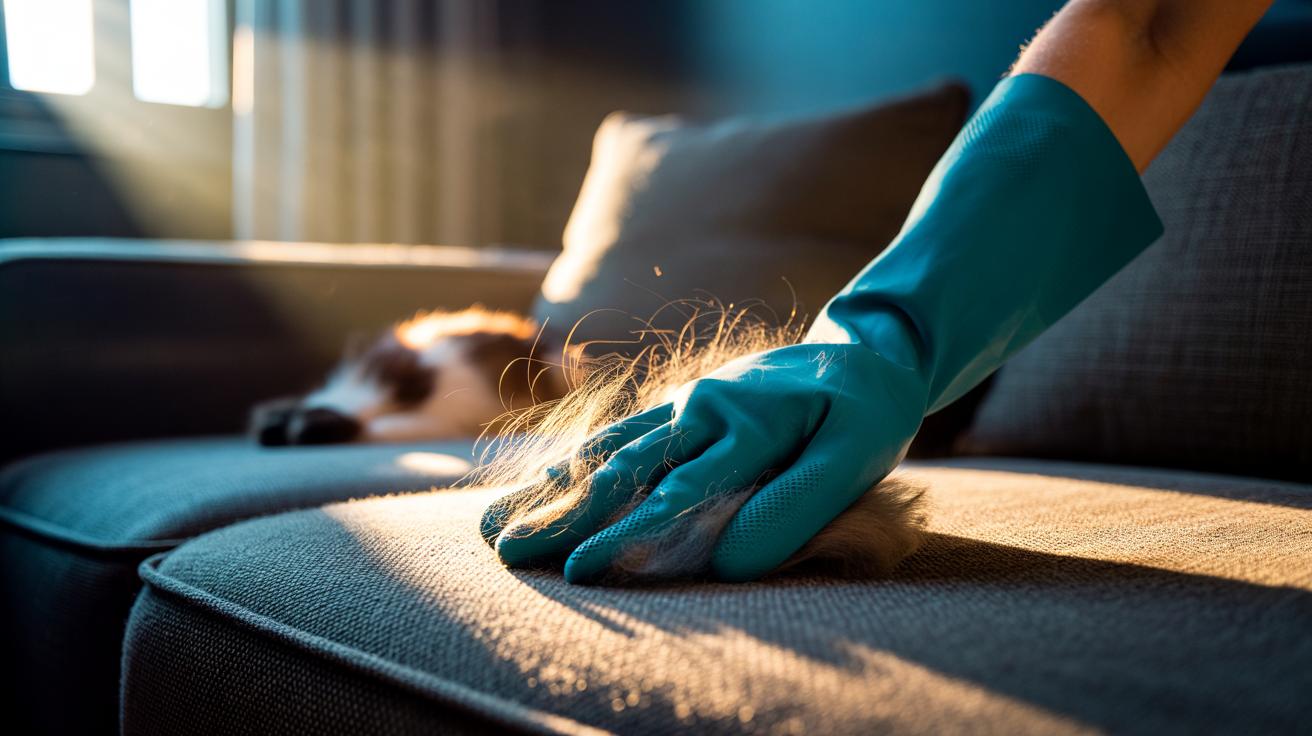
Run a rubber glove across fabric and you create a tiny charge imbalance through friction, known as the triboelectric effect. Rubber tends to pick up a negative charge, while many textiles and pet hair skew positive. Opposites attract, so hair leaps towards the glove, then bunches as the sweep continues. The clumps grow, become heavier, and detach cleanly by hand. This is why a dry glove can strip a sofa arm in a fraction of the time a lint roller takes. The effect is gentle, so it won’t abrade most upholstery, and it reaches stubborn strands that lie flat against weave.
Conditions matter. Low to moderate humidity boosts cling; very damp air can weaken static. Still, the method works across velour, wool blends, and car upholstery. If you feel micro-shocks, you’re moving too fast on synthetic fibres; slow the sweep. Static-based pickup is safe for pets and fabrics when used with light pressure. It’s a clean, repeatable process that leaves no adhesive residue and produces zero disposable waste.
Choosing the Right Glove: Rubber, Silicone, and Textured Palms
Classic natural rubber or latex washing-up gloves deliver robust static and good friction, making them ideal for upholstery and stairs. Many prefer silicone grooming gloves with textured nubs; they raise hairs before static locks them in. For allergy concerns, look for latex-free nitrile or silicone. A snug fit is essential: loose fingertips reduce contact area and cut the charge you generate with each pass. A glove that grips your hand will grip the hair better.
Colour and thickness matter less than surface design. Light micro-texture enhances drag without snagging fabric. Avoid heavy oils or conditioners; they neutralise charge. If sustainability is your priority, durable silicone outlasts most disposable tools, while biodegradable natural rubber scores for end-of-life. For mixed households—short-haired cats and double-coated dogs—keep one glove per zone to prevent cross-transfer of odours. Store flat, out of sunlight, to prevent rubber from perishing and to maintain consistent performance.
Step-by-Step Technique for Faster Fur Removal
Start with a dry glove. Rub your gloved palms together to “prime” the static, then test a small area with gentle, short strokes. Work in overlapping arcs, moving in the direction that lifts the nap of the fabric. On sofas, tackle armrests and creases first; on stairs, sweep from riser to tread to keep clumps corralled. Short, rhythmic strokes build charge; long, slow sweeps gather the clumps. Pinch and lift accumulated balls of hair as they form to keep the glove surface active.
For car seats and mats, brace fabric with your free hand and use tighter circles to dislodge embedded strands. On clothes, pull the fabric taut and glide from shoulder to hem. If static flags in humid weather, pause and rub the glove across a clean cushion to recharge. Avoid moisture unless targeting velvet or velour, where a barely damp finish can help gather hair by cohesion—though this shifts the mechanism from pure static to light capillary adhesion.
Where It Outperforms Rollers and Vacuums
Vacuums excel on floors and large rugs, but they struggle with woven resistance on stair edges and tufted upholstery. Lint rollers stick, but they’re slow and generate waste. The rubber glove slips into tight curves, grips hair matted by body oils, and works silently—ideal for late-night tidy-ups or in shared flats. It’s the tool you reach for when you need instant results without hauling equipment or peeling sheets. The absence of adhesives avoids residue on delicate fabrics and reduces plastic waste, a win for frugal and eco-minded homes.
| Method | Best For | Cost per Use | Noise | Waste | Speed |
|---|---|---|---|---|---|
| Rubber glove | Upholstery, car seats, stairs | £0 | Silent | None | Fast |
| Lint roller | Clothing on the go | Low–moderate | Silent | Paper/plastic | Moderate |
| Vacuum | Floors, large rugs | Electricity | Loud | Filter/bag | Fast on flat areas |
| Microfibre cloth | Hard surfaces | £0 | Silent | None | Slow–moderate |
For households with allergy concerns, quick removal reduces allergens clinging to fabrics. The glove also reaches awkward seams where turbo tools snowplough hair. In rental homes with noise restrictions, silent sweeping is a practical advantage for late schedules.
Care, Cleaning, and Longevity
After each session, peel off clumps by hand. Rinse the glove in cool water with a drop of mild detergent, then air-dry away from direct sun. Oils, fabric softeners, and silicone sprays kill static; keep them off the glove and off target fabrics before cleaning. A clean, dry surface equals stronger static and faster pickup. If the glove feels slick, wash again to restore friction. Periodically inspect fingertips for wear; small cracks reduce contact and charge generation.
Store flat in a drawer, not scrunched under the sink. In very dry winter rooms, you may build too much charge; lighten pressure to avoid micro-snaps on synthetics. In summer humidity, prime the surface by rubbing against a dry towel between passes. Consider a dedicated glove for clothing versus furniture to prevent lint transfers. With basic care, a quality silicone or natural rubber glove should outlast dozens of lint roller cores and keep static performance admirably consistent.
From newsroom sofas to commuter car seats, a simple rubber glove turns static electricity into a fast, tidy clean-up, saving money and cutting waste. You’ll spend less time chasing fluff and more time relaxing with your pet, minus the fur tumbleweeds. The secret is contact, motion, and a clean, dry glove that builds and spends charge efficiently. Pair it with occasional vacuuming for floors and you’ve got a balanced routine that respects both time and budget. What fabric or corner in your home would benefit most from a quick, static-powered sweep today?
Did you like it?4.5/5 (20)