In a nutshell
- 🧤 Rubber gloves work because of microtexture, friction, and slight viscoelastic tack, with ridges creating shear that traps glitter in a single sweep.
- ⚡ Manage cling by addressing static: a lightly damp glove neutralises charge, while subtle capillary bridges help pull specks into textured pits.
- ✨ Choose smart: latex microbeaded for fine specks, nitrile for sensitivity, household rubber for carpets, and silicone bristles for bulk—avoid powdered gloves.
- 🧽 Technique wins: start dry, then go slightly damp; use overlapping arcs, pinch stubborn flecks, and rinse the glove, trapping debris to reduce microplastics.
- ♻️ A glove acts like a reusable lint roller, outperforming vacuums on edges and fibres, delivering quick, residue-free clean-ups across hard floors, textiles, and tight crevices.
Glitter’s charm fades the moment it lodges in carpets, cuffs, and phone cases, defying brushes and vacuums alike. Yet a simple household champion solves the problem at speed: the rubber glove. When you drag textured latex or nitrile across a surface, tiny ridges and a tacky finish gather stray flecks in a single sweep. What looks like a mere cleaning hack is, in fact, a smart combination of microtexture, friction, and controlled moisture. This piece unpacks the physics behind the trick and offers practical guidance on choosing the right glove and technique so you can rescue your floors, fabrics, and sanity without resorting to endless rounds of sticky tape.
How Rubber Texture Grabs Glitter
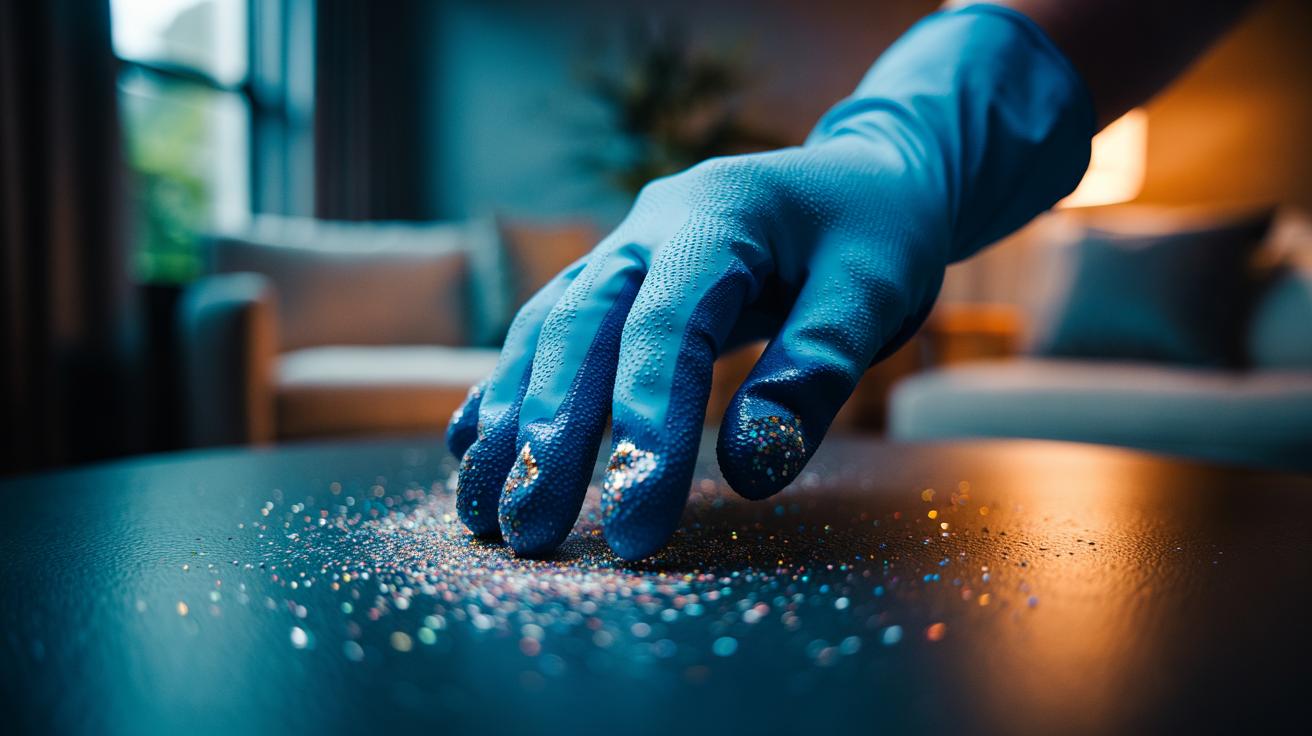
At the heart of the trick is microtexture. Rubber gloves—especially those with microbeaded fingertips or patterned palms—host thousands of tiny asperities. Pressing the glove on a surface increases the real contact area, while the glove’s compliant material moulds around the angular edges of glitter. That slight viscoelastic tack acts like a reusable, low-stick adhesive, catching particles without leaving residue. The process isn’t merely sticky; it’s mechanical. The ridges create shear forces and pockets where glitter settles, so each pass scoops up specks and traps them against the glove’s contours. The rougher the microtexture—up to a point—the quicker the capture.
Texture works hand in hand with the glove’s high coefficient of friction. Glitter skates across smooth plastics and varnish but drags on rubber, which resists slip and stabilises particles long enough to be lifted. The glove’s flexibility also matters: it conforms to grout lines, carpet loops, and hem seams where glitter hides. Combine a light press with a short, controlled wipe and you achieve three effects at once—grip, gather, and release to the glove. That’s why a modest glove outperforms vacuum nozzles on hard floors and tight crevices.
Friction, Static, and Moisture: The Three Forces at Work
Glitter clings for several reasons, and a glove counters each. First is friction: rubber’s grippy surface slows particles, shepherding them into the glove’s microvalleys. Second is static. Glitter and household surfaces sit apart on the triboelectric series, so they swap charge with every rub, making flakes cling stubbornly. A glove helps reset that imbalance by providing an alternative path of contact. To neutralise static in seconds, lightly dampen the glove. The moisture carries charge away and collapses electrostatic attraction, allowing texture to dominate instead of a crackling cling.
Third is capillary action. A barely damp glove forms tiny menisci between the rubber and glitter, creating subtle suction—capillary bridges that pull flakes into the textured pits. Too much water and pieces simply skate; too little and static wins. Aim for a faint sheen, not wetness. On textiles, brush in a single direction to align fibres and avoid driving particles deeper. Use short strokes along skirting boards and keyboard edges where turbulence from vacuums scatters debris. Get the balance right and the glove behaves like a reusable lint roller without the waste.
Choosing and Using the Right Glove
For speed, prioritise texture, fit, and finish. Latex gloves with microbeaded fingertips excel on hard floors and tables because they combine tack with density. Nitrile is great for those sensitive to latex; opt for patterned grips or select a size that fits snugly to boost control. Household rubber gloves with raised palms work well on rugs and upholstery, where the pattern hooks glitter from loops. Silicone dish gloves with soft bristles move lots of debris quickly, though they need slight dampness for fine glitter. Always avoid powdered gloves—the powder loosens, spreads, and muddles the clean-up.
| Glove Type | Surface Texture | Best Use | Notes |
|---|---|---|---|
| Latex, microbeaded | Fine dots on fingertips | Tables, hard floors, crafts | High tack; quick capture of fine specks |
| Nitrile, smooth or light grip | Subtle grain | Mixed surfaces | Dampen slightly to curb static |
| Household rubber | Raised palm pattern | Carpets, upholstery | Excellent for glitter lodged in fibres |
| Silicone with bristles | Soft nubs | Large flakes, stairs | Pair with light moisture for fine dust |
Technique matters. Start dry to gather bulk, then switch to a lightly damp glove to defeat static and chase the leftovers. Wipe in overlapping arcs, lifting the glove occasionally to avoid redepositing. For persistent flecks, pinch between thumb and fingertip texture. Rinse the glove under cool water, sweeping glitter towards the drain cover and trapping it with a mesh to prevent microplastics escape. Finish with a quick once-over using tape only for showcase surfaces. Store gloves flat so texture stays crisp and effective for the next sparkle storm.
What feels like a party disaster becomes a two-minute fix when you leverage texture, friction, and a hint of moisture. The rubber glove’s microgeometry catches and holds particles that defy brooms and nozzles, while dampness quiets static so glitter releases from surfaces without fuss. Small adjustments—glove type, fit, and a measured wipe—decide whether you sweep or smear. With a glove hanging by the sink or tucked in your craft kit, you can banish confetti and sequins before they migrate. Where will a smarter use of texture save you the most time: the hallway rug after a birthday bash, or the studio table after your next creative burst?
Did you like it?4.5/5 (22)