In a nutshell
- 🍷 The salt pour saves carpets by creating an osmotic gradient and capillary action that wicks wine into the crystals, limiting fibre penetration.
- 🧪 Red wine pigments (anthocyanins) bind more as they dry or are heated; rapid salt application keeps them mobile and reduces setting.
- 🧼 Step-by-step: blot immediately (no rubbing), cover with dry salt, wait until pink/damp, remove and repeat, then rinse with cold water and blot dry.
- 🧂 Crystal choice matters: coarse kosher/sea salt offers stronger wicking; table salt works in a pinch but cakes; avoid impure rock salt.
- 📌 Pro tips: Act fast, test on hidden areas, avoid heat and steam, and keep coarse salt on hand as a low-cost, science-backed safeguard.
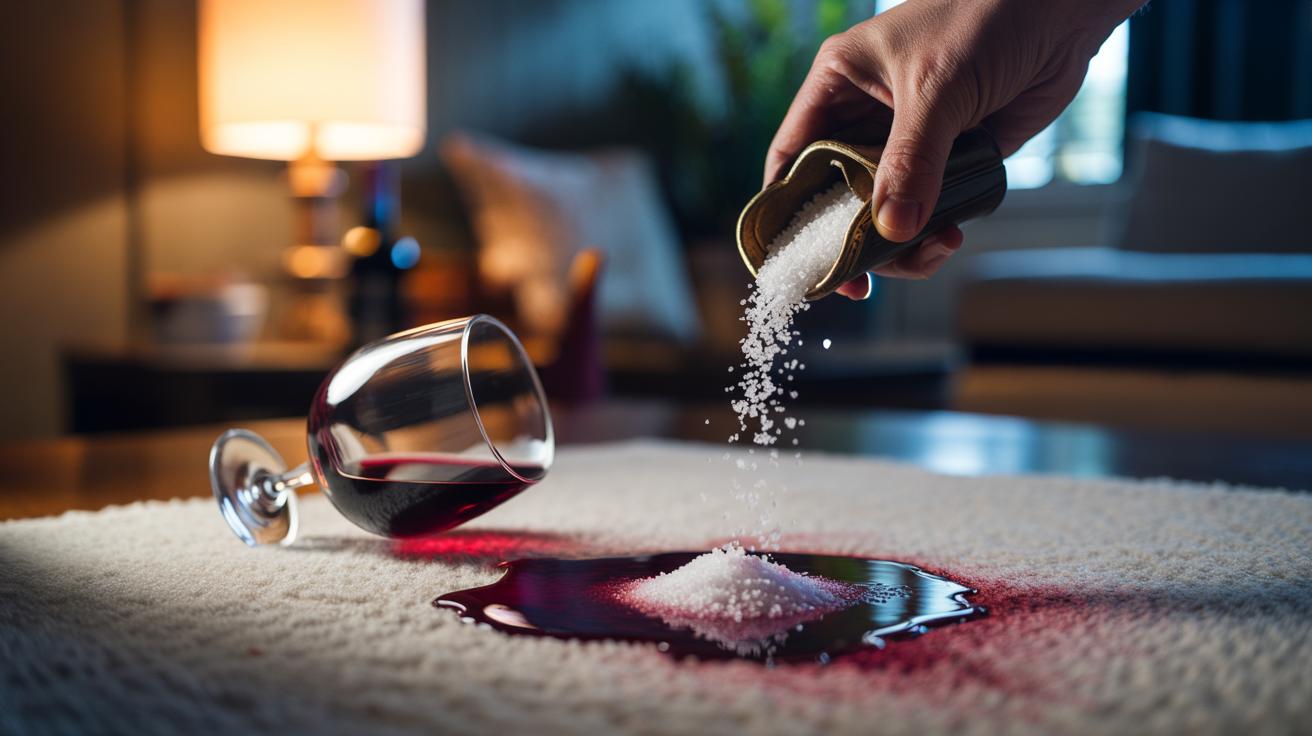
Spilled red wine on a pale carpet is the domestic nightmare that launches a dozen cleaning myths. One remedy endures because it works quickly and visibly: the salt pour. Spread generously, those benign white crystals seem to drink the stain, turning blush, then burgundy, as panic recedes. This isn’t magic; it’s material science meeting household pragmatism. As the wine wicks upward, the carpet’s fibres are spared deep penetration and dye fixation. In British homes, rented flats, and bustling pubs, knowing how and why this trick succeeds can mean the difference between a forgettable spill and a costly call-out. Speed is everything; the sooner you deploy the salt, the more liquid you’ll rescue from the pile.
Why Salt Works on Red Wine
On contact with a fresh spill, sodium chloride begins to dissolve, creating a concentrated brine at the crystal surface. That high-salt zone draws water from the lower-salt environment in the carpet via an osmotic gradient, while the remaining dry grains form a loose, porous bed. Within that bed, narrow gaps between crystals generate capillary action, wicking the wine upward. The combined effect pulls coloured liquid out of fibres and into the sacrificial salt mound. Salt isn’t a desiccant like silica gel, but in this very wet scenario its rapid dissolution becomes the engine that lifts the stain.
Red wine’s colour comes from anthocyanins, a family of plant pigments that latch onto fibres—especially protein-based ones like wool—more tightly as they dry or are heated. By extracting liquid quickly, salt limits this bonding window. The brine’s ionic strength can also disturb early dye–fibre interactions, helping to keep pigment mobile while you blot. The sooner the crystals contact liquid, the less time pigments have to settle, making later cleaning steps gentler and more effective.
Step-By-Step: The Salt Pour That Saves Carpets
First, act immediately. Use white kitchen roll or a clean cotton cloth to blot the spill, pressing firmly to lift liquid without spreading it. Do not rub; friction drives pigment deeper and fluffs the pile. When you’ve removed surface wetness, pour a generous layer of salt directly over the stained area—enough to hide the colour. Avoid damp salt; you want crystals to start dry so they can establish that wicking bed.
Let the salt sit until it turns visibly pink or damp—typically 10–20 minutes for a small glass, longer for a larger pool. Gently scoop away the spent crystals with a spoon and bin them. Repeat once if colour remains active. Follow with a light rinse of cold water and fresh blotting. For stubborn tints, dab a mild solution of washing-up liquid in cold water, then blot again. Never use hot water or a steamer; heat sets stains. Finish by propping the pile with dry towels under and over the spot to speed evaporation.
Choosing the Right Crystal: Table, Kosher, or Rock Salt?
The size and purity of salt grains influence performance. Coarse crystals create larger voids between grains, boosting capillary pathways and preventing the bed from turning to slush too quickly. Fine table salt dissolves fast, which can help pull water but may cake, reducing wicking. Additives like anti-caking agents or iodate don’t typically stain, but very cheap rock salt can contain minerals that may. When in doubt, test on an inconspicuous patch and stick to kitchen-grade products.
For most households, the sweet spot is a coarse, non-iodised sea salt or kosher salt. These pour evenly, cover quickly, and retain structure long enough to absorb. Standard table salt still works in a pinch—just use more and replace it promptly as it saturates. Avoid coloured or smoked salts. Coarse, food-grade crystals usually give the best results, balancing rapid dissolution with stable wicking.
| Salt Type | Grain Size | Best Use | Caveats |
|---|---|---|---|
| Kosher/Coarse Sea Salt | Large | Primary spill control; strong wicking bed | Use enough to fully cover stain |
| Table Salt | Fine | Quick dissolution; emergency use | Can cake; replace as it saturates |
| Rock Salt (De-icing) | Very large/impure | Not recommended indoors | Potential mineral residues; uneven coverage |
Between kitchen lore and lab logic lies the practical middle ground for saving soft furnishings from a red wine disaster. Salt buys time by pulling liquid out and keeping pigment mobile until you can rinse and blot. Pair it with disciplined technique—swift blotting, no rubbing, cold water only—and most spills fade to a memory rather than a permanent motif. If you entertain often, keeping a tub of coarse salt to hand is as sensible as owning a corkscrew. What other low-cost, science-backed tricks do you swear by when a celebratory toast goes sideways?
Did you like it?4.6/5 (20)