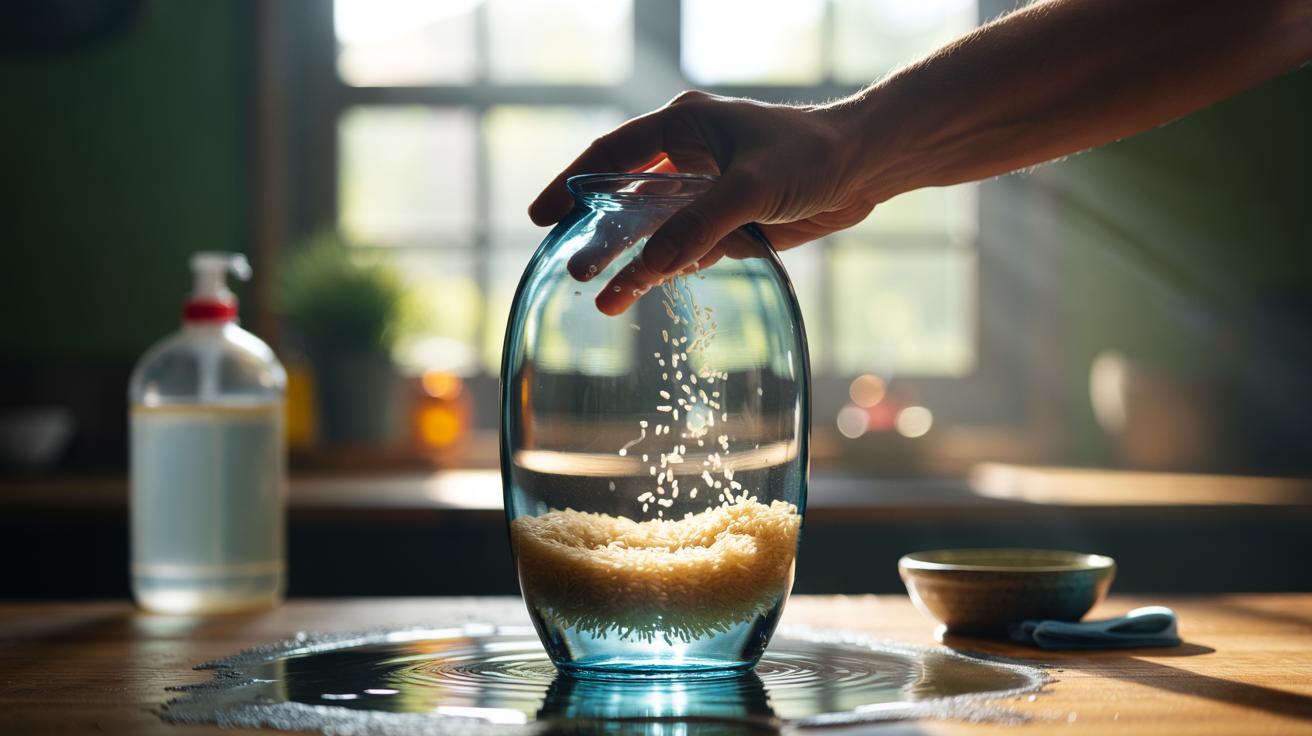
In a nutshell
- 🧽 The one-cup rice trick uses uncooked rice, warm water, and washing-up liquid to deliver gentle abrasion that scrubs narrow vases without scratching or stress.
- 🌀 Swirl, tilt, and rotate to create hydrodynamic scrubbing that carries grains into tight curves; avoid vigorous shaking to protect delicate glass.
- 🧪 Choose long-grain rice for slim necks or short-grain for firmer contact; target grime with vinegar (limescale) or bicarbonate (organic residue), used separately.
- ⚠️ Keep agitation minimal on antique or cracked pieces; pre-soak heavy scale with citric acid, and recognise that cloudy glass may be etching, not dirt.
- 💡 Benefits: quick, frugal, and tool-free cleaning that reaches “impossible” spots, restores clarity, and reduces breakage risk compared with rigid brushes.
Every home harbours a vase or decanter with a neck too narrow for a brush, where blooms have left a ghostly green film and stubborn mineral rings. The simplest remedy may be in your pantry. The one-cup rice trick uses uncooked grains, water, and a dash of washing-up liquid to scour those unreachable surfaces without scratching or stress. Acting as countless tiny scrubbers, rice slips into curves and corners that sponges cannot reach. It’s quick, cheap, and surprisingly gentle on glass, ceramic, and enamel. Because the grains are soft-edged and mobile, they clean efficiently without the torque that risks cracking delicate vessels. Here is how it works—and how to get impeccable results in minutes.
How the One-Cup Rice Trick Works
At its core, the method relies on gentle abrasion plus fluid dynamics. When you add rice and liquid to a narrow vessel and swirl, the grains roll and glide along the interior, dislodging biofilm, pollen residue, and calcium deposits. Each grain behaves like a rounded micro-brush. Because rice is less dense and softer than glass or glazed ceramic, the abrasive action stays mild and controlled. The water forms a cushion, reducing friction while allowing particles to shear grime effectively. Unlike stiff bottle brushes, the grains naturally navigate tight shoulders and bulbous bases without force.
Think of it as hydrodynamic scrubbing: as you rotate the vase, currents carry grains across the surface. Changing the direction and tempo redistributes the rice so it reaches hidden patches under the lip and at the heel. Detergent lowers surface tension, helping the slurry penetrate films, while warm water softens residues. Because you’re agitating mass rather than levering a handle, there’s far less risk of slamming a tool into fragile glass. The result is a polish that looks hand-buffed, with none of the stress points caused by rigid brushes.
Step-by-Step: Cleaning Narrow Vases Safely
Measure roughly one cup of uncooked rice (standard long-grain is fine). Rinse the vase with warm water to loosen debris, then add the rice through a small funnel. Pour in warm water to one-third or half full, add a squirt of washing-up liquid, and cover the mouth with your palm or a silicone mat. Swirl in smooth, circular motions; tilt and rotate to send grains along every contour. Do not shake violently—steady, rhythmic rotations deliver better cleaning and protect delicate glass. After 60–90 seconds, rest, then repeat with a reverse swirl to catch missed spots.
Decant the slurry into a sieve to save the rice for non-food cleaning use, then rinse the vessel thoroughly with warm water. For persistent rings, repeat with a tablespoon of white vinegar or a teaspoon of bicarbonate of soda (not together). Air-dry upside down on a rack. If the vase is antique or hairline-cracked, test with a brief, gentle swirl first. The approach is tidy, quick, and requires no specialist kit—ideal for bud vases, slender carafes, and sculptural pieces with awkward bends.
| Step | Why it matters | Tip |
|---|---|---|
| Pre-rinse with warm water | Softens film and lifts loose grit | Roll the vase to wet all surfaces |
| Add rice + detergent | Creates mobile, mild abrasives | Use a funnel to avoid spills |
| Swirl and tilt | Drives grains into tight curves | Short, controlled rotations work best |
| Rinse and air-dry | Clears residue, prevents streaks | Finish with cool water for sparkle |
What Kind of Rice and Liquids to Use
Most household rice works—long-grain (basmati) flows swiftly through slim necks, while short-grain offers slightly firmer scrubbing for broader bodies. Avoid parboiled or tinted varieties that may leach colour. For everyday grime, warm water and a small dose of washing-up liquid suffice. Limescale responds to a 1:3 mix of white vinegar and water, while organic films lift well with warm water plus a teaspoon of bicarbonate of soda (used separately from acids). Boiling water is unnecessary and can stress thin glass or older glazes.
For odour control after decaying stems, add a few drops of lemon juice to a detergent mix, then rinse thoroughly. If the vase is lead crystal or hand-painted inside, keep solutions mild and contact brief. Avoid harsh solvents and gritty powders; rice already provides the gentle mechanical action you need. If you’re out of rice, millet or couscous can substitute, but they swell faster and may clog—use small amounts and shorter cycles.
| Material | Best Use | Notes |
|---|---|---|
| Long-grain rice | Very narrow necks | Flows easily, low compression |
| Short-grain rice | Stubborn mid-body films | More contact pressure |
| Vinegar + water | Limescale rings | Rinse thoroughly after use |
| Bicarbonate + water | Organic residue | Use separately from acids |
Limits, Safety, and Smart Alternatives
The rice method excels for modern glass, glazed ceramics, and enamel. If a piece has internal gilding, flaking paint, or known hairline cracks, keep agitation minimal and skip acidic additives. For heavy mineral crusts, pre-soak with a mild citric acid solution (1 tsp per cup of warm water) for 20 minutes, then use the rice. Where sand or eggshells are sometimes suggested, rice is safer: it’s softer, uniform, and far less likely to leave scratches or sharp chips. Never use metal shot in domestic glassware.
When a neck is extremely tight, create a smaller slurry: half a cup of rice with enough solution to keep grains mobile. For museum-grade pieces, place the vase on a towel and swirl over a cushioned surface to limit impact risk. If clouding persists after cleaning, the issue may be etching—microscopic surface wear from years of hard water—so no amount of abrasion will restore the original clarity. In that case, professional polishing or a glass restorer is the sensible route.
The one-cup rice trick earns its place in the toolkit because it’s frugal, safe, and fast—an elegant answer to the age-old problem of narrow-neck cleaning. It restores sparkle without special brushes, reaches impossible corners, and protects fragile forms from brute-force scrubbing. With a few pantry staples and five minutes of swishing, your favourite vase can look gallery-ready again. Once you’ve tried it, you may never dread the decanter rinse again. Which vessel in your home would benefit most from a rice-powered refresh, and what tweaks might you test to tailor the method to your glass or glaze?
Did you like it?4.6/5 (28)