In a nutshell
- ⚡ Use the 30-second microwave steam method with lemon water to loosen grime fast, eliminate odours, and achieve an effortless wipe-clean finish.
- 🧼 Step-by-step: heat 200–250 ml water with half a lemon for ~30 seconds, let steam stand 60–90 seconds, then wipe with a microfibre cloth; repeat short bursts for heavier build-up.
- 🔬 Why it works: steam rehydrates dried splatters while lemon’s citric acid helps disperse light grease and freshen the cavity without harsh residues.
- 💷 Benefits: chemical-free, budget-friendly, and energy-light; a little-and-often routine prevents stubborn deposits and preserves your microwave’s finish.
- 🛡️ Safety and tweaks: always use a microwave-safe container, never seal lids, handle hot bowls carefully; try vinegar or bicarbonate of soda for odours and use a splatter cover to prevent mess.
There’s a quick kitchen hack sweeping UK households: the 30-second microwave steam method using nothing more than lemon water. It tackles cloudy grease, dried splatters, and stubborn odours without harsh chemicals. Steam loosens grime while the lemon’s mild citric acid cuts through residue, leaving a fresh, clean scent. This is not just about speed; it’s about effortless wiping, lower costs, and safer air in your home. For light to moderate mess, a short burst of steam is all it takes. Below, you’ll find the science, a precise step-by-step, a quick reference table, and safety notes to keep your microwave sparkling with minimal effort and maximum results.
What Is the 30-Second Lemon Steam Method?
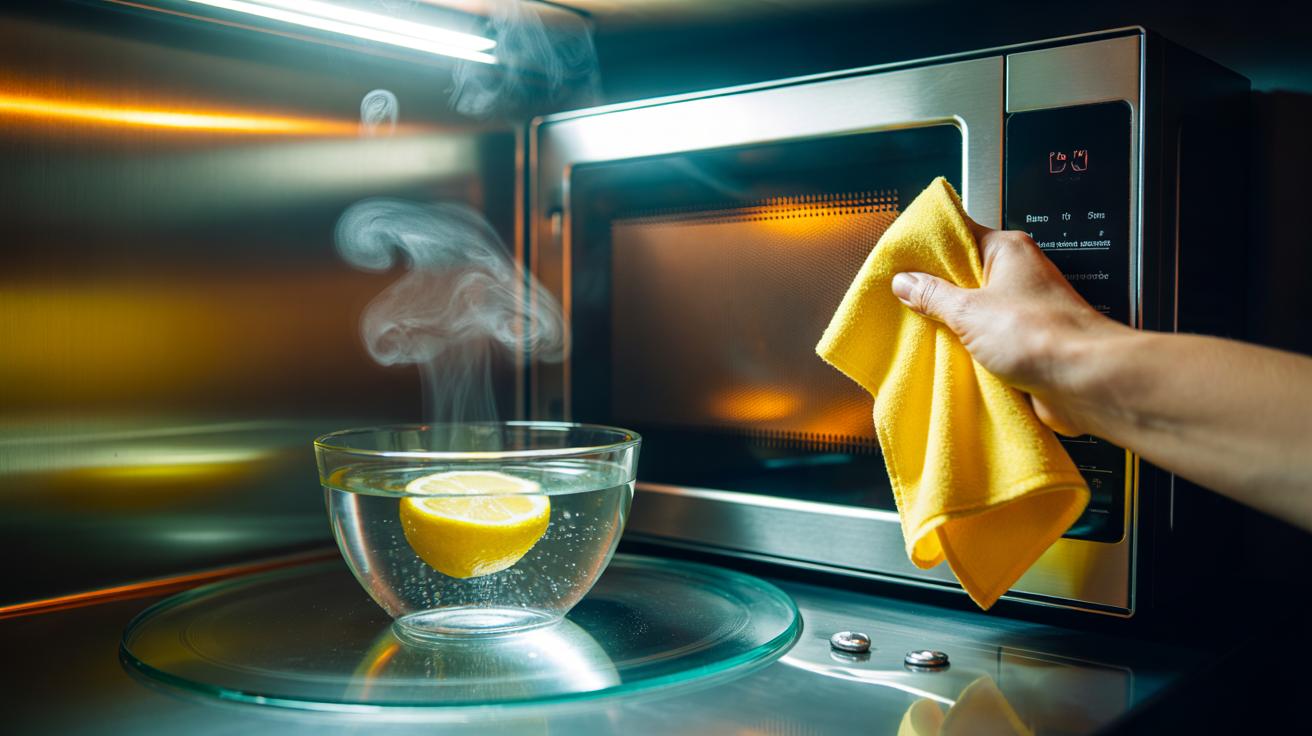
The method is as simple as it sounds: combine water and fresh lemon in a microwave-safe bowl, heat briefly—about 30 seconds for a burst of steam—then let the vapour soften residues so the interior wipes clean in seconds. As steam condenses on the cool walls, it rehydrates dried splatters, while the lemon’s citric acid helps break down light grease films. The result is a cleaner cavity, a brighter door glass, and a fresher aroma—all without bleach, synthetic fragrances, or pricey sprays. It’s a low-effort, high-reward routine ideal for regular upkeep.
While many guides suggest longer cycles, the 30-second approach is tailored for daily or near-daily cleaning, when mess hasn’t yet hardened into a lacquer. It uses less energy, reduces exposure to strong chemicals, and encourages a little-and-often habit. If your microwave is moderately soiled from reheating soups, sauces, or porridge, you’ll appreciate how the steam softens the splatter halo. For heavier build-up, you can stack short bursts—pausing to allow steam to work—rather than blasting for several minutes and risking overboil.
Step-By-Step: From Slice to Sparkle
First, choose a microwave-safe bowl or jug. Add about 200–250 ml of water and the juice of half a fresh lemon, dropping the squeezed half into the bowl for extra oils. Place it in the centre and heat on full power for 30 seconds. Let the bowl stand inside for 60–90 seconds with the door closed, so steam circulates. Open carefully, remove the bowl using a dry cloth, then wipe the interior, turntable, and door seal with a soft microfibre cloth. Never run the microwave empty or seal the bowl with a tight lid. If needed, repeat in short increments, letting the steam dwell before each wipe.
| Microwave Power | Water + Lemon | Heat Time | Steam Stand Time | Best For |
|---|---|---|---|---|
| 700–800 W | 250 ml + 1/2 lemon | 30–40 sec | 60–90 sec | Light splatters, daily refresh |
| 900–1000 W | 200–250 ml + 1/2 lemon | 25–30 sec | 60–90 sec | Routine wipe-clean |
| Heavy build-up | 300 ml + full lemon | 2 x 30 sec bursts | 90 sec after each | Stuck-on residues |
For door glass streaks, dampen the cloth with the lemon water, then buff dry with a second cloth. Lift the turntable and roller ring to clean beneath; crumbs often hide here and trap odours. A cotton bud can run around the door gasket and vents. Finish by propping the door open for a minute to let residual moisture evaporate. Wipe stainless trims with the grain to avoid visible swirls. The whole routine takes under three minutes, start to finish, yet leaves the cavity smelling bright and looking newly scrubbed.
Why Lemon Works: The Science and the Savings
Steam is the star. Microwaves excite water molecules; that heat converts to vapour, which lifts grime by softening the bonds between dried food and enamel. Lemon provides a complementary boost: its citric acid helps disperse light grease, while natural oils in the peel add gentle solvent action. The combination deodorises lingering smells from fish, curry, or bacon without masking them. The method is biodegradable, food-safe, and leaves no harsh residues. Because you’re cleaning in short bursts, you also reduce the risk of superheating and splashing compared with long, rolling boils.
Your wallet benefits too. Lemons are affordable, and a single fruit can service several cleans. The energy draw for a 30-second burst is minimal compared with protracted cycles, and you avoid purchasing specialty cleaners. For those with sensitive airways, ditching strong aerosols and fragrances helps keep indoor air more comfortable. This small routine builds into a habit: wipe once, often, and heavy build-up never gets a foothold—saving scrubbing time and preserving the finish on your microwave interior.
Safety, Variations, and Troubleshooting
Always use a microwave-safe glass or ceramic container and leave the lid off so steam can escape. Handle hot bowls carefully; use a dry cloth to avoid scalds. Do not heat a completely sealed container. If your unit runs very hot, reduce time by five seconds and lengthen the door-closed stand time to let steam work passively. For stubborn spots, dab the warm lemon water onto the stain and leave for two minutes before wiping. Avoid abrasive scourers that can cloud the interior or scratch door glass. If odours persist after cleaning, leave a small bowl of fresh bicarbonate of soda inside (microwave off) overnight.
Prefer a substitute? White vinegar works well—one tablespoon per 200 ml of water—though lemon tends to smell nicer. A drop of mild washing-up liquid in the bowl can help with greasy splatters, but rinse with a damp cloth after. Remove and wash the turntable in the sink; dry thoroughly so water spots don’t bake on during the next reheat. If you encounter patchy fogging on the glass, polish with a dry microfibre until clear. For repeated explosions (looking at you, beans), adopt a splatter cover; prevention ensures the 30-second method remains all you need.
A humble bowl of lemon water and a quick steam can transform your microwave from murky to immaculate with barely any elbow grease. The trick is consistency: brief, frequent steams that keep residue soft and odours at bay. You sidestep harsh chemicals, save a little on bills, and maintain a kitchen standard you can be proud of. Small rituals deliver big results when they’re easy to repeat. Will you adopt the 30-second burst as part of your evening tidy-up, or tweak the timings to build your own effortless cleaning ritual?
Did you like it?4.6/5 (22)