In a nutshell
- 🧽 A crumpled aluminium foil ball delivers controlled micro-abrasion, lifting burnt-on carbon quickly on stainless steel and well-seasoned cast iron while avoiding deep scratches—never use on non-stick or delicate enamel.
- 🔥 Method: soften with hot water and a touch of baking soda or washing-up liquid, scrub in small circles, rotate or re-crumple the foil to refresh edges; for cast iron, avoid long soaks, dry on heat, and lightly oil to protect the seasoning.
- ⚖️ Versus other tools: foil is adjustable, non-shedding and fast; unlike steel wool it won’t leave fragments, and unlike scouring pads it doesn’t clog—its cost-per-clean is pennies and it reaches rivets and corners easily.
- 🌿 Environmental and safety: reuse clean foil offcuts, cut detergent and hot-water use, then rinse away grey slurry; avoid strong acids on aluminium cookware, and finish with a thorough wash and dry for solid food safety.
- ✅ Takeaway: a simple, cheap, and effective rescue for crusted pans—choose the right surface, add a mild chemical assist when needed, stop once residue yields, and keep foil as a reliable staple in your cleaning arsenal.
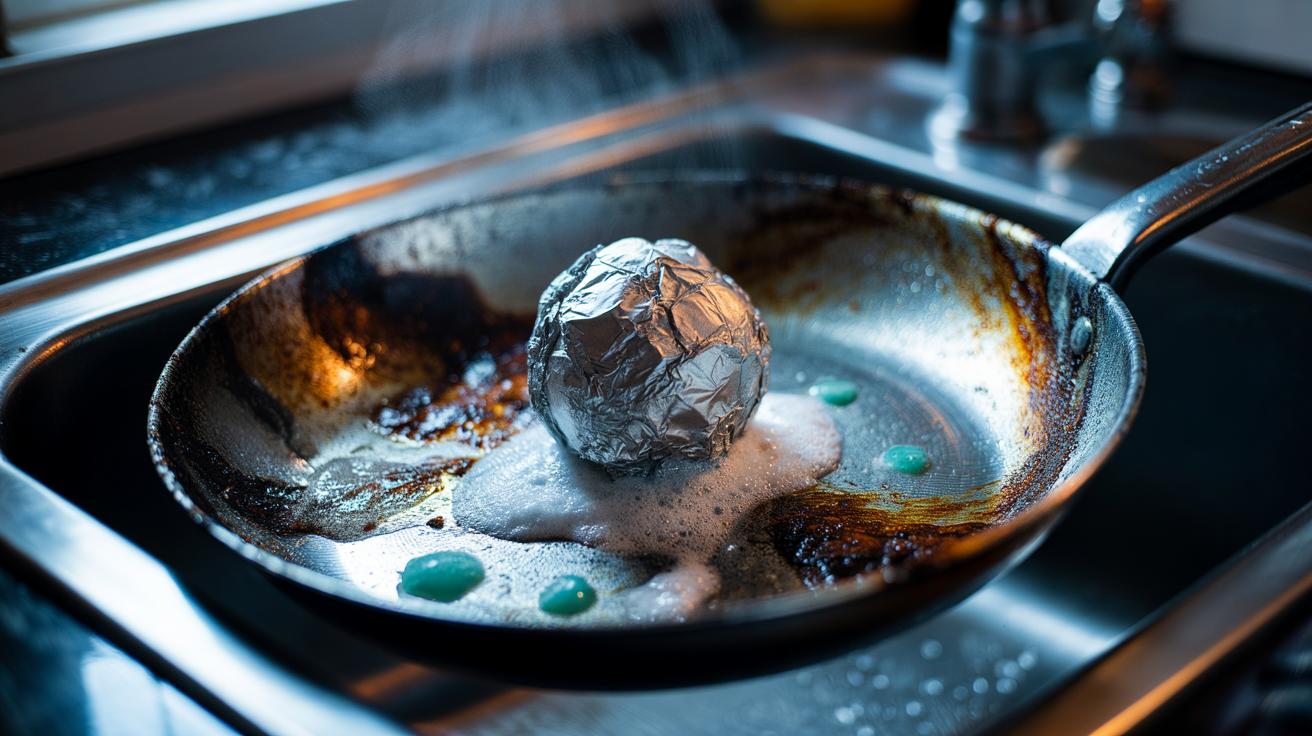
The humblest ball of aluminium foil can outperform fancy scourers when a pan is tattooed with burnt-on residue. Crumple, grip, and scrub: the edges of the metal bite into carbonised food, lifting it fast without the shedding fibres of steel wool or the wasted expense of single-use pads. Used correctly, a foil ball can restore stainless steel and seasoned cast-iron surfaces in minutes. It’s cheap, always on hand, and adjustable: squeeze tighter for precision, loosen for coverage. Pair it with hot water, a pinch of baking soda, or a dash of washing-up liquid, and you’ll convert stubborn crusts into harmless grey slurry that rinses clean.
Why a Foil Ball Works on Burnt Residue
A crumpled aluminium foil ball creates thousands of tiny peaks and edges. Those micro-ridges deliver controlled micro-abrasion, gripping carbon and polymerised oils so they fracture and lift. Because foil is soft and malleable, its edges deform under pressure rather than gouging the metal beneath. The result is effective cutting of residue with minimal scratching on durable cookware like stainless steel and well-seasoned cast iron. The ball’s shape constantly renews as you rotate it, exposing fresh edges without the harshness of steel wool.
The trick relies on a blend of mechanics and chemistry. Hot water softens carbonised films; an alkaline boost from baking soda helps break bonds; the foil’s texture then shaves debris free. Do not use a foil ball on non-stick coatings or delicate enamel, where any abrasion is too aggressive. On reactive soft aluminium pans, foil can leave grey marks, so test discreetly. For tough jobs, alternate short soaks with brisk scrubs to protect the base metal while clearing the crust.
How to Use Aluminium Foil to Rescue Pans
First, soften the battlefield. Fill the pan with very hot water and a teaspoon of baking soda or a drop of washing-up liquid. Let it sit for 10–15 minutes; for cast iron, skip prolonged soaks to preserve seasoning. Drain, then crumple a palm-sized foil ball, leaving a craggy surface. Wearing washing-up gloves, scrub in small circles, focusing on dark, glassy patches where sugar or starch has caramelised. Rotate the ball as edges flatten. If needed, re-crumple to refresh its bite.
For stainless steel, persistent amber heat tints respond to a dab of bar keeper’s friend or a paste of soda and water; rinse thoroughly afterward. For cast iron, keep it simple: hot water and foil only, then dry on a low hob and wipe with a thin film of oil to recondition the seasoning. Stop if you see bare metal shining on enamel or if the surface feels tacky—both signs of damage risk. Finish by rinsing, inspecting under light, and drying fully to prevent spotting or rust.
Foil Versus Other Scrubbers: Speed, Safety, and Cost
The foil ball excels because it’s cheap, adjustable, and non-shedding. A scouring pad is consistent, but it smears with grease and dulls quickly; steel wool is ferocious, yet leaves fragments and can scar softer finishes. Nylon brushes spare coatings but often skate over hard, carbonised patches. A foil ball splits the difference: assertive on crust, gentle on sound metal, and available instantly from your drawer. If you cook regularly with stainless or cast iron, its reliability makes it a go-to rescue tool.
| Tool | Abrasiveness | Best For | Risks | Cost/Availability |
|---|---|---|---|---|
| Aluminium foil ball | Medium, controllable | Stainless steel, cast iron | Scratches on non-stick, soft aluminium | Very low; always on hand |
| Steel wool | High | Heavy carbon on bare metal | Deep scratches; shedding strands | Low; shop-bought |
| Scouring pad | Medium | General grime | Dulls, can trap grease | Low; disposable |
| Nylon brush | Low | Non-stick, enamel | Ineffective on baked-on carbon | Low; reusable |
Speed matters when dinner’s cooling on the counter. The foil ball clears corners and rivets efficiently, renewing its cutting edges with a quick squeeze. Unlike steel wool, it won’t pepper your sink with metal fluff. Unlike pads, it won’t collapse into a greasy rag. Cost-per-clean is pennies, and you can repurpose lightly used foil from roasting trays—so long as it’s food-safe and free from heavy grease or bones. It’s a practical hedge against next day’s scrubathon.
Environmental and Food-Safety Considerations
Used thoughtfully, a foil ball can be a greener option than chemical degreasers. It shortens soaking times and reduces hot-water runs, cutting both energy and detergent use. Re-crumple clean offcuts from wrapping or baking to give them a second life before the recycling bin. Always rinse thoroughly to remove grey slurry—those are harmless oxide particles and loosened carbon, not pan damage. For stainless steel and well-seasoned cast iron, abrasion is mild; on soft aluminium cookware, limit pressure and test first to avoid visible smearing.
Food safety is straightforward: finish with a soap-and-rinse cycle, then dry completely. For cast iron, heat-dry and wipe with a whisper of oil to maintain a resilient, non-stick seasoning without chemicals. Avoid pairing foil with strong acid soaks, which can darken aluminium surfaces. If enamel shows chips or hairline cracks, switch to a soft sponge to avert flaking. In practice, the foil ball’s nimble control helps you clean efficiently while keeping harsh products under the sink.
The kitchen rarely rewards overcomplication. A scrunched aluminium foil ball, a splash of heat, and a measured scrub will return battered pans to service quickly, often better than store-bought scourers. The trick is to choose the right surface, add a gentle chemical assist when needed, and stop the moment residue gives way. Respect coatings, rinse well, and dry immediately for gleaming results. It’s the sort of homespun fix that earns a permanent spot in your cleaning arsenal. Which pan in your cupboard is begging for a foil-ball rescue, and how will you put the method to the test tonight?
Did you like it?4.6/5 (30)