In a nutshell
- 🧪 The science: sodium bicarbonate is a mildly alkaline powder that neutralises acidic odours (e.g., isovaleric and butyric acids), buffers pH, and offers light adsorption to reduce volatile smells.
- 🧂 How to use: apply a thin, even dusting (about 50–100 g for a double), allow contact time of 1–8 hours, ensure airflow, then vacuum slowly with a HEPA upholstery tool—quantity matters less than dwell time and dryness.
- 📊 Practical guide: match dose to odour—light mustiness (50 g, 1–2 h), post‑workout sourness (75–100 g, 4–6 h), pet spots (extra pinch, 6–8 h); best results on a dry, breezy day.
- 🚫 Limits: baking soda is a deodoriser, not a detergent or disinfectant; use enzymatic cleaners for urine and protein spills, and tackle mouldy smells with thorough drying or professional assessment.
- 🛡️ Prevention and safety: rotate the mattress, use a protector, ventilate daily, and wash bedding at 60°C; sprinkle sparingly, vacuum gently, spot‑test foams, and note warranty or airway sensitivities.
Strip the sheets and give the mattress a quick sniff: if it smells a bit like a gym bag after a rainy commute, the fix may already be in your cupboard. A brisk baking‑soda shake works not by masking, but by chemistry. The mildly alkaline powder, better known as sodium bicarbonate, interacts with acidic molecules from sweat, pets and spills, reducing the volatile compounds that hit your nose. It also helps manage moisture at the fabric surface. The result is a fresher mattress without perfumes or harsh cleaners. Here’s why this everyday staple neutralises odours, how to use it properly, and when you need something stronger.
How Alkalinity Tackles Acidic Odours
Most stubborn mattress smells come from volatile fatty acids produced when skin bacteria break down sweat and sebum. Think isovaleric acid (cheesy notes) or butyric acid (rancid butter). Sodium bicarbonate (NaHCO₃) is a mild base. When it meets these acidic molecules, it reacts to form non‑volatile salts and carbon dioxide, lowering the odour load that evaporates into the room. In water, bicarbonate also acts as a buffer around pH 8, nudging acidic residues away from the nose‑tingling zone where they are most noticeable. This is neutralisation, not fragrance cover‑up, which is why results often feel cleaner rather than perfumed.
The powder’s fine, porous crystals offer plenty of surface area, so there’s light adsorption too: some molecules stick to particle surfaces long enough to be hoovered away. It is not a silver bullet for every odour; proteins and oxidised oils can cling to fibres differently. Yet for the sweaty, slightly sour notes common in mattresses, an alkaline nudge plus dry absorption delivers a measurable improvement. Dryness is critical because moisture amplifies mustiness and helps odour molecules travel.
The Right Way to Sprinkle, Sit, and Suck
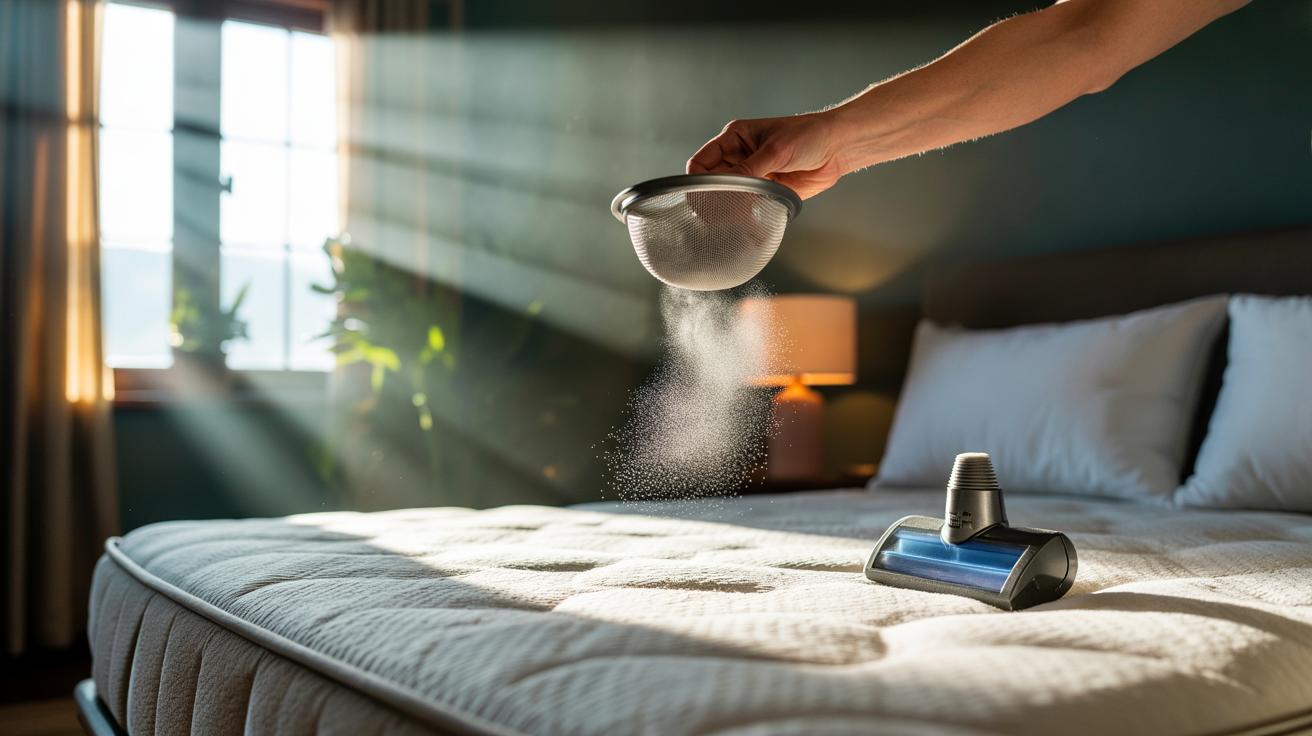
Start by opening windows; airflow speeds drying. Vacuum the mattress to remove grit. For memory foam or latex, do a quick spot test. Sieve a light, even layer of baking soda across the surface—about 50–100 g per double mattress, or a thin dusting you can just see. For targeted areas (where a pet napped), add a pinch more. Let the powder sit undisturbed for at least 60 minutes; two to eight hours is better in damp homes. Sunlight helps, but avoid direct harsh UV on delicate covers. Skip essential oils; they can stain foams and add competing fragrances.
Finish with a slow vacuum using a HEPA upholstery tool. Work in overlapping passes to lift powder from the stitching and quilting. If odours persist, repeat the next dry day or combine with a spot clean using an enzymatic product for organic spills. Keep the habit modest: a monthly refresh is plenty, with weekly sheet changes doing the heavy lifting. Remember: contact time and dryness matter more than sheer quantity.
| Odour Level | Baking Soda Amount | Dwell Time | Notes |
|---|---|---|---|
| Light mustiness | 50 g (thin dusting) | 1–2 hours | Air room; vacuum thoroughly |
| Post‑workout sourness | 75–100 g | 4–6 hours | Best on a dry, breezy day |
| Pet area | Targeted extra pinch | 6–8 hours | Use enzymatic cleaner if urine is involved |
What Baking Soda Can and Cannot Do
Think of baking soda as a deodoriser and moisture manager, not a magic wand. It reduces acidic odours and light dampness in the cover, yet it won’t pull deep‑set stains or fix microbial growth inside the mattress core. Baking soda is a deodoriser, not a detergent nor a disinfectant. For urine, milk and vomit, an enzymatic cleaner breaks down proteins that bicarbonate cannot touch. For mouldy smells caused by prolonged damp, prioritise drying and ventilation; if the odour persists, professional assessment may be safer than DIY.
Most people find sodium bicarbonate gentle, but dust can irritate sensitive airways. Sprinkle sparingly and vacuum slowly with a sealed, HEPA‑filtered machine. Avoid forcing wet solutions into foam, which trap moisture. If your mattress carries a warranty warning about powders, use a washable mattress protector and limit treatments to the cover. Finally, manage the root causes: rotate the mattress, wash bedding at 60°C where fabrics allow, and air the room daily. Prevention beats any rescue job.
A simple box of baking soda can reset a tired mattress because its gentle alkalinity neutralises acid‑led odours while its particles hold moisture and smells long enough to be lifted away. Used correctly—light dusting, patient contact time, thorough HEPA vacuuming—it is low‑cost, low‑risk and reliably effective for everyday mustiness. When spills and pet accidents happen, pair the powder with targeted enzymatic cleaning and serious drying. Over time, good ventilation and a decent protector will do as much as any product. With your next wash day approaching, how will you adjust your routine to keep that elusive “hotel‑fresh” feel for longer?
Did you like it?4.3/5 (27)