In a nutshell
- 🧪 The science: foot odour stems from bacteria; sodium bicarbonate delivers pH buffering and moisture absorption to neutralise smells at the source.
- 🧴 DIY shake: blend 2 parts bicarbonate of soda with 1 part cornflour; optional zinc oxide and a drop of essential oil; keep the mix dry and free-flowing.
- 👣 Application: dust lightly on clean, dry feet, socks, and shoes; wear breathable socks, rotate footwear, and do a midday refresh for all-day freshness.
- 🛡️ Safety: patch test first, avoid broken skin and inhaling dust; persistent odour with itching may indicate athlete’s foot, while excessive sweating could be hyperhidrosis—seek advice.
- 🧺 Care: pre-soak socks with bicarbonate in laundry and use overnight shoe sachets; consistent, light use outperforms heavy, occasional applications.
Britain knows sweat: packed trains, long walks, and wrapped-up work shoes can turn even the most diligent commuter’s feet into a greenhouse. There’s a thrifty fix hiding in your baking cupboard. A simple baking soda “shake” delivered each morning into socks and shoes can neutralise odour and trap dampness before it causes trouble. Unlike fragrances that simply mask smells, sodium bicarbonate targets the chemistry behind foot funk and keeps moisture in check. The trick is even coverage and consistency: a light dusting, daily. Here’s the science, the mix that works, and the safe, no-fuss routine to keep feet fresher from breakfast to bedtime.
Why Baking Soda Tackles Foot Odour
Foot odour mostly comes from odour-causing bacteria munching on sweat and dead skin, producing volatile acids and sulphur compounds. Sodium bicarbonate (bicarbonate of soda) is mildly alkaline, so it neutralises acidic by-products, dulling sharp smells at their source. Its fine, porous particles also behave like tiny sponges, soaking up perspiration before it becomes a bacterial buffet. That dual action—pH buffering and moisture absorption—is why a dusting of baking soda outperforms perfumed sprays that simply camouflage the issue. Neutralise the chemistry and you quiet the odour.
There’s a comfort angle, too. Drier skin reduces friction, so toes rub less and socks stay less clammy. By keeping the microenvironment of your shoe less humid, baking soda indirectly makes life harder for microbes that thrive in warm, wet conditions. It is unscented, inexpensive, and, used sensibly, gentle on skin and most materials. In UK stores it’s labelled bicarbonate of soda (not baking powder). A little powder placed precisely is more effective than a heavy, messy shake.
How to Make the All-Day Baking Soda Shake
Use a clean shaker—an empty spice jar with a few enlarged holes is ideal. Mix plain bicarbonate of soda with a silky carrier to improve spread. A 2:1 blend of bicarbonate to cornflour (cornstarch) gives grip-free glide and boosts moisture control. Sensitive skin? Skip fragrance or add just one drop of tea tree or lavender essential oil per tablespoon of powder, then let it air for an hour to disperse. Do not apply to broken skin and avoid inhaling dust when refilling.
| Ingredient | Purpose | Suggested Ratio |
|---|---|---|
| Bicarbonate of soda | Neutralises acids; absorbs odour | 2 parts |
| Cornflour | Improves flow; absorbs moisture | 1 part |
| Optional: zinc oxide | Extra dryness; mild odour control | 0.5 part |
| Optional: essential oil | Light scent; perceived freshness | 1 drop per tbsp |
Shake until uniform. Store sealed, away from steam. The goal is a free-flowing, soft powder that spreads evenly without caking. If your shoes dust white, you’re using too much.
Application: Keeping Feet Dry From Dawn to Dusk
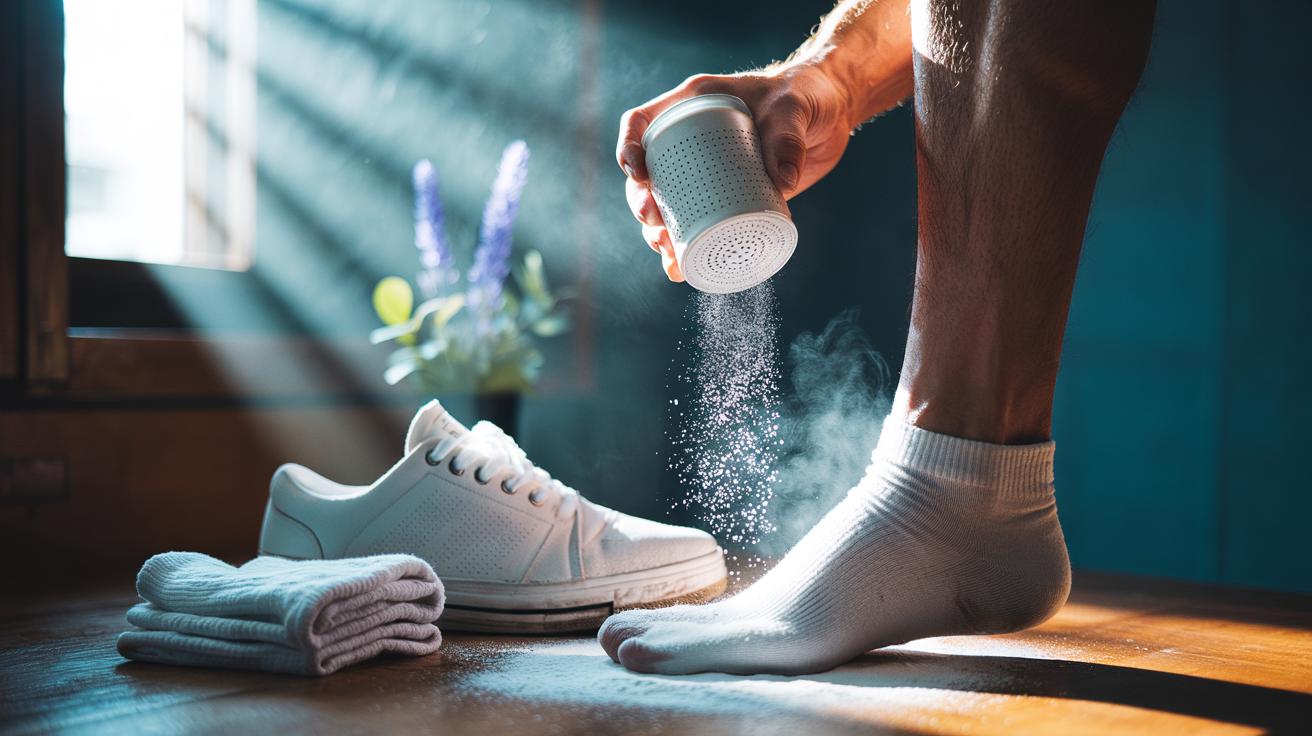
Start with clean, dry feet. Dust a small pinch into the palm, then pat over soles and between toes. Tap another pinch into each sock and shoe, aiming for the heel and forefoot where sweat gathers. Light coverage works longer than heavy clumps. Slip on breathable socks—merino blend or cotton with elastane—and let the powder settle for a minute before heading out.
For long shifts, carry a mini shaker for a quick lunchtime refresh: remove shoes, allow 60 seconds of air, add a whisper of powder, and change into a spare pair of socks. If you rotate shoes, dust the resting pair to absorb residual moisture. After sport, remove insoles, pat a tiny amount under them, and leave overnight. Target hot spots rather than coating the entire footbed.
Avoid overuse: a visible layer can cake with sweat and reduce traction. If you see residue on dark insoles, halve the dose or blend in more cornflour for finer distribution.
Safety, Laundry, and When to See a Professional
Bicarbonate of soda is generally safe for topical use, but patch test first if you have reactive skin. Keep away from eyes, and minimise dust inhalation while refilling your shaker. Don’t use on broken or irritated skin. If odour persists alongside itching, cracking, or scaling, speak to a pharmacist; you may have athlete’s foot, which needs antifungal treatment. Excessive sweating that disrupts daily life may be hyperhidrosis; your GP can advise on clinical-strength antiperspirants or other options via the NHS.
For laundry, add half a cup of bicarbonate to a warm pre-soak for gym socks, then wash as normal. It helps neutralise trapped acids and freshens fabrics without heavy fragrance. To freshen shoes, place a tablespoon of powder in a coffee filter, tie it, and leave the sachet inside overnight. This targets lingering humidity without coating the insole. Consistency—light, daily use—beats occasional heavy applications.
For commuters, runners, and anyone whose day keeps them on their feet, the baking soda shake is a quiet workhorse: low-cost, low-fuss, and surprisingly effective. By combining odour neutralisation with steady moisture absorption, it curbs the conditions that make smells flourish, while keeping feet more comfortable in the process. There’s room to personalise—cornflour for glide, zinc oxide for extra dryness, a hint of essential oil for confidence. Start small, apply evenly, repeat daily. Will you build your own shaker this week and test which blend keeps your shoes freshest from the morning rush to the evening ride home?
Did you like it?4.6/5 (25)