In a nutshell
- 🧪 The bag uses activated bamboo charcoal with vast surface area and micropores to capture molecules via adsorption (not absorption), driven by weak van der Waals forces.
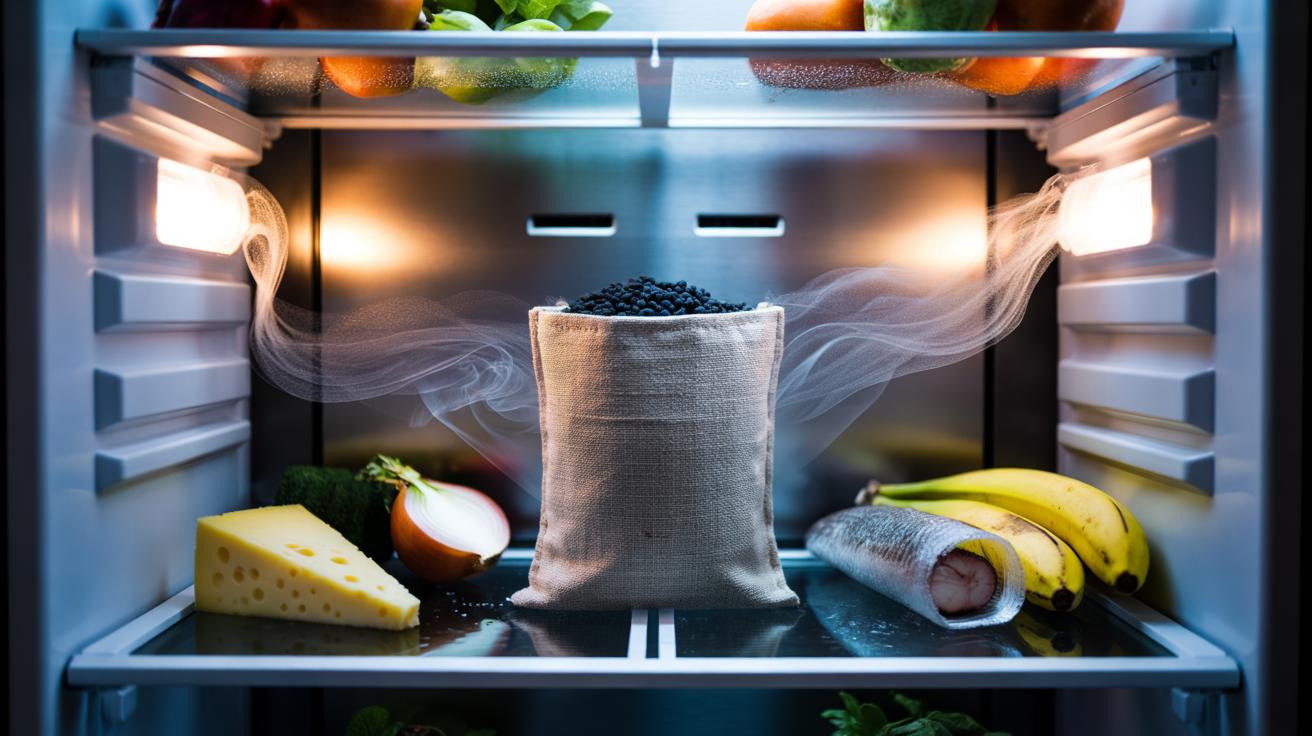
- 🧊 It tackles fridge VOCs from fish, cheese, onions, and helps reduce ethylene; cooler temperatures often enhance adsorption when the pouch has good airflow.
- 📍 Usage matters: place where air circulates, keep the fabric dry, and target roughly 75–100 g per 100 L of fridge volume without blocking vents.
- 🔁 Easy upkeep: recharge monthly in sunlight to release moisture and odours; expect a 12–24 month lifespan, then reuse the charcoal as a soil conditioner.
- ⚖️ Compared with baking soda and built-in carbon filters, the bag is reusable, cost‑effective, and plastic‑light, offering broad-spectrum odour control with minimal maintenance.
Open the fridge and the scent of last night’s garlic pasta can linger like an uninvited guest. A discreet linen pouch packed with bamboo charcoal promises a simpler fix: it quietly draws odours from the air and locks them away. This isn’t magic or perfume; it’s material science in a bag. The highly porous carbon structure inside offers vast internal surfaces that latch onto smell-causing molecules. Because it works without sprays or power, it’s tidy, silent, and endlessly reusable. For households looking to ditch chemical deodorisers, the bamboo charcoal bag delivers a clean, low-maintenance way to keep food aromas in their place—on the plate, not in the air.
What Makes Bamboo Charcoal So Porous
Bamboo grows fast, with dense, fibrous walls that become a superb precursor for activated carbon. During carbonisation and steam activation, those fibres transform into a labyrinth of micropores and mesopores. The result is a material with an immense surface area—often hundreds to over a thousand square metres per gram. That internal landscape is where odours go to disappear. Pore size matters: sub‑2 nm micropores grip the smallest molecules, while larger passages guide them inward. Oxygen-containing surface groups add sites for weak bonding, turning a simple pouch into a sophisticated molecular trap.
While many products say “absorb,” the science is adsorption: molecules adhere to surfaces via van der Waals forces and, in some cases, mild polarity effects. Unlike gels or sponges, the charcoal does not swell; it stores odours across its internal walls. Heat and airflow during recharging can release those guests, readying the pores for another cycle. This reversible process underpins the bag’s long service life and low waste.
How Adsorption Captures Fridge Odours
Kitchen fridges host a cocktail of volatile organic compounds (VOCs) from cheese, fish, onions, and leftovers: sulfur compounds, amines, and aldehydes are typical culprits. The bamboo charcoal’s microporous network fits many of these small, smelly molecules, while mesopores help funnel larger ones. Chilly temperatures actually favour adsorption for many gases because the process is exothermic. That means a fridge can be a strong operating environment for charcoal, provided the bag has decent airflow and isn’t buried behind containers.
Humidity does compete for space—water vapour can crowd surfaces—but high-quality activated bamboo charcoal retains capacity thanks to its pore hierarchy. In practice, it tames persistent notes such as trimethylamine from fish and certain sulfurous cheese aromas, and it can reduce ethylene, the ripening gas that nudges produce to soften too soon. The outcome isn’t perfume; it’s subtraction—a cleaner, more neutral background that helps fresh food taste as it should when the door swings open.
Using and Recharging a Charcoal Bag in Your Fridge
Place the bag on a shelf with clear airflow—ideally near the rear where circulation is steadier, but not blocking vents. For family-sized fridges, two small bags can outperform one bulky pouch by covering more air paths. Aim for roughly 75–100 g of bamboo charcoal per 100 litres of fridge volume. Keep the fabric dry and away from spills, because soaking the bag fills pores with water rather than odours.
To restore capacity, “recharge” monthly. Set the pouch in direct sunlight for 2–3 hours; radiant heat helps release trapped molecules and moisture. On grey UK days, a warm windowsill or a spot near (not on) a radiator works. Never microwave or oven-bake the bag—it’s fabric-wrapped and can scorch. With gentle care, performance stays steady.
Expect a lifespan of 12–24 months. When the bag finally slows, cut it open and mix the charcoal into plant soil as a soil conditioner. It can improve drainage and odour control in compost caddies too, completing a neat circular story from fridge to garden.
How It Compares to Baking Soda and Built-In Filters
Consumers often weigh bamboo charcoal against the old box of bicarbonate and the branded filter in premium fridges. The quick guide below outlines how each approach works, where it shines, and when it falls short. The right choice depends on the mix of odours, your maintenance habits, and budget.
| Solution | How It Works | Strengths | Limitations | Typical Lifespan |
|---|---|---|---|---|
| Bamboo Charcoal Bag | Adsorption on high-area carbon | Reusable, silent, no power; handles varied VOCs | Needs monthly recharge; dislikes spills/high humidity | 12–24 months (rechargeable) |
| Baking Soda | Neutralises acids; limited adsorption | Cheap, widely available | Narrow spectrum; often underdosed and left unchanged | 1–3 months before refresh |
| Fridge Carbon Filter | Forced airflow through activated carbon | Consistent performance; integrates with circulation | Proprietary refills; ongoing cost | 3–6 months per cartridge |
On running costs, a durable charcoal bag often lands at pennies per week over its life. It’s plastic-light, low fuss, and compostable at the end. For renters and students, it’s a plug-and-play deodoriser with no installation or brand lock-in. For households that already have a built-in filter, a small charcoal bag near produce drawers can give an extra edge against ethylene and pungent foods without clashing with existing hardware.
The quiet genius of the bamboo charcoal bag is its elegant simplicity: no scents, no gels, just vast surface area tucked inside a breathable pouch doing steady work every hour of the day. It’s a practical fix for shared kitchens, family fridges, and anyone who wants air that smells like nothing at all. Set it, recharge it, and let science do the tidy-up. Would you pair a charcoal bag with your current routine, or replace baking soda outright—and where in your fridge do you think it would make the most noticeable difference?
Did you like it?4.4/5 (24)