In a nutshell
- 🪵 A boiled-flaxseed rinse penetrates wood fibres, helps oils polymerise within the grain, and revives colour and texture while keeping a breathable, modestly moisture‑resistant finish.
- 🧪 Prep and apply: clean and lightly sand (180–220 grit), thin BLO 1:1 with solvent, work with the grain, wait 10–15 minutes, then wipe back to dry; repeat after ~24 hours and buff for a gentle sheen.
- ⚠️ Safety first: oil cures by oxidation, so rags can self‑ignite; lay flat to dry or submerge in water, ventilate well, and avoid flames; not ideal for food contact surfaces.
- 📊 Comparisons matter: Boiled linseed oil (BLO) gives warmth and speed; raw linseed is slow; pure tung offers stronger water resistance; hardwax oil is durable; mineral oil is food‑safe but non‑curing.
- 🧰 Aftercare: expect 6–12 hours touch‑dry and 5–10 days to cure; clean with pH‑neutral products, refresh annually with a light 1:3 oil–solvent mix, and avoid silicone polishes to keep future coats even.
When timber looks grey, parched, and joyless, a simple boiled-flaxseed rinse can deliver the kind of revival that sandpaper and silicone sprays rarely achieve. Drawn from the humble flax plant, this oil sinks into tired fibres, feeds dry surfaces, and coaxes out depth of grain without smothering the wood in plastic. The magic lies in penetration and polymerisation rather than a heavy topcoat. From oak tables to ash shelving and vintage tools, a light-and-repeat approach restores suppleness, adds a gentle sheen, and increases resistance to everyday splashes. Here’s how the science, technique, and safety stack up—and when to consider alternative natural oils for different jobs.
Why Boiled Flaxseed Oil Brings Timber Back to Life
Flaxseed—often called linseed—contains triglycerides that wick into wood capillaries. In its “boiled” form, it includes modern metal-based driers that help the oil polymerise in contact with oxygen, forming a microscopic network inside the fibres. This internal cure toughens the surface from within while leaving the grain tactile. Because the oil’s refractive index is close to lignin, it darkens pale, chalky boards just enough to reveal figure and chatoyance. The result is richer colour, enhanced contrast, and a revived, velvety feel under the hand.
Unlike film-forming varnishes, a boiled-flaxseed rinse is breathable. It reduces thirsty absorption without sealing off the timber, offering modest moisture resistance suitable for furniture and trim. Think “nourish and protect” rather than “encase and forget”. On historical pieces or interiors where patina matters, that subtlety is precisely the point: a finish that respects age, accentuates grain, and stays easy to refresh.
Preparing and Applying a Boiled-Flaxseed Rinse
Preparation sets the tone. Clean the surface with a pH‑neutral soap solution or odourless mineral spirit to lift waxes and grime, then allow to dry. Sand lightly to 180–220 grit, vacuum the dust, and wipe with a barely damp microfibre cloth. Warm a small quantity of boiled linseed oil in a water bath and, for the first pass, cut it 1:1 with citrus solvent or white spirit to improve flow. Thin coats are essential; heavy application risks sticky, slow-curing patches.
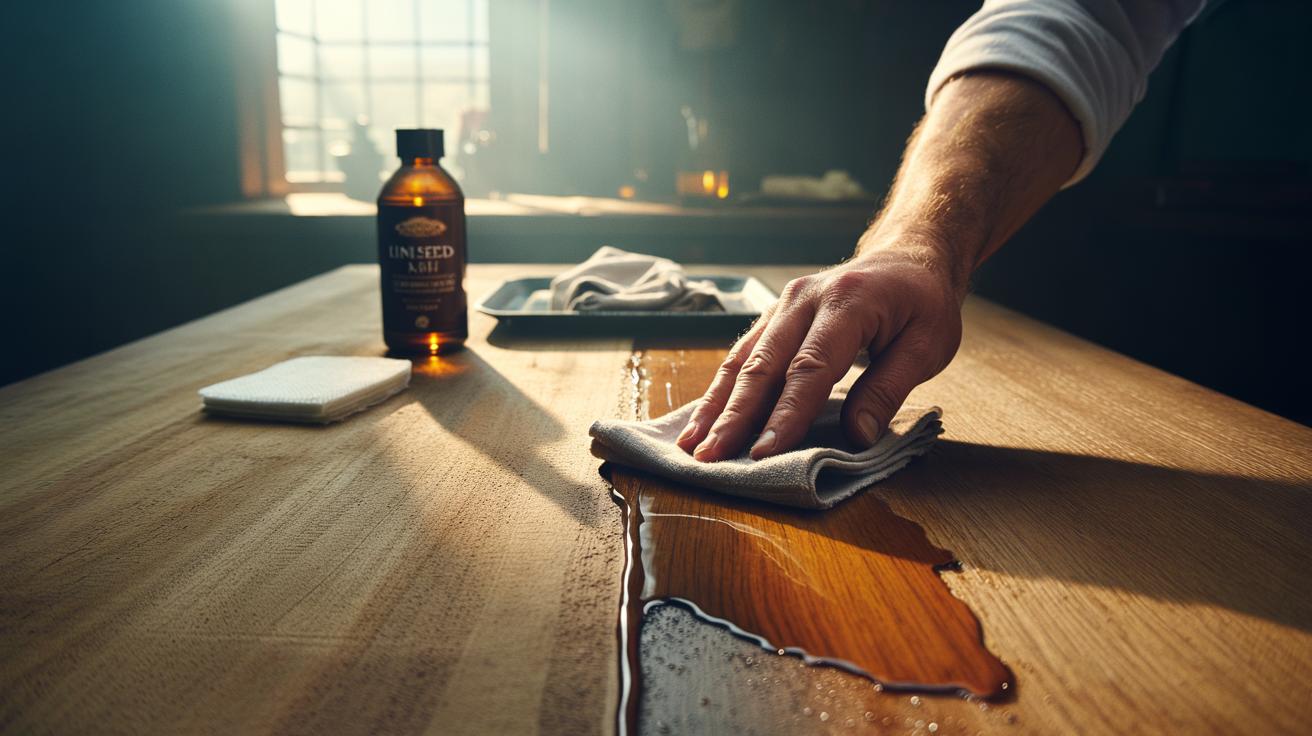
Charge a lint‑free cloth and work with the grain, massaging oil until the wood stops drinking. Wait 10–15 minutes, then wipe back to dry—no glossy wet spots left behind. After 24 hours, repeat once or twice, judging by feel rather than habit. A final buff with a white non‑scratch pad tightens the sheen. Optional: top with a whisper of beeswax-carnauba blend for added slip. If the surface looks shiny after wiping, you used too much oil.
Safety, Drying Times, and Aftercare
Boiled linseed oil cures by oxidation—a heat‑releasing reaction. Oil‑soaked rags can self‑ignite if scrunched in a bin. Spread them flat to dry outdoors, submerge in water in a sealed metal can, or follow local disposal guidance. Ventilate the area and avoid sparks or open flames. Modern driers speed things up but can affect food-contact suitability; keep the boiled-flaxseed rinse for furniture, not salad bowls or chopping boards. For kitchenware, choose pure tung or food‑safe mineral oil instead.
Expect touch‑dry in 6–12 hours, recoatable at roughly 24 hours, and a resilient cure in 5–10 days, slower in cold or damp conditions. Cleaning is simple: a pH‑neutral cleaner or a barely damp cloth. Refresh with a light wipe of 1:3 oil to solvent every year or two on hard‑worked areas. Avoid silicone polishes; they impede future coats and can cause patchy, fish‑eye defects. Care is little and often, not once and never again.
Natural Oils Compared for Thirsty Wood
Not all oils behave alike. Boiled linseed oil (BLO) gives fast build and warmth; raw linseed cures slowly but stays traditional; tung oil hardens more robustly and sheds water better; hardwax oils combine oils with waxes and resins for durable, low‑sheen protection; mineral oil is inert and ideal for food‑contact maintenance. Choosing the right bottle depends on use, patience, and the desired look. The matrix below helps to match project to product.
| Oil | Penetration | Drying/Cure | Sheen | Water Resistance | Food Contact | Notes |
|---|---|---|---|---|---|---|
| Boiled Linseed (BLO) | Deep | Fast/Moderate | Low to Satin | Moderate | Generally no | Warm tone; easy refresh |
| Raw Linseed | Deep | Very Slow/Slow | Low | Low–Moderate | Traditional use | No driers; patience required |
| Pure Tung | Moderate | Moderate/Strong | Low to Satin | High | Yes (pure) | Excellent water beading; pricier |
| Hardwax Oil | Moderate | Fast/Strong | Matt to Satin | High | Check label | Durable floors and tables |
| Mineral Oil | Shallow | N/A (doesn’t cure) | Low | Low | Yes | Needs frequent reapplication |
For a parched Victorian bannister or a mid‑century desk, boiled-flaxseed rinse is often the sweet spot: quick, warm, sympathetic to age. For wet zones or heavy wear, tung or a quality hardwax oil wins on resilience. Test on an inconspicuous area first; wood species and past finishes can alter results. Keep records of ratios, coats, and cure times so touch‑ups match the original treatment without guesswork.
The quiet beauty of a well‑oiled board is hard to fake: fibres plumped, grain vivid, and a touch that invites use. A natural-oil routine respects the material and keeps maintenance human‑scale, not a battle with plastic films. Applied with restraint, the boiled‑flaxseed rinse turns dryness into depth and sheen. Whether you’re rehabbing a flea‑market find or stewarding family furniture, which surface in your home is most in need of a nourishing oil treatment—and what finish would you choose to suit its daily life?
Did you like it?4.5/5 (20)