In a nutshell
- 🔬 The science: acetic acid in vinegar reacts with limescale (calcium carbonate) to form soluble calcium acetate, water, and CO₂; heat speeds wetting and reaction for faster, deeper cleaning.
- 🧽 The method: a boiled-vinegar wipe uses a hot vinegar–soaked microfibre cloth wrapped around taps for 10–20 minutes, followed by a gentle wipe, thorough rinse, and dry buff for a streak-free shine.
- 🛡️ Safety first: ventilate, wear gloves, keep children and pets away, and never mix vinegar with bleach; test on delicate finishes and avoid natural stone or lacquered/brass coatings.
- 🧰 Tools & timing: use white distilled vinegar (neat for heavy scale, 1:1 for maintenance), a heatproof jug, elastic bands, and a soft brush; apply hot and steaming—not boiling on the surface.
- 🚿 Prevention & alternatives: dry taps after use, clean the aerator monthly, consider a water softener, and choose citrate-based or neutral cleaners for sensitive finishes.
Hard water leaves a tell-tale haze on bathroom fittings, but there’s a thrifty trick that returns chrome to a showroom sheen: the boiled-vinegar wipe. The gentle acidity of acetic acid eats through chalky limescale, releasing fizzing carbon dioxide as it works. Heated vinegar accelerates the reaction and softens grime, allowing a simple cloth to lift deposits without harsh scouring. Because the method relies on chemistry rather than abrasion, it protects most modern tap finishes while producing a brighter, streak-free result. Below, we explain why the film forms, how warmed vinegar dismantles it, the safest way to apply heat, and when to choose a different approach.
Why Hard Water Leaves Taps Cloudy
Most UK households draw hard water containing dissolved calcium and magnesium ions picked up as rain passes through limestone and chalk. When this water evaporates on tap bodies, aerators and spouts, the minerals precipitate as calcium carbonate and magnesium salts, forming the stubborn, milky film known as limescale. The crystalline residue roughens the surface, so droplets cling and dry in place, encouraging a cycle of haze, water spots and dulling. Soap interacts with hardness to create a sticky layer beneath the scale, meaning deposits stick harder with every shower or handwash.
The result is not just cosmetic: limescale narrows flow paths, clogs the tap aerator and leaves valve parts gritty, shortening their life. Left alone, scale hardens into a crust that no amount of buffing will shift without damaging the finish. That’s why a targeted acid—mild but effective—is the smart way to cut through the carbonate matrix and release trapped grime without scratching chrome or stainless steel.
How Boiled Vinegar Dissolves Limescale
White distilled vinegar contains about 5–8% acetic acid, which reacts with calcium carbonate to form soluble calcium acetate, water and carbon dioxide gas. Chemically speaking: 2 CH₃COOH + CaCO₃ → Ca(CH₃COO)₂ + H₂O + CO₂. Warmth speeds everything up. As vinegar is heated, molecular motion increases and reaction rates climb; heat also lowers surface tension so the liquid wets pits and seams where scale hides. That’s why a hot vinegar wipe often outperforms a cold soak of the same strength.
Boiling the vinegar briefly, or heating it to steaming, primes it for contact. Apply it while hot—never scalding—to taps wrapped in a cloth so the acid stays in place. You’ll often hear a faint fizz as carbon dioxide escapes, a sign the acid is digesting the carbonate. Keep the surface wet until the fizzing subsides and the haze loosens; then a gentle rub will lift the softened film cleanly.
Step-by-Step: The Boiled-Vinegar Wipe
Decant plain white vinegar into a small pan or heatproof jug and warm it until steaming. For light build-up, a 1:1 mix with hot water is fine; for heavy deposits, use it neat. Do not boil to dryness and ventilate the room to avoid sharp fumes. While it heats, remove the aerator if accessible and set aside for a separate soak.
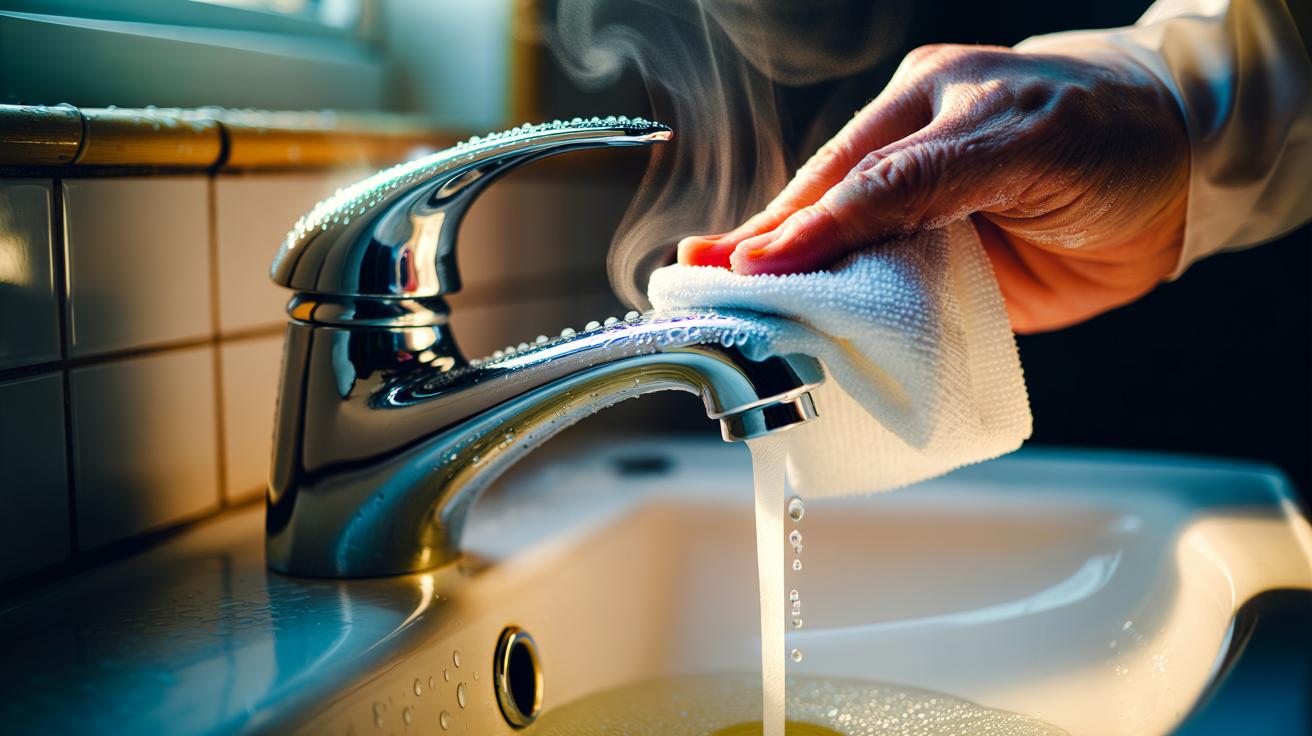
Soak a microfibre cloth in the hot vinegar, wring lightly, then wrap it snugly around the tap neck, spout and base. Secure with an elastic band so the fabric stays in contact. Leave for 10–20 minutes, re-wetting if it cools quickly in a draughty room. For intricate areas, dab with a cotton bud or use a soft toothbrush dipped in hot vinegar to guide the liquid into seams without scratching.
Unwrap and wipe; the film should slide away. Rinse thoroughly with warm water to remove dissolved salts, then buff dry to prevent fresh spots. If an area remains cloudy, repeat once rather than scrubbing. Never mix vinegar with bleach or products containing chlorine—dangerous gases can form.
Materials, Timing, and Safety at a Glance
Gather a small pan or kettle, a heatproof jug, microfibre cloths, cotton buds, a soft toothbrush and plain white distilled vinegar. Work with windows open or an extractor on low. Gloves protect skin from prolonged contact with hot acidic liquid, and safety glasses are sensible when tackling overhead shower arms. Keep children and pets away from steaming vessels.
Timing depends on thickness and age of the deposit. Fresh haze clears in minutes; chalky collars around tap bases may need a second hot application. Rinse thoroughly and dry to inhibit the next layer. If your tap finish is specialised—brushed brass, lacquered bronze, nickel—check the maker’s guidance. Always test on an inconspicuous spot first to confirm the acid won’t dull a delicate coating.
| Aspect | Recommendation |
|---|---|
| Vinegar type | White distilled, 5–8% acetic acid |
| Dilution | Neat for heavy scale; 1:1 with hot water for maintenance |
| Temperature | Hot and steaming, not boiling on the surface |
| Contact time | 10–20 minutes, re-wet cloth if it cools |
| Tools | Microfibre cloth, soft brush, elastic band, heatproof jug |
| Aftercare | Rinse well, dry, and buff to a shine |
When Not To Use Vinegar and Smarter Alternatives
Never use vinegar on natural stone such as marble, travertine or limestone—acids etch these surfaces. Avoid soaking lacquered brass or living finishes unless the manufacturer says it’s safe. On plated surfaces with damage or pinholes, acid may creep beneath and lift the coating. Where rubber seals or o-rings are exposed, keep contact brief and rinse promptly. If you smell bleach residue in the basin or overflow, flush thoroughly with water before introducing any acid.
For fixtures sensitive to acids, choose a neutral pH cleaner, a citrate-based descaler labelled safe for your finish, or try warm water with a drop of washing-up liquid followed by a gentle nylon pad. Preventive care matters most: wipe taps dry after use, fit an inexpensive water softener cartridge to the inlet, and clean the aerator monthly. Little and often beats heroic scrubbing that risks wear.
The boiled-vinegar wipe proves that smart chemistry can outshine brute force. By heating mild acetic acid, you speed the reaction that dissolves stubborn limescale, preserve your tap’s finish and restore sparkle in minutes. Consistent aftercare—quick rinses, thorough drying and aerator maintenance—slows the return of cloudy film, saving time and money. Treat heat and acid with respect, test first and never mix with bleach, and you’ll have a reliable, low-cost routine for hard-water homes. What’s your current method for keeping taps bright, and which part of your bathroom would benefit most from a careful hot-vinegar revival?
Did you like it?4.4/5 (21)