In a nutshell
- 🔥 Boiling-water pour lowers grease viscosity, cracks congealed films, and—with a little surfactant—helps emulsify loosened fats so they flush away instead of reattaching.
- 🫗 Follow a safe, staged pour: let the kettle stand 10–20 seconds, pour in 3–4 small bursts with pauses, add a touch of washing-up liquid before the final pour, then run the hot tap to keep residue moving.
- 🧪 Mind temperatures and materials: animal fats soften at 30–40°C, vegetable oils at 40–60°C, soap scum around 40–50°C; metals tolerate heat well, while PVC softens near ~80°C—use short, controlled pours.
- 🌿 Use gentle boosters and smart habits: bicarbonate with hot water for odours, enzyme cleaners overnight for organic films, sink strainers, and never pour fats down the drain—bin or bottle them instead.
- 🚩 Watch for red flags: gurgling, repeat slow drains, or water at gullies suggest deeper blockages; if two or three heat treatments fail, call a professional—heat is maintenance, not a cure-all.
Across British kitchens, a humble kettle has become an unexpected drain doctor. When grease from roasts, gravies, and washing-up cools, it clings to pipe walls, trapping food particles and forming stubborn films. A careful boiling-water pour can shift this grime, sending it on its way before it hardens into a full blockage. The trick is not force but physics: heat loosens fat, changes its viscosity, and allows water to carry it off. Used with care, hot water helps clear residue without harsh chemicals, and it’s a habit that aligns with water companies’ pleas to keep fatbergs out of our sewers. Here’s what happens in your pipes—and how to do it safely.
Why Boiling Water Breaks Grease Blockages
Grease build-up is a slow-motion problem. As cooking fats cool, they congeal, coating the inside of pipes with a waxy layer that snags crumbs, coffee grounds, and soap scum. When you pour in boiling water, two things happen at once: thermal energy reduces the viscosity of those fats, and the sudden temperature gradient causes the film to crack and slough off. Heat lets water penetrate the greasy biofilm, dislodging it from joints and bends. In effect, you’re briefly reversing the solidification process that created the clog in the first place, encouraging the residue to unstick and flow.
There’s also chemistry at play. Many greases are a cocktail of fats, proteins, and minerals. Heat disrupts weak bonds within this matrix, while the turbulence of a slow, steady pour provides gentle mechanical agitation. If a small dose of washing-up liquid is present, its surfactants lower surface tension, letting hot water emulsify loosened fat droplets so they travel downstream instead of reattaching. It’s not magic; it’s thermal softening plus better flow dynamics. The method works best on fresh or moderately aged deposits rather than rock-hard, months-old fat caps.
How to Use Heat Safely: A Step-By-Step Pour
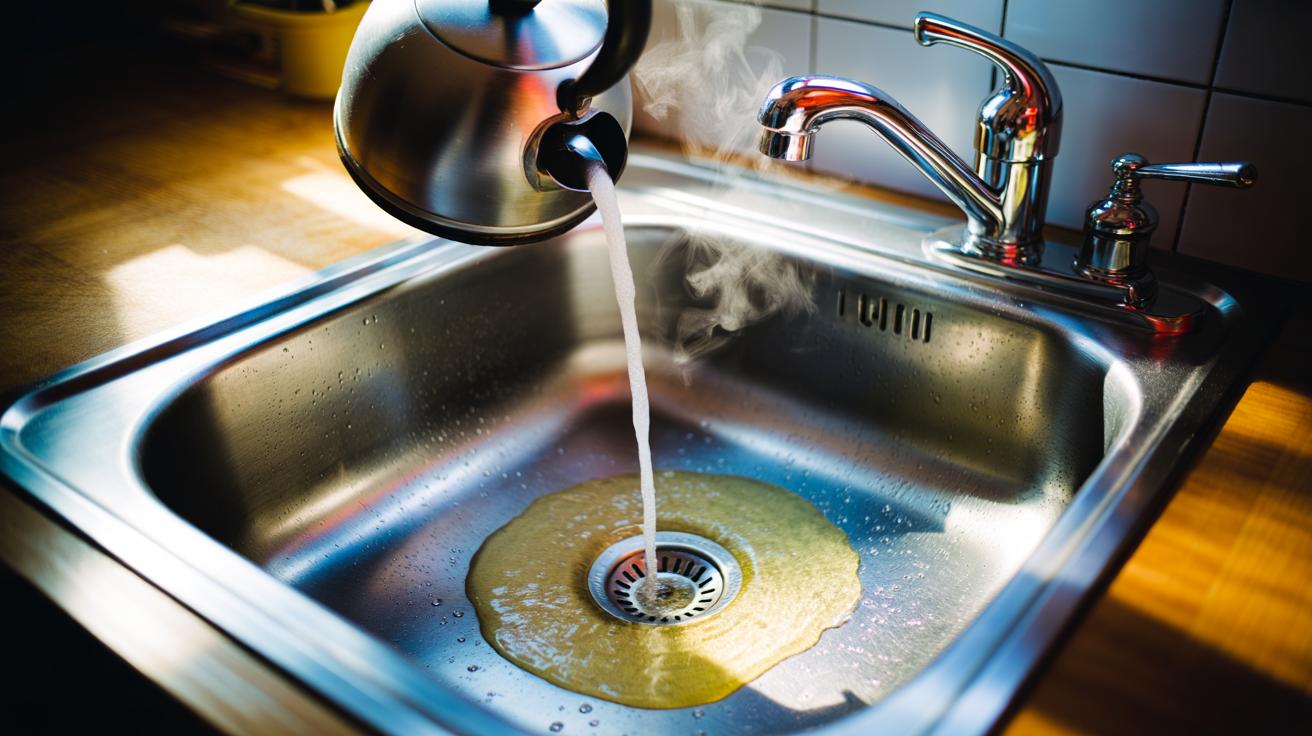
Boil a kettle and let it stand for 10–20 seconds—this slightly reduces the shock to pipework while staying near 100°C. Clear the sink of standing water. Pour the hot water in three to four small stages, pausing 10–20 seconds between each to let heat soak into the residue. A gradual pour spreads heat along the run, preventing sudden expansion at a single joint. If you’ve just cooked, wipe pans with kitchen roll before washing, then follow with the hot-water routine; you’ll be removing the residue before it sets.
Need a boost? Add a teaspoon of washing-up liquid just before the final pour to leverage its surfactants. For smelly traps, follow with a kettle of very warm—not boiling—water to flush lingering emulsions. Avoid mixing with caustic drain openers; heat accelerates reactions and can be hazardous. If you have PVC traps, bypass them with a slower pour and shorter bursts. Finish by running the hot tap for 30 seconds to keep loosened material moving into the main stack.
Science in the Sink: Temperatures, Materials, and Limits
Your kettle is a precise instrument in disguise. Animal fats start softening around 30–40°C; many vegetable oils thin dramatically by 50–60°C; soap scum softens in a similar range. At the spout, boiling water arrives near 100°C, but it cools rapidly in air and upon contact with colder metal or plastic, often reaching a safer 70–90°C by the time it hits the U-bend. This gradient is exactly what helps detach films from pipe walls. The key is moderation: short pulses let heat spread without overstressing joints, especially in older installations.
Pipe materials matter. Metal (copper, steel) shrugs off boiling water. PVC begins to soften near the high-70s to 80s°C range; quick, controlled pours reduce risk. Consistent, gentle practice beats occasional heroic deluges. If you notice recurring slow drains despite weekly maintenance, you may be dealing with deeper fat deposits or structural issues that hot water cannot overcome. Use heat as routine hygiene, not as a cure-all, and combine it with good kitchen habits: scrape plates, trap food, and bin fats.
| Substance/Component | Key Temperature | What Happens in the Pour |
|---|---|---|
| Animal fats | 30–40°C soften | Film loosens; viscosity drops, aiding flow |
| Vegetable oils | 40–60°C thin | Emulsifies with surfactant; less likely to reattach |
| Soap scum | 40–50°C soften | Breaks adhesion, especially in bends |
| PVC pipe | ~80°C softening | Use short, staged pours to limit thermal stress |
| Copper/steel pipe | High thermal tolerance | Safe for controlled boiling-water pours |
When Heat Is Not Enough: Natural Boosters and Red Flags
Heat pairs well with gentle helpers. A tablespoon of bicarbonate of soda followed after 10 minutes by hot (not boiling) water can freshen odours, while a dash of washing-up liquid before your final pour stabilises loosened fats in tiny droplets. Enzyme-based cleaners used overnight can digest organic films that heat alone cannot shift, especially in long runs. Space these methods—don’t combine caustic products with hot pours. Keep a mesh strainer in the sink, and never tip cooled fat down the drain; collect it in a jar and bin it, as UK water companies advise.
Know the signs that say stop. Gurgling, repeated backups, or water surfacing at a gully point signal a deeper obstruction. If the sink remains slow after two or three heat treatments over a week, call a professional; you may have a fatberg further along the line, a collapsed section, or tree-root intrusion. For renters, report persistent issues early to prevent damage. Heat is a clever maintenance tool, not a substitute for proper repair. Combined with better disposal habits, it dramatically cuts the risk of winter clogs.
Used thoughtfully, the boiling-water pour is a simple, effective way to keep drains moving and odours at bay without aggressive chemicals. The method relies on heat to soften, detach, and disperse greasy films before they mature into hard blockages. Adopt it as a weekly ritual after heavy cooking, pair it with strainers and sensible disposal, and your pipes—and the sewers downstream—will thank you. What will your household change first: a new routine at the kettle, or a stricter rule on what gets scraped, bottled, and binned?
Did you like it?4.5/5 (20)