In a nutshell
- 🔥 Boiling-water rinse breaks stubborn films by thinning oils, softening surfactants, loosening hard-water minerals, and using steam-driven sheeting; slight metal expansion helps residues release.
- 🫧 Method: start with clean cutlery, soak in just-boiled water for 30–60 seconds, agitate with tongs, add white vinegar (1 tsp/L) for mineral film, then hot rinse and dry with a microfibre cloth along the grain.
- 🛡️ Safety and materials: most stainless steel is heat-safe; keep dips brief for silver and avoid acids on glued handles; never mix acids with bleach; use tongs and stable, heatproof vessels.
- 💧 Water chemistry: in hard-water areas, add a little white vinegar, finish with low-mineral or deionised water, and dry immediately to prevent spots; adjust rinse-aid and detergent dosage to curb residue.
- 🧪 Troubleshooting: for rainbow tints, use a warm citric acid soak (about 1 tbsp/L, 5–10 minutes) before a hot rinse; tarnished silver needs polish; if haze persists, it may be etching or abrasion rather than removable film.
You load the dishwasher, you polish with a tea towel, yet the knives still look cloudy, the forks strangely grey. That stubborn film often isn’t dirt at all but a cocktail of hard-water minerals, trace grease, and dried detergent clinging to metal. The quickest cure hides in plain sight: a boiling-water rinse. By harnessing heat, you loosen the residues’ grip and restore that mirror sparkle in minutes. Heat is the cheapest polish you already own. Here’s why it works, how to do it safely at home, and what to try if your cutlery remains dull despite your best efforts.
How Heat Breaks the Film on Stainless Steel
At the heart of the trick is physics and a little kitchen chemistry. Hot water changes the behaviour of residue: it thins oils, softens dried-on surfactants, and weakens the network of calcium-rich deposits left by limescale. Stainless steel itself expands fractionally with heat, nudging films off the surface. Meanwhile, rapid evaporation encourages a wicking effect that lifts contaminants as droplets pull away. At the boil, micro-expansion in the steel plus a drop in residue viscosity helps films lose their foothold. Add a dash of acidity and you nudge mineral complexes back into solution, which is why an otherwise clean spoon turns lustrous the instant it meets the kettle’s roar.
Steam plays a supporting role. Condensing steam creates tiny flows across the metal—think invisible squeegees—while hotter rinse water reduces surface tension so droplets sheet and drain rather than bead and dry patchily. For most everyday stainless steel cutlery, especially pieces clouded by dishwasher cycles, the combination of heat, flow, and a clean final drain removes the veil that makes stainless look tired. If rainbow hues linger, that’s usually a thin oxide or detergent film: heat loosens it and a mild acid finish finishes the job.
| Residue Type | Typical Cause | Heat Action | Optional Boosters |
|---|---|---|---|
| Greasy haze | Cooking oils, hand transfer | Thins oils; improves sheeting | Drop of washing-up liquid |
| Mineral film | Hard water, rinse-aid salts | Softens and releases deposits | Teaspoon of white vinegar |
| Detergent cast | Excess powder, cool cycles | Re-dissolves residue | Hot rinse followed by wipe |
| Rainbow tint | Thin oxide + surfactant | Loosens film for removal | Warm citric acid dip |
The Boiling-Water Rinse: Step-by-Step Method
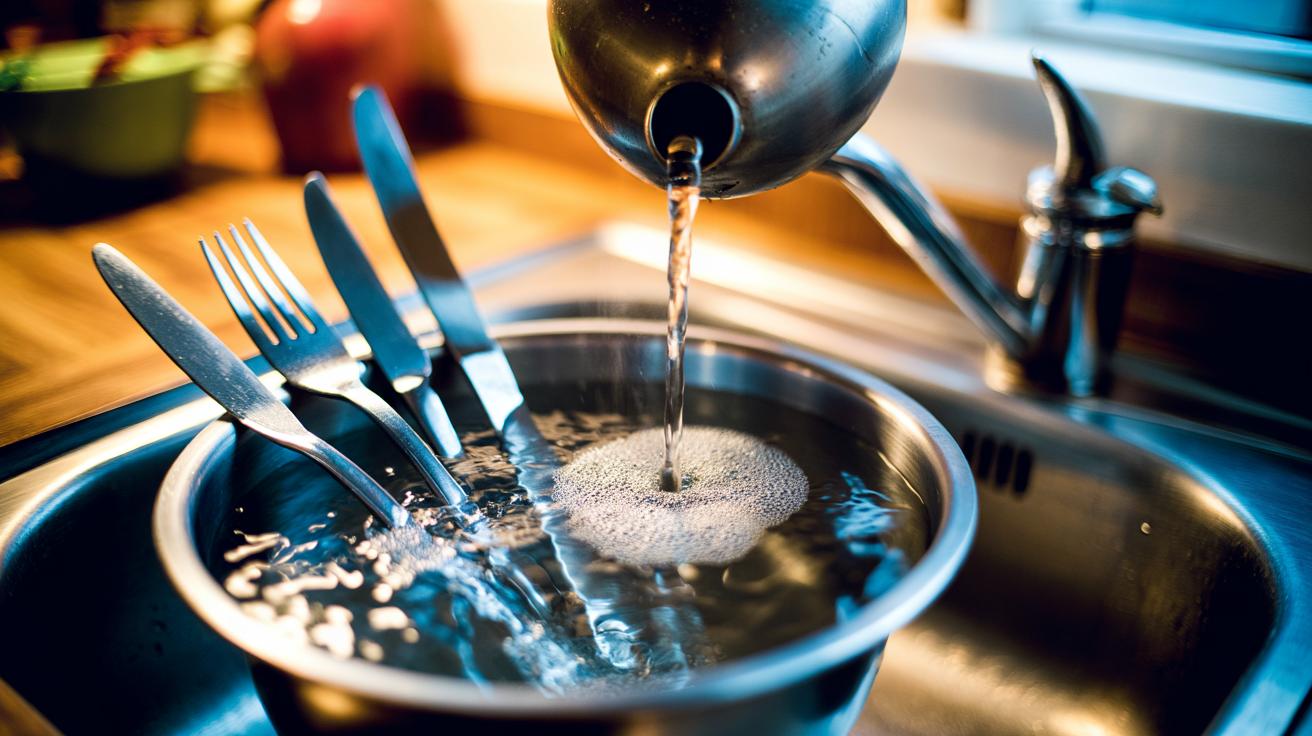
First, start with visibly clean cutlery—no crumbs or sticky sauces—so the rinse tackles only the invisible film. Boil a kettle. Line a heatproof bowl or pan with a clean tea towel to cushion knives and prevent clatter marks. Pour in water just off the boil. Submerge the pieces for 30–60 seconds, agitating gently with tongs. Always pour away from you and keep fingers clear: boiling water deserves respect. Lift each piece and let it drain vertically so water sheets off rather than pooling. A swift flick of the wrist helps remove droplets that can dry into marks.
For stubborn haze in hard-water areas, add one teaspoon of white vinegar per litre to the hot bath, then rinse briefly in plain hot water. Dry immediately with a lint-free microfibre cloth, following the grain of the metal to keep that showroom sheen. If you suspect detergent film, a single drop of washing-up liquid swished through the hot bath increases wetting and helps residues release, but finish with a clean hot rinse to avoid new streaks.
| Step | Action | Why It Works |
|---|---|---|
| 1 | Boil water and pre-warm vessel | Maintains high temperature on contact |
| 2 | 30–60s hot soak with gentle agitation | Heat loosens films; motion lifts them |
| 3 | Optional vinegar (1 tsp/L) | Dissolves minerals without harshness |
| 4 | Hot plain-water rinse, then dry | Prevents new spots; restores shine |
Safety, Materials, and Water Chemistry
Most modern stainless steel cutlery (18/10 or 18/8) tolerates boiling water comfortably. Take care with decorative handles, glued scales, or hollow-handled knives—avoid prolonged soaking. Silver-plated or solid silver pieces are also fine with heat but prefer a brief dip and no acids stronger than mild citric acid or vinegar. If in doubt, test one piece first and keep contact times short. Always use tongs, protect your hands, and place the vessel on a stable surface; steam burns are sneaky. Never mix acidic rinses with bleach-based products—the combination can release dangerous gases.
Britain’s famously variable water hardness matters. In very hard-water regions, mineral films form faster and rinse spots appear as droplets dry. Two easy fixes: dose the hot bath with a teaspoon of white vinegar per litre, and do a final splash with freshly boiled, low-mineral or deionised water to prevent limescale rings. Drying technique is the closer: a clean microfibre cloth, light pressure, and strokes along the grain. Hard water calls for hot rinses, mild acid, and immediate drying to keep the sparkle.
Troubleshooting and When to Go Beyond Heat
If the effort leaves a persistent rainbow tint, you’re likely seeing a wafer-thin oxide or detergent bloom. A warm 5–10 minute soak in diluted citric acid (about 1 tablespoon per litre), then a boiling-water rinse, usually clears it. Grey or black marks on silver are tarnish rather than film; a specialist silver polish or a bicarbonate-of-soda paste on foil can help, followed by a hot rinse. If the film resists heat and mild acid, you may be dealing with abrasion scars or dishwasher etching rather than residue. In that case, polishing compounds designed for cutlery will improve reflectivity, though deep pitting is permanent.
Prevent the problem at source: avoid over-dosing dishwasher detergent, choose a hotter cycle occasionally to clear surfactants, and space cutlery so pieces don’t nest. If rinse-aid leaves tracks, reduce the setting or try a different brand. Hand-washing? Finish with a kettle rinse and immediate drying. Store clean cloths separately from cooking towels—traces of oil undo your work. With small, consistent habits and the judicious use of heat, that dulled drawer of forks can look dinner-party ready again.
The genius of the boiling-water rinse is its simplicity: no fancy kit, no harsh chemicals, just heat doing the heavy lifting. Paired with a touch of acidity for limescale and a disciplined dry-down, it revives everyday cutlery without fuss and keeps your table setting camera-ready. Stainless steel rewards consistency, and a weekly hot rinse is often all it needs. Now that you know the science and the safe method, how will you adapt your routine—will you tweak your dishwasher settings, add a vinegar boost, or make the kettle your new finishing tool?
Did you like it?4.5/5 (24)