In a nutshell
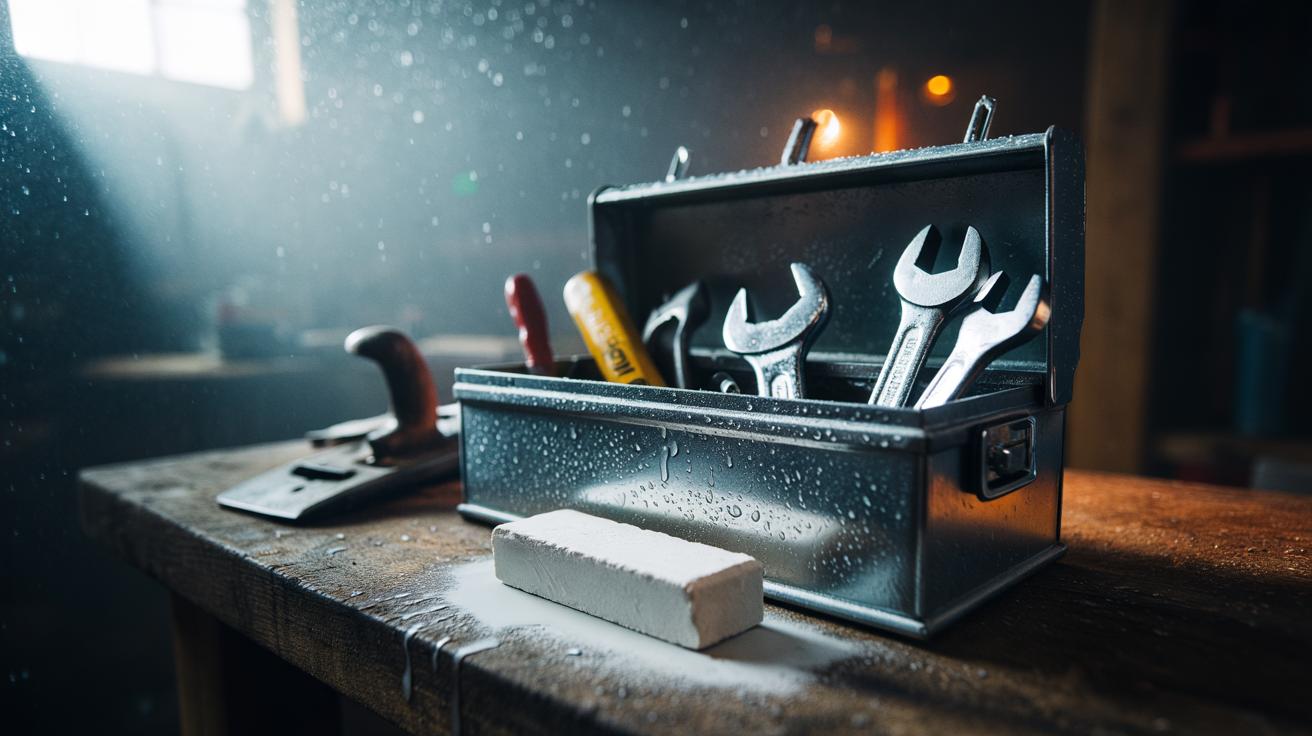
- 🧰 A humble chalk stick absorbs ambient moisture and gently raises pH, disrupting the corrosion cycle to prevent rust in closed toolboxes.
- 🔬 Moisture control relies on surface adsorption: calcium carbonate (true chalk) offers porous uptake that curbs condensation and humidity spikes in small, sealed spaces.
- 🛠️ Use classic white calcium carbonate sticks, wrap loosely for cleanliness, distribute in compartments, and recharge by gently drying; pair with wiping and a light oil film.
- 📊 Compared with silica gel (efficient), calcium chloride (powerful but messy), and rice (temporary), chalk is cheap, clean, and reusable—ideal for everyday toolboxes.
- 🚨 Know the limits: persistent rust signals an upgrade to VCI papers, silica gel, better sealing, or dehumidification; avoid calcium chloride inside boxes due to spill and corrosion risks.
In a country where sheds sweat and garages fog, keeping tools bright can feel like a losing battle. Yet a humble chalk stick dropped into a toolbox can slow the slide to orange. Chalk is porous and mildly alkaline, quietly soaking up stray moisture and nudging the microclimate away from corrosion. It is not a miracle desiccant, but it is cheap, safe, and endlessly reusable. A single stick can make a discernible difference in a closed toolbox, especially after temperature swings that trigger condensation. Think of it as a pocket-sized weatherproofing measure: light, unobtrusive and strategically effective for everyday metal care.
Why Metal Rusts and How Chalk Helps
Rust is the energetic reunion of iron with oxygen and water, a reaction that accelerates in the cramped, humid air of closed toolboxes. Temperature changes drive condensation on cold metal, forming micro-films that deliver oxygen and electrolytes exactly where corrosion wants them. Oils and wraps help, but the simplest win is to remove water vapour before it beads. Interrupt the moisture, and you disrupt the corrosion circuit. That’s where chalk earns its keep: it absorbs airborne damp before droplets settle, buying your tools the dry minutes and hours that add up to longer life.
Chalk’s pores and microcracks act like capillaries, wicking vapour into the solid. Because it is largely calcium carbonate, it also creates a slightly alkaline environment that discourages acidic residues from fingerprints or urban air pollution. This twin action—modest vapour uptake and pH buffering—does not replace a proper desiccant, but it does smooth out humidity spikes. It’s the everyday damp, not the deluge, that chalk is designed to tackle, making it a smart companion to routine wiping, light oiling, and sensible storage.
The Science of Moisture Absorption in Chalk
Most traditional classroom sticks are either calcium carbonate (true chalk) or calcium sulphate (gypsum). Both are porous and adsorb water on their surfaces; carbonate versions also trap trace moisture within their matrix. This is adsorption plus limited absorption, not a chemical reaction, so capacity is modest. Against heavy hitters like silica gel or calcium chloride, chalk is conservative—better at levelling humidity than stripping air to desert-dry. In a sealed toolbox, small, steady absorption can keep relative humidity below the threshold where condensation forms, which is precisely the point.
Humidity control is about balance. Silica gel can draw far more water, but it costs more and needs disciplined recharging. Calcium chloride is powerful yet messy and corrosive if spilled. Chalk sits in the pragmatic middle: safe, clean, affordable. Its porosity can vary by brand; polished “dustless” sticks often absorb less. Choose rougher, matte sticks for better performance, and break one in half to expose fresh surfaces. More surface area equals more active sites for moisture capture, a small tweak with outsized effect in tight spaces.
Practical Guide: Using Chalk Sticks in Toolboxes
Pick classic white chalk sticks made of calcium carbonate, not polymer “dustless” alternatives. Wrap each stick loosely in a scrap of cotton or paper to contain dust while keeping it breathable. Distribute two to four pieces across compartments, away from oily parts so the chalk can meet air, not grease. Label a corner of the box with the date, then check monthly. If the chalk feels damp or darker, dry it gently on a sunny windowsill or pop it in a low oven (80–90°C) for 30 minutes. Recharging keeps the cycle going indefinitely.
Pair chalk with basic good practice: wipe tools dry, apply a thin film of light oil to vulnerable faces, and avoid trapping rags that can wick moisture. For timber-handled tools, chalk’s dryness helps avert swelling, but don’t let brittle dust abrade finishes—keep sticks wrapped. If your shed faces coastal air or you open the box in drizzle, scale up to a true desiccant alongside chalk. The goal is steady dryness, not austerity: a stable microclimate beats extreme measures you won’t maintain.
| Moisture Control Option | Typical Capacity | Pros | Best Use |
|---|---|---|---|
| Chalk (Calcium Carbonate) | Low–Moderate | Cheap, clean, reusable, mildly alkaline | Everyday toolboxes, small drawers |
| Silica Gel | Moderate–High | Efficient, regenerable, tidy | Valuable tools, cameras, sealed cases |
| Calcium Chloride | Very High | Powerful in damp spaces | Sheds/lock-ups (use spill-safe containers) |
| Rice | Low | Readily available, temporary | Short-term stopgap only |
Alternatives, Limits, and When to Upgrade
Chalk is a great first line of defence, not a silver bullet. If your toolbox lives in a leaky shed, address the source: seal gaps, lift boxes off concrete, and introduce a small dehumidifier or ventilation. For precision kit—vernier calipers, plane irons, micrometers—add silica gel sachets or VCI (vapour corrosion inhibitor) papers. When rust stains appear despite chalk, you’ve crossed its capacity ceiling. Move to sealed cases with gasketed lids and a monitored desiccant, and consider a humidity indicator card for quick checks.
A note on chemistry: avoid open trays of calcium chloride inside toolboxes. It can liquefy, leak, and—if it contacts steel—accelerate corrosion. Chalk, by contrast, is benign even if it crumbs. Keep sticks away from cutting edges to prevent micro-abrasion, and replace any that have absorbed oil, which blocks pores. Think of chalk as the low-cost stabiliser that makes every other protection method work better, especially in Britain’s swingy shoulder seasons.
A chalk stick is a small gesture with outsized effect: keep the air calm, keep the steel calm. It won’t reverse a flood or rescue careless storage, but it will chip away at the everyday damp that shortens a tool’s life. As energy prices rise and workshops get pared back, this kind of simple, circular solution makes sense. Dry metal is happy metal, and chalk helps you get there with pennies and habit. What routine will you adopt this week to keep your tools dry, bright, and ready to work?
Did you like it?4.6/5 (27)