In a nutshell
- 🔪 Myth-busting: Most disposals lack “blades”; they use impellers and a grind ring—foil doesn’t sharpen but burnishes and cleans residues for smoother performance.
- 📝 How-to: Make a walnut-sized, loosely crumpled aluminium foil ball, run cold water, switch on for 3–5 seconds, flush 10–15 seconds, then add ice + coarse salt and finish with citrus.
- ⚙️ Why it works: Soft foil provides a mild abrasive action; cold water solidifies grease, reducing friction and odours by polishing contact points rather than creating a sharper edge.
- ⚠️ Safety & limits: Check manufacturer guidance, avoid large/dense balls or multiples, don’t use hot grease or mixed chemicals; limit to monthly use and clean the splash guard regularly.
- 🔄 Alternatives & upkeep: Try ice–salt flushes, enzyme cleaners, and a disposal brush; persistent issues may signal component wear or a failing motor—consider professional inspection.
The internet loves a quick fix, and few hacks are as oddly satisfying as the crumpled foil trick for a garbage disposal. Roll up a ball of aluminium foil, drop it into the unit, run water, and switch on—supposedly you’ll “sharpen” the blades and scour away grime in a single swoop. Here’s the truth: most waste-disposal units don’t have razor blades at all. They use blunt impellers and a grinding ring to pulverise scraps. Yet the foil hack still has merit. Used correctly, it can gently burnish metal surfaces, dislodge stuck-on debris, and freshen odours, leaving your unit cleaner and seemingly more effective.
What the Crumpled Foil Trick Actually Does
Despite the viral promise, there’s nothing to “hone” in the classic knife sense. A modern garbage disposal relies on centrifugal force: food is flung by impellers against a ridged grind ring. When you feed in a small ball of aluminium foil, the soft metal ricochets within the chamber, gently abrading gummy residues, polishing contact points, and knocking loose fibrous strands that can dull performance. The result often feels like sharpening because friction is reduced and the unit regains its bite.
Used sparingly, foil acts as a mild abrasive and a carrier for micro-debris, helping lift films of fat and oxidised residue. Pairing it with a brief cold-water flush aids coagulation of grease, so the scouring action becomes more effective. The trick is about restoring clean, consistent contact between the impellers, grind ring, and the waste you’re trying to process, not carving a keener edge.
Step-by-Step: How to Use Aluminium Foil in a Disposal
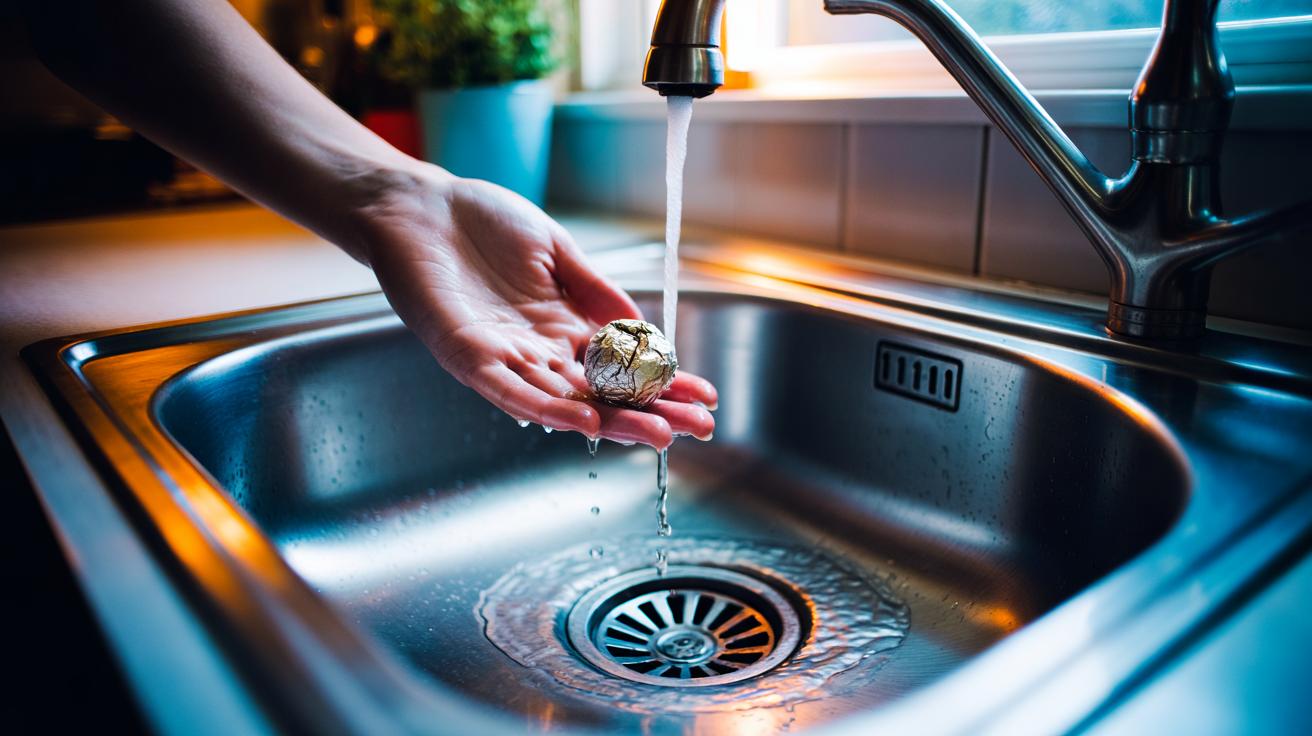
Prepare a foil ball about the size of a walnut—no larger. You want a loosely crumpled sphere of aluminium foil with a textured surface. Oversized or dense balls can stress the motor. Clear the sink, remove cutlery, and run a thin stream of cold water. Drop in the foil ball and switch the unit on for 3–5 seconds, just long enough for a brisk rattle.
Switch off the unit, keep the water running for 10–15 seconds to flush micro-particles, then follow with a handful of ice and a tablespoon of coarse salt. The ice firms residual grease; the salt boosts abrasion safely. Finish with a citrus rind for a clean, deodorised scent. Avoid adding foil alongside pits, shells, or bones.
Repeat the foil step only once every month or two. Routine care beats aggressive interventions: keep the splash guard clean, avoid stringy peelings, and run cold water before and after every use to move fats along the drainage.
Why It Works: Materials and Mechanics
Aluminium is softer than the stainless steels used in most waste-disposal units. In motion, the foil deforms, distributing impact while its textured surface provides light scouring. The process is best described as burnishing: the foil rubs and polishes areas where residue builds up, reducing micro-high points that can snag fibres and impede grinding. This improves efficiency without cutting a sharper edge.
Cold water helps fats solidify briefly, letting abrasion actually remove them rather than smear them around. Adding ice increases mechanical resistance safely; it shatters into harmless shards while scrubbing the chamber. Salt contributes angular grit that scours rubber and steel surfaces without lasting damage. Together, these forces clean, quiet minor rattles, and reduce odours caused by biofilm and rancid grease. The “sharpened” feel is really lower friction and restored clearance, which translates into smoother, quicker breakdown of scraps.
Safety Notes, Myths, and Alternatives
Check your manufacturer’s guidance before trying any hack. Many brands accept occasional soft abrasives like ice and salt; few explicitly mention foil. If your unit is older, underpowered, or already noisy, skip the foil and use an ice-salt flush with a brush-cleaned splash guard. Never pack the chamber with metal or run hot grease down the drain. Avoid bleach-ammonia mixes, which can create toxic fumes in confined plumbing.
| Do | Don’t |
|---|---|
| Use a walnut-sized, loosely crumpled foil ball | Use large, dense balls or multiple at once |
| Run cold water before, during, after | Run hot water with liquid grease |
| Follow with ice and coarse salt | Mix chemicals (bleach, drain openers) |
| Clean splash guard and trap routinely | Feed stringy husks, pits, or shells |
Good alternatives include enzyme cleaners for odour control, a dedicated disposal brush for the baffle, and periodic citrus peels. If grinding performance drops persistently, consider worn components or a failing motor—no hack replaces maintenance or a professional inspection.
Used judiciously, the crumpled aluminium foil trick can rejuvenate a garbage disposal by cleaning and burnishing the grind assembly, creating the impression of “sharper” action while tackling odours. It’s a quick, frugal part of a sensible care routine alongside ice, salt, and regular rinses—provided you respect the limits of your unit and avoid overuse. The goal isn’t to sharpen; it’s to restore clean, low-friction contact so food breaks down fast and drains freely. How will you tailor this method to your own kitchen—monthly spruce-up, or saved for when performance starts to lag?
Did you like it?4.5/5 (27)