In a nutshell
- 🎯 The pillowcase trick encloses each blade, using friction to dislodge buildup while the fabric walls trap dust before it falls, reducing allergens and room-wide mess.
- 🛠️ Safety-first steps: switch the fan off, use a stable stool, slide a pillowcase over the blade, pinch edges, and pull back; shake out outside and launder the case; consider a mask and glasses for heavy dust.
- 🧵 Right tools matter: choose tight-weave cotton or microfiber, opt for queen/king sizes to fit wide blades, add a light mist of cleaner inside the case, and use a steady ladder for control.
- 🧽 Finish and care: wipe the motor housing lightly, dry blades to prevent streaks, avoid harsh chemicals on veneer, and clean all blades evenly to maintain balance and prevent wobble.
- ⏱️ Routine and benefits: clean monthly in summer and quarterly in cooler months; expect quieter, more efficient airflow and less follow-up cleaning, especially in grease-prone kitchens.
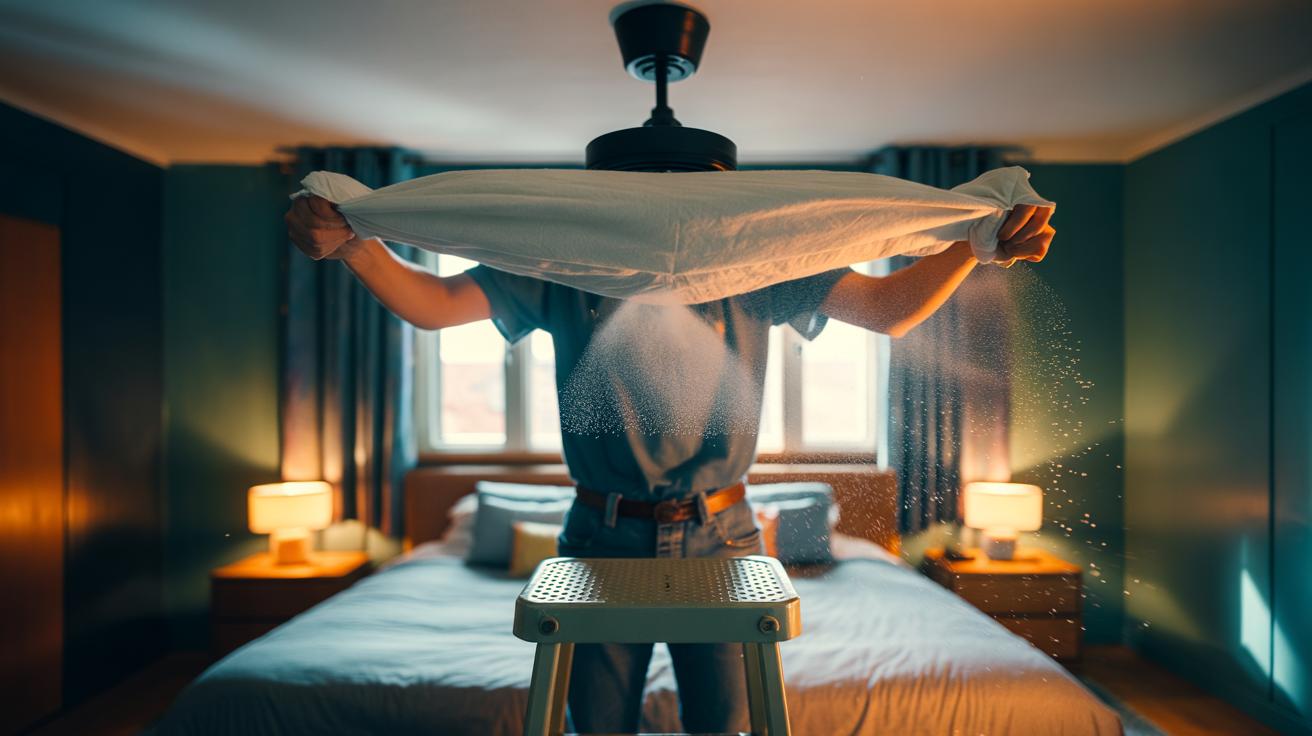
There is a quietly brilliant housekeeping hack that stops a blizzard of fluff the second you touch the switch: the pillowcase trick for ceiling fan blades. Slide fabric over each blade, sweep once, and the dust doesn’t fall—it’s swallowed. In homes where a fan hangs over a bed, dining table, or carpet, this method is a time-saver and a sneeze-saver. Instead of dust drifting onto your face, furniture, and flooring, it collects inside the pillowcase like a sealed pouch. The result is quick, tidy, and unexpectedly satisfying. Here’s why it works, how to do it safely, and which tools make the trick even sharper.
Why the Pillowcase Trick Works
Dust on fan blades is a clingy cocktail of lint, skin cells, and oily particles. When you swipe with an open cloth or paper towel, you create turbulence and send debris airborne. The pillowcase trick inverts the physics. By enclosing the blade, you create a containment chamber. As you pull the case back, the fabric’s friction dislodges buildup while its walls capture the fallout. The dust has nowhere to escape. That single motion reduces the risk of spreading allergens and spares you from cleaning the room twice.
Fabric density matters too. A tight weave—think soft cotton or microfiber—grabs fine particulate that looser knits miss. Add a light mist of water or a drop of mild cleaner inside the case and you introduce weight, which helps lock down particles. Compared with sprays and feather dusters, this approach is cleaner, quieter, and often faster, especially for fans with wide blades or textured finishes.
Step-by-Step: How to Use It Safely
Turn the fan off at the wall and wait for the blades to stop completely. Position a stable step stool or ladder beneath the outer half of a blade so you’re reaching forward, not overhead. Gather a clean, dry pillowcase. If dust looks greasy, lightly spritz the inside with water and a drop of dish soap. Slide the open end over the blade until the case’s seam reaches the spindle end; pinch the long edges around the blade to seal.
With gentle pressure, pull the pillowcase back toward you, keeping your grip along the edges. The dust detaches and falls into the case, not your eyes. Repeat for each blade, rotating the ladder instead of twisting your back. Take the pillowcase outside, turn it inside out, and shake the contents into a bin. Launder it on a warm cycle to reset the fibres. Never clean above head height without secure footing and adequate lighting, and consider safety glasses if buildup is heavy.
Choosing the Right Pillowcase and Tools
The right kit makes the trick effortless. Aim for a queen or king-size pillowcase to cover broad blades, opt for tighter weaves to trap fine dust, and choose a stable platform over a wobbly chair. A small spray bottle and a gentle cleaner round out the setup without leaving residue. If allergies are a concern, a simple mask is sensible. The table below condenses the choices that matter.
| Item | Why It Matters | Quick Tip |
|---|---|---|
| Cotton or Microfiber Pillowcase | Tight weave traps fine dust and dander. | Prefer microfiber for heavy buildup. |
| Size (Queen/King) | Fits wider blades; easier to seal around edges. | Choose king for large, modern fans. |
| Step Stool/Ladder | Stable height reduces strain and risk. | Place under outer third of the blade. |
| Mild Cleaner + Spray | Dampness helps keep dust contained. | Mist inside the case, not the motor. |
| Mask/Glasses | Limits irritation from fine particles. | Use when buildup is visible from below. |
Finish by wiping the motor housing with a lightly damp cloth and drying the blades to prevent streaks. Balance matters: clean every blade evenly to avoid wobble. For wood-veneer blades, skip harsh chemicals; a tiny amount of diluted dish soap is enough. Once you’ve laundered the pillowcase, store it with your cleaning kit so you’re ready when the first dust halo reappears.
The “final secret” of the pillowcase trick is not just its neatness but its reliability: it works in one pass, it’s gentle on finishes, and it slashes cleanup time. Use it quarterly in cooler months and monthly in summer, especially in kitchens where grease attracts dust. Clean blades move air more quietly and efficiently, a small win you’ll notice the next warm evening. Will you try this method on your next cleaning day—or adapt it with your own twist to handle chandeliers, high shelves, and other dust traps just out of reach?
Did you like it?4.3/5 (29)