In a nutshell
- ❄️ The freezer method chills gum below its glass transition, turning sticky residue brittle so it cracks off fibres instead of smearing.
- 🧊 Step-by-step: apply a bag of ice or inverted compressed air for 2–5 minutes, chip from the edges with a spoon or plastic scraper, and re-chill frequently to keep the gum snappable.
- 🧼 Residue care: blot with a citrus-based adhesive remover or methylated spirits after a patch test, then neutralise with a damp cloth, deodorise with bicarbonate of soda, vacuum, and groom the pile.
- 🧵 Fibre safety: adjust timing and tools for wool, nylon, polypropylene, and polyester; avoid flooding, sharp blades, coloured cloths, and force that lifts loops.
- 🛠️ Call a pro for large, embedded, antique, or seam-adjacent gum; professionals use cryo sprays and re-tufting, while DIY myths like heat or oils only spread stains.
Nothing derails a smart sitting room faster than a wad of gum welded into the carpet pile. Hot water and scrubbing only smear the mess wider, trapping colour and odour in the fibres. The simplest fix is unglamorous but ingenious: the freezer method. By plunging gum into a deep chill, you coax it from sticky to snappy, so it fractures rather than strings. Cold turns tack into shatter. With a few household items and patience, you can lift the residue cleanly, safeguard delicate fibres, and avoid calling in a costly specialist. Here is the science, the step-by-step, and the safety notes every UK home should know.
Why Cold Works on Chewing Gum
Chewing gum is a tangle of polymers that behave like a rubber band at room temperature. Scientists call this viscoelastic: it stretches and flows, which is exactly why it smears when you rub it. Drop the temperature, however, and that same polymer network approaches its glass transition. Instead of rebounding, it turns rigid and loses grip on adjacent fibres. Lowering the gum below this threshold makes it brittle enough to chip away in flakes. You are not dissolving the gum; you are changing its mechanical behaviour so it stops acting like glue.
The role of additives matters too. Flavours, sweeteners, and oils act as plasticisers that keep gum bendy. Cold suppresses their effect, squeezing mobility out of the mix. In carpets, where gum is pressed into the nap, chilling penetrates the blob and the fibre interface, reducing adhesion. That is why the freezer method succeeds where hot water fails: heat softens gum and drives it deeper; cold firms it up and weakens the bond.
Step-By-Step: The Freezer Method for Carpet Gum
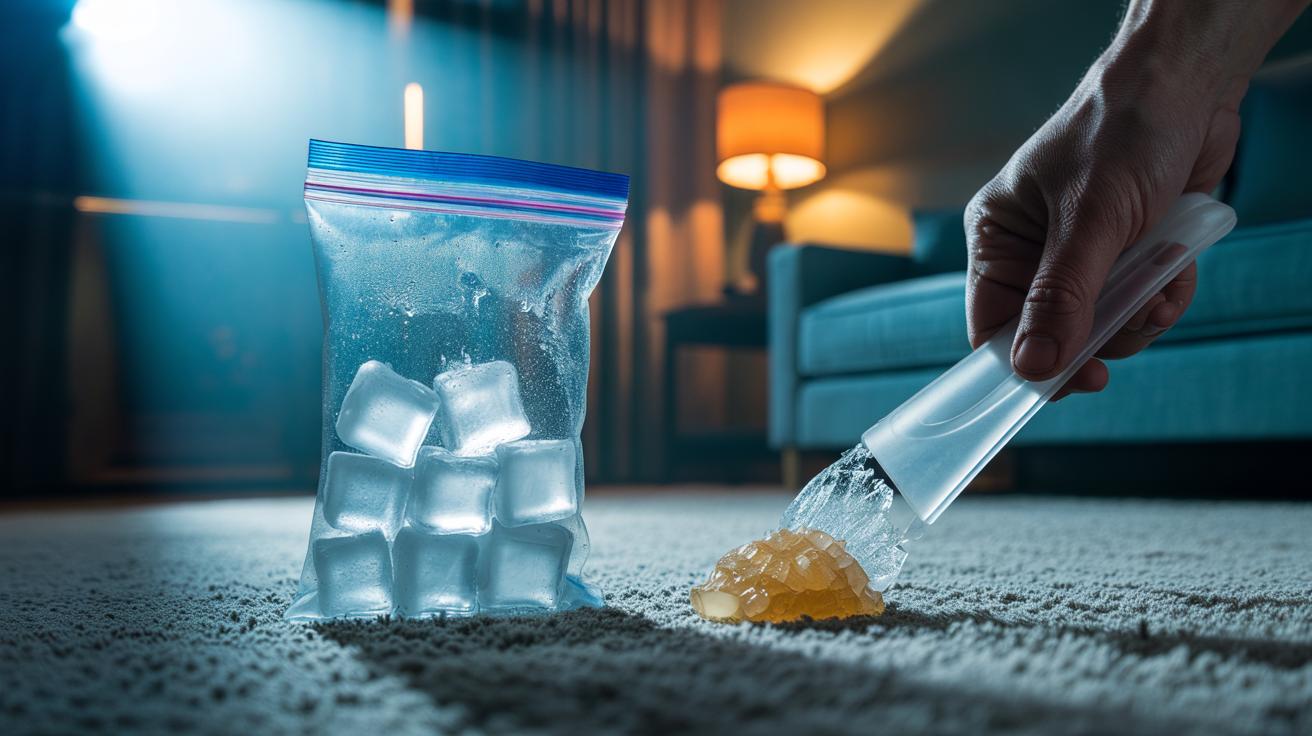
First, isolate the spot. Pick off any fluff or grit and place a handful of ice cubes in a zip bag, or use a gel pack. Press firmly on the gum for 2–5 minutes, shifting the pack so meltwater does not soak the area. If you have a can of compressed air, invert it for a freeze spray blast that chills rapidly. Do not flood the carpet—moisture spreads dyes and can wick adhesive deeper.
Test the gum with a spoon edge or a plastic scraper. It should feel hard, not rubbery. Working from the outer rim inward, lever up thin chips, keeping the tool nearly flat to protect the pile. Reapply cold every 30–60 seconds to keep the gum in its brittle state; warm fragments smear, cold fragments snap. Never use a sharp blade; cutting loops leaves a bald patch you cannot hide. Collect flakes as you go, then vacuum to remove crumbs lodged between tufts.
If a shadow remains, dab—not rub—a small amount of a citrus-based adhesive remover or methylated spirits onto a white cloth and blot the residue. Always patch test behind a sofa or in a corner first. Neutralise any lingering solvent with a barely damp cloth, then sprinkle bicarbonate of soda, leave for an hour, and vacuum to freshen the area. Gently brush the pile upright with a spoon to blend the texture.
Tools, Timings, and Safety for Different Carpet Fibres
Carpet composition influences how assertively you can chill and scrape. Wool is resilient but sensitive to aggressive solvents; polypropylene shrugs off moisture but can show stress whitening if scuffed. The aim is consistency: sustain the cold long enough to embrittle the gum, then lift in thin passes. Short, repeated freezes are safer than one prolonged soak. A table helps match fibre to method and give a sense of timing and aftercare.
| Carpet Fibre | Chill Time | Preferred Tool | Solvent Caution |
|---|---|---|---|
| Wool | 2–3 min, repeat as needed | Spoon edge/credit card | Patch test; avoid strong alkalines |
| Nylon (Polyamide) | 3–5 min | Plastic scraper | Light citrus or meths, blot only |
| Polypropylene | 2–4 min | Spoon edge | Generally tolerant; avoid oils |
| Polyester | 3–5 min | Plastic scraper | Minimal solvent; swift neutralise |
Keep colours safe by using a white cloth throughout and never rubbing dye from coloured ice bags or towels into the area. Dispose of gum fragments immediately so they do not track elsewhere. If fibres begin to lift, stop and re-chill—force is a sign the gum has warmed. Finish by grooming the pile to prevent a visible halo.
When to Call a Professional and Alternative Tricks
Some jobs outstay the home kit. If gum has been trodden into a large area, is bonded to an antique rug, or has fused near a seam, call a professional cleaner. They can use cryo sprays or controlled dry-ice pellets and have spotting agents calibrated for wool blends. Pros also re-tuft or steam the pile to erase pressure marks. If the carpet buckles, do not keep scraping; structural damage costs more than a service call.
There are handy variations. An inverted can of compressed air creates instant frost when you lack ice. For cars, a freezer pack with a tea towel barrier avoids saturating underlay. Skip online myths: peanut butter, hairdryers, and cooking oils are messy, drive odours, and often deepen stains. Heat spreads gum; oil feeds dirt. The principle remains simple: freeze, chip, re-freeze, then spot-clean and groom, all with a light touch.
Cold is the quiet hero of carpet care, transforming a gummy nuisance into brittle confetti you can lift without drama. By exploiting brittleness instead of brute force, you protect fibres, preserve colour, and skip expensive call-outs. Keep a zip bag and a plastic scraper in your cleaning caddy, and remember the rhythm: chill, chip, re-chill, blot, and groom. Patience and low temperatures beat panic and hot water every time. When gum strikes next—on a shag pile, a hallway runner, or the car mat—will you reach for the freezer method first, or do you have a trusted twist that deserves a place in the playbook?
Did you like it?4.5/5 (21)