In a nutshell
- 🔬 Warm air clears steam by raising the mirror above the dew point, lowering local relative humidity, disrupting the saturated boundary layer, and accelerating evaporation.
- 💨 Use a hairdryer on warm/medium, 20–30 cm from the glass, in slow overlapping arcs for 10–20 seconds; ventilate to keep the surface above the dew point and delay re-fogging.
- 🛡️ UK safety first: plug into an RCD-protected outlet outside the bathroom, keep hands and floors dry, avoid shaver sockets, and unplug immediately after use.
- 🧰 Long-term fixes: fit a heated mirror demister pad, add a humidity-sensing extractor fan, use a warm towel rail, apply a hydrophobic coating or shaving foam, and squeegee moisture.
- ♻️ A 20-second blast costs a fraction of a penny, but better ventilation and permanent solutions cut repeat clearing and save energy over time.
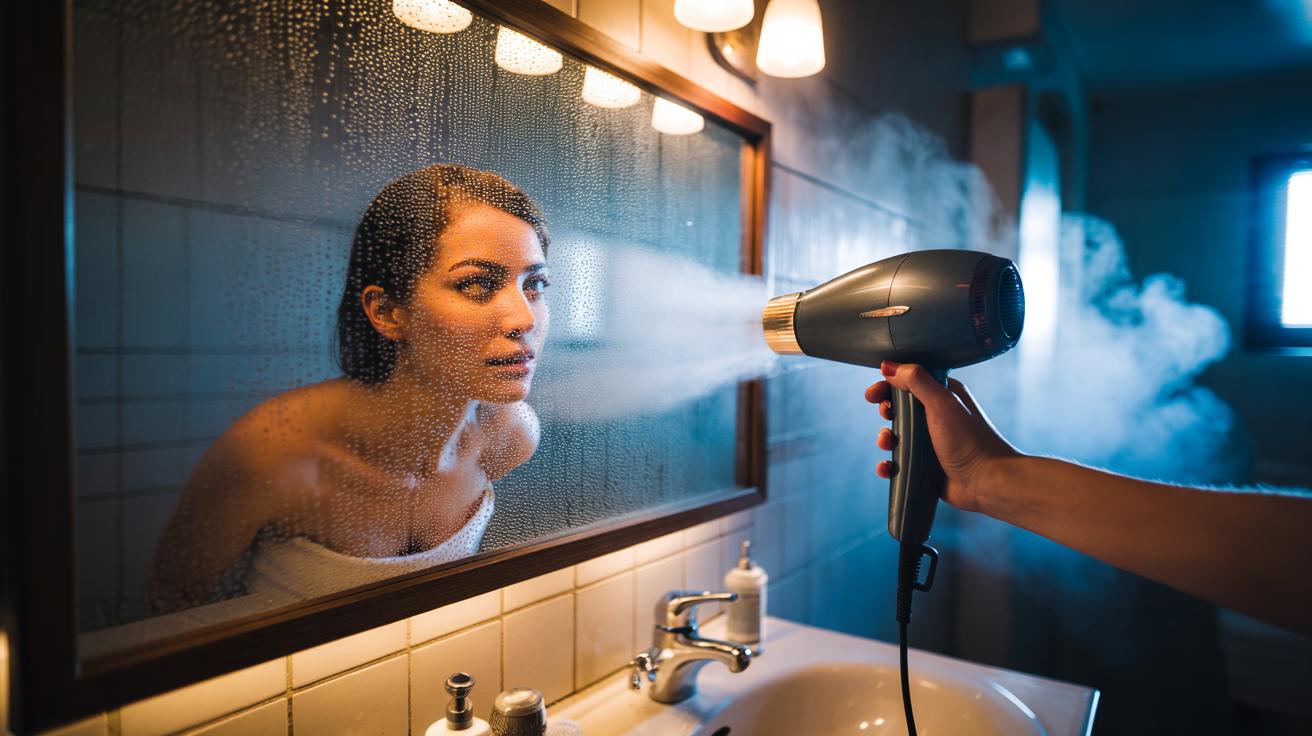
The fog on your bathroom mirror isn’t mysterious; it’s physics in action. When warm, moist air from a shower meets cooler glass, water condenses into tiny droplets that scatter light and blur your reflection. A swift blast from a hairdryer clears the surface in seconds because it targets both temperature and airflow. By elevating the mirror’s surface temperature and sweeping away saturated air, the hairdryer restores clarity quickly. Think of it as a compact, on-demand demister. Here’s how warm air works the magic, how to do it safely at home, and which long-term fixes are worth considering.
How Warm Air Clears Steam
Fog forms when the mirror’s surface temperature drops below the local dew point, producing thousands of microscopic droplets. A hairdryer counters this by delivering warm air with a lower relative humidity at the mirror surface. As the air passes over the glass, it raises the pane’s temperature and reduces the air’s moisture content right where it matters. The result is rapid evaporation of the droplets that cause the haze. Warm air both heats the glass and carries away moisture, which is why the effect is so fast and visible.
Airflow from a dryer also disrupts the stagnant boundary layer that hugs the glass. That thin layer is normally saturated and cool, slowing evaporation. By shearing it off and replacing it with warmer, drier air, the hairdryer steepens the gradient that drives water back into vapour. Simultaneously, the glass itself warms a few degrees, nudging it above the dew point so new fog is less likely to form immediately. Together, these effects create the clear “window” that appears in mere seconds.
The Quick Technique: A Safe, Step-by-Step Guide
Start with the dryer on a warm or medium setting, not full heat. Hold it roughly 20–30 cm from the glass and keep it moving in slow, overlapping arcs. Begin at one corner and sweep across, then down in a zig-zag to cover the whole surface. The aim is to gently warm the mirror and replace damp air with drier flow. Keep the nozzle moving to avoid hotspots and thermal stress on the glass. Most mirrors clear in 10–20 seconds; very cold glass may need a little longer.
If beads reappear, it’s usually because the mirror hasn’t fully warmed or the room remains saturated. A second, quicker pass stabilises the surface temperature and removes the lingering humidity cushion. For best results, run the bathroom fan or crack the door to let moist air escape. A swift wipe with a microfibre cloth can mop up edge droplets, but avoid paper towels that leave lint. The goal is to raise the glass above dew point and keep it there briefly.
| Variable | Recommended | Why It Matters |
|---|---|---|
| Heat setting | Warm/medium | Fast clearing without stressing glass or seals |
| Distance to glass | 20–30 cm | Balances temperature rise and safe airflow |
| Movement | Slow, overlapping arcs | Even heating; avoids hotspots |
| Time | 10–20 seconds | Sufficient to lift surface above dew point |
| Room ventilation | Fan on/door ajar | Removes humid air to delay re-fogging |
Safety, Power, and UK Bathroom Realities
British bathrooms typically lack standard 13A sockets, and for good reason: water and mains electricity do not mix. If you use a hairdryer, never operate it within reach of water or with wet hands. Plug it into an RCD-protected circuit outside the bathroom, keep the cord dry, and stand on a dry floor. Shaver sockets aren’t designed for hairdryers. Where possible, clear the mirror from the doorway or in a dry dressing area. Safety should always outrank speed.
Most dryers draw 1400–2200 W. A 20-second blast uses a fraction of a penny in electricity, but the real cost comes from frequent reheating and poor ventilation that forces repeat clearing. Unplug immediately after use and allow the appliance to cool on a safe, dry surface. If the room is steamy enough to drip, prioritise extraction: a strong extractor fan and an open gap under the door will reduce fog formation at the source.
Smarter Alternatives and Long-Term Fixes
If you’d prefer a hands-off approach, consider a heated mirror demister pad bonded behind the glass. It warms the surface evenly, keeping it above the dew point during showers. Permanent demisters are the safest, hands-off solution because they avoid moving hot air and mains appliances near water. Pair that with a modern, humidity-sensing extractor fan and you’ll slash condensation across the room, not just on the mirror.
Low-cost tactics also help. A hydrophobic coating or a thin film of shaving foam buffed off can reduce droplet formation for days. A warm towel rail beneath the mirror gently raises surface temperature. Shorter, slightly cooler showers generate less vapour, and leaving the bathroom door ajar speeds dilution. A quick pass with a squeegee removes bulk moisture before it condenses on glass. Each tactic addresses either heat, humidity, or both—the two levers that control fog.
The humble hairdryer works because it exploits fundamentals: heat the surface, reduce local humidity, and sweep moisture away. In seconds, fog becomes clarity, and the mirror stays mist-free long enough for the morning routine. Still, safety in UK bathrooms is non-negotiable, and permanent fixes can make the ritual unnecessary. Whether you choose a brisk blast, a demister pad, or better ventilation, the goal is the same: a clear view without faff. Which method will you try first, and what upgrade would make your bathroom truly steam-proof?
Did you like it?4.5/5 (20)