In a nutshell
- 🌀 Use warm air to create an internal airflow “chimney” that dries shoes in about 10 minutes without cracking leather; keep the dryer 15–20 cm away, move constantly, and finish on cool.
- 🧰 Follow the quick method: towel off, remove laces and insoles, insert a tube or rolled sock to guide air, alternate 60–90 second passes per shoe, then apply leather conditioner to replenish oils.
- 📏 Match settings to materials: smooth leather on warm/medium at 15–20 cm; suede/nubuck on low/warm at 20–25 cm; synthetics handle medium heat but watch glues; waterproof membranes need airflow over heat.
- 🛡️ Safety first: airflow first, heat second; use a sock diffuser, never park the nozzle, keep the dryer intake clear, and avoid any surface temperature you can’t comfortably touch.
- 🌿 Post-dry care: insert cedar shoe trees, neutralise odours with bicarbonate of soda, reproof with a water-repellent spray, and brush suede to lift the nap; store away from radiators and direct sun.
When skies open and your shoes take the hit, waiting hours for them to dry is a luxury. The fast fix is the hairdryer method, which can remove most moisture in about 10 minutes without sacrificing leather health. The secret is not raw heat, but controlled warm air channelled inside the shoe to push out humidity. With smart airflow, the insole and toe box dry first, and the surface never overheats. Move the dryer, keep a safe distance, and guide the air—don’t blast it. Done right, this approach avoids cracking leather and preserves adhesives, while restoring comfort in one short session.
How Warm Air Reaches the Insole in Minutes
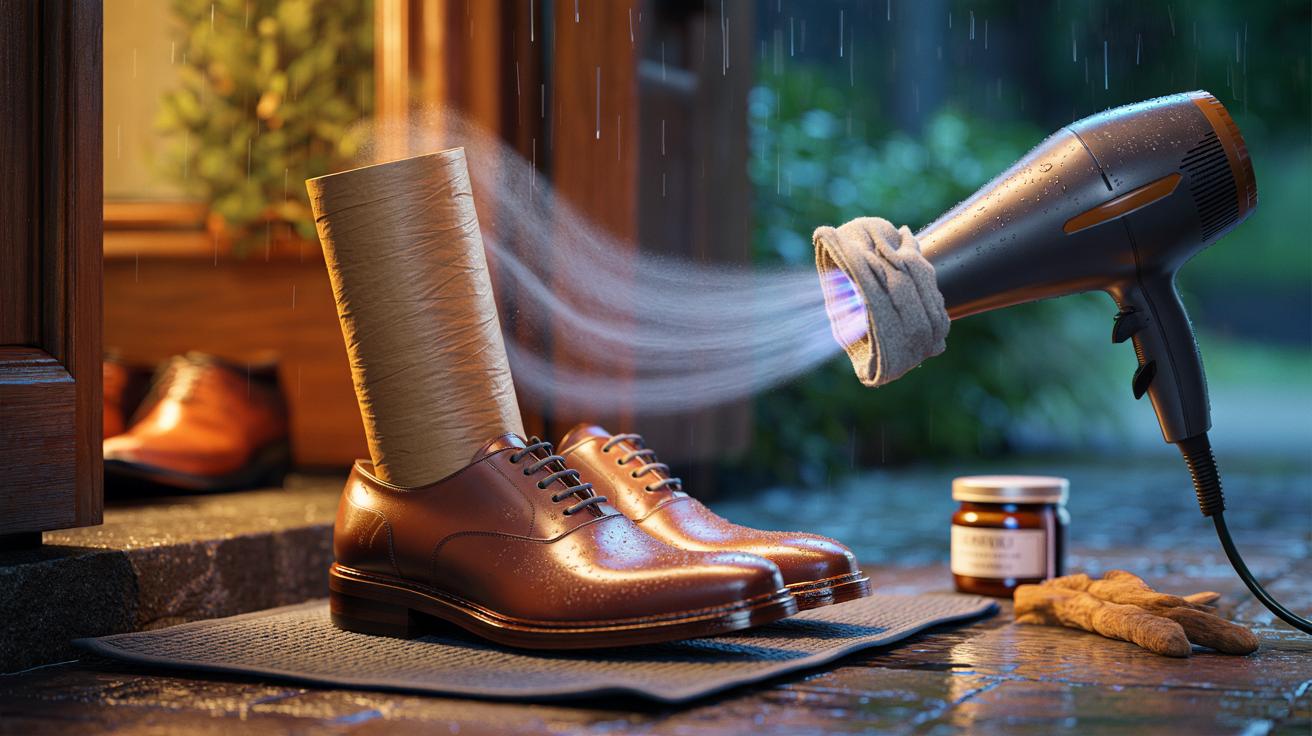
The physics is simple: warm air holds more moisture. When you create a path through the shoe, convection draws damp air out from the toe box and insole. Start by removing the insole and loosening laces fully. Slip a rolled microfibre cloth or a cardboard tube into the shoe to form a mini “chimney”. Hold the hairdryer 15–20 cm from the opening on medium heat, angled so air travels down the channel and rolls out at the heel. Rotate the shoe every minute so warm air touches all interior surfaces.
The danger for leather is concentrated heat on the surface, which evaporates oils too quickly. Keep the dryer moving in small arcs and never park it in one spot. Think airflow, not heat. An easy hack is a thin cotton sock secured over the dryer nozzle. This “diffuser” softens the stream and spreads warmth, reducing hot spots. After six to eight minutes, switch to the cool setting for a minute to pull out residual humidity and let the leather equilibrate.
Step-by-Step Hairdryer Method for a 10-Minute Dry
Pat shoes with a towel to remove surface water. Take out laces and insoles; squeeze insoles gently and set them near a fan or under the hairdryer on low. Create an airflow tunnel with a toilet-roll core, a mesh shoe tree, or a rolled sock inserted from the vamp to the toe. Place a small wedge—like a folded card—at the heel to lift the collar and widen the exit path. Air needs an entry and an exit to carry moisture out. Set the dryer to warm/medium, hold it at 15–20 cm, and aim into the tunnel.
Work in 60–90 second passes per shoe, alternating left and right to avoid heat build-up. Check the upper: it should feel warm, never hot. If the surface heats up, back off to 25 cm or switch to warm-low. For leather, finish drying at cool for a minute to stabilise. Once dry to the touch, massage a pea-sized amount of leather conditioner or cream into the upper to replenish oils. This simple aftercare step is what prevents microcracking, especially along the vamp and flex points.
Settings, Distances, and Materials: What Not to Overheat
Different uppers tolerate heat differently. Smooth leather prefers gentle warmth and constant motion. Suede and nubuck need lower temperatures to avoid shiny patches. Synthetics cope with more heat, but glues can still soften. Waterproof membranes dry best with moving air, not high heat. Use the table below as a quick reference during the process, and adjust if your dryer runs hotter than average. A cheap infrared thermometer is helpful; if not, rely on touch: warm is fine, hot is not.
| Material | Heat Setting | Distance | Typical Time | Notes |
|---|---|---|---|---|
| Smooth Leather | Warm/Medium | 15–20 cm | 8–12 min | Finish cool; apply conditioner |
| Suede/Nubuck | Low/Warm | 20–25 cm | 10–15 min | Brush nap after drying |
| Synthetics/Mesh | Medium | 10–15 cm | 6–10 min | Watch glued areas |
| Waterproof Membranes | Low–Medium | 20 cm | 10–15 min | Prioritise airflow over heat |
Never exceed a surface temperature you can comfortably touch. If steam appears from the leather, it’s too hot; switch to cool and increase distance. Keep the dryer intake unobstructed to avoid overheating the device itself.
Preventing Cracks and Odours After the Quick Dry
Fast drying can be kind to leather if you restore what heat removes. Once shoes are dry, rub in a light conditioning cream or balm, focusing on flex lines. For suede, use a dedicated renovator spray and a soft brush to lift the nap. Insert cedar shoe trees to absorb lingering moisture and realign the silhouette. If odour is a concern, dust a teaspoon of bicarbonate of soda inside, then shake out the next morning. Dry shoes are not automatically fresh; deal with bacteria and salts as well.
To future-proof, reapply a water-repellent spray and briefly warm the surface on low to help it bond—not hot, just slightly warm. For trail shoes, inspect midsole glue lines; if they feel soft, rest the footwear overnight. Store away from radiators and direct sun. The aim is balance: quick comfort now, long-term suppleness later. Airflow first, heat second remains the golden rule for every pair you own.
Handled with care, the hairdryer method turns a soggy commute into a minor inconvenience. By directing warm air through a simple channel and keeping the nozzle moving, you reach the insole fast without sacrificing the oils that keep leather supple. Add a minute of cool air and a dab of conditioner, and your shoes bounce back with no brittle creases, no damp patches, and no lingering odour. It’s a newsroom-tested fix you can repeat all winter. What tweaks will you try—sock diffuser, cardboard tunnel, or cedar shoe trees—to make your next 10-minute dry even better?
Did you like it?4.5/5 (29)