In a nutshell
- 🔬 Condensation forms when moist indoor air meets glass below the dew point, creating droplets; UK homes are vulnerable due to high indoor humidity and cold seasons.
- 💨 The hairdryer works by combining warm air and airflow to deliver convective heat, thin the boundary layer, and speed evaporation—raising glass temperature just above the dew point.
- 🧭 Safe method: use low–medium heat, hold 15–20 cm away, sweep in steady passes, and keep the nozzle moving; ventilate simultaneously to lower relative humidity.
- ⚠️ Use it for quick, surface fog only; avoid on cracked or stressed glass, antique leaded panes, or condensation trapped between double glazing (likely a failed seal).
- 🛠️ For longer-term control, prioritise ventilation (extractors, trickle vents), reduce moisture sources, and consider a dehumidifier; the hairdryer is a tactical, low-cost fix.
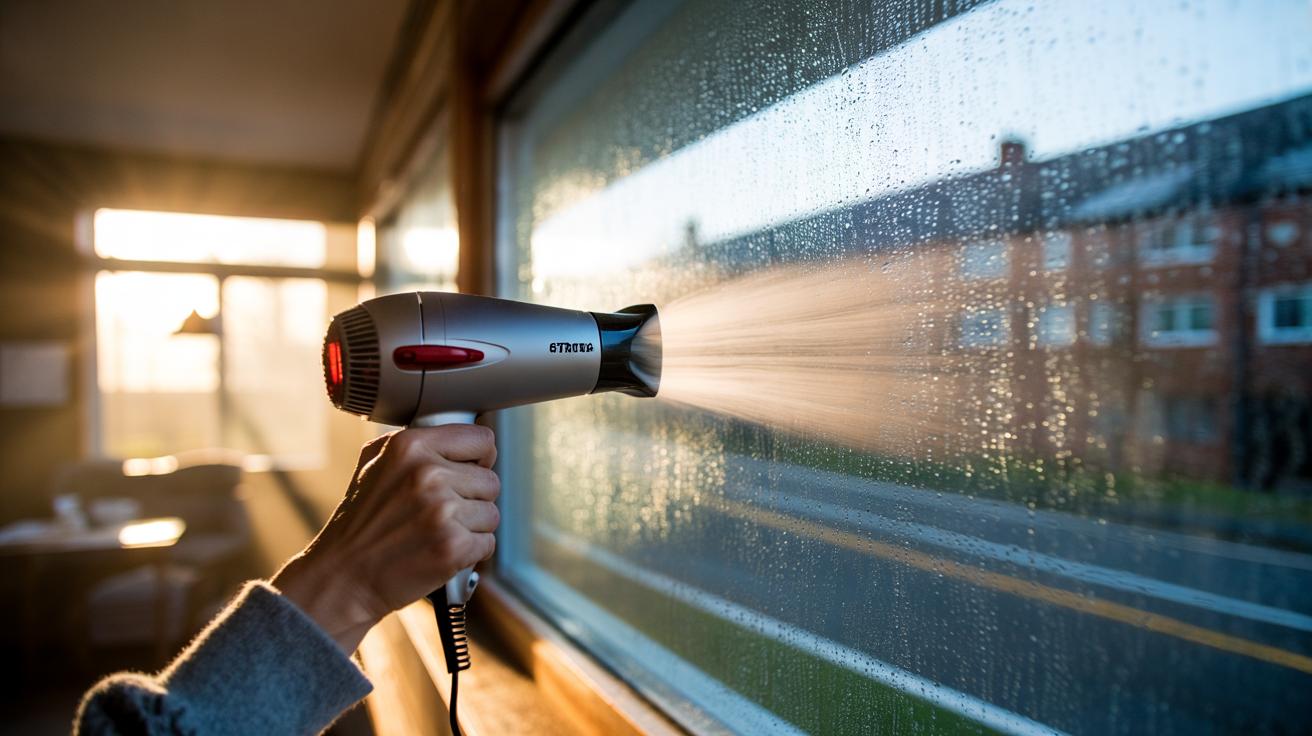
Condensation stalks British mornings like a persistent mist, fogging windscreens and beading on window panes. An unglamorous household hero—the humble hairdryer—can clear it in seconds. By directing controlled warm air across the glass, you lift its surface temperature and nudge water droplets back into the air. The technique is simple, quick, and surprisingly scientific. Used carefully, it protects frames and keeps rooms brighter, while sparing you frantic wiping that leaves streaks. The key is raising the glass just above the dew point without overheating it, a balance any standard hairdryer can achieve with a light, sweeping motion.
Why Condensation Forms on Cold Glass
Condensation appears when moist indoor air brushes a surface colder than the air’s dew point. Water vapour then turns into liquid, collecting as the familiar mist of tiny droplets. UK homes are especially prone in autumn and winter: showers, kettles, and even breathing raise indoor humidity, while outside temperatures fall and window surfaces cool. Single-glazed panes and metal frames amplify the effect by conducting heat away fast, creating the perfect stage for fog.
Airflow complicates the picture. Still air near the pane forms a cool boundary layer, lowering temperature at the surface and making droplets cling. Curtains and blinds, though cosy, can trap that cooler air. Warm air holds more moisture than cold air, so when glass is chilled, that surplus moisture has nowhere to go but onto the pane. Double glazing, trickle vents, and well-sealed frames reduce extremes, yet even efficient homes fog up during steamy mornings without adequate ventilation.
How the Hairdryer Trick Works
The hairdryer’s power lies in a one-two: heat plus airflow. Passing warm, moving air over glass transfers gentle convective heat, nudging the surface temperature above the dew point so droplets stop forming. Simultaneously, the breeze thins the boundary layer and boosts evaporation by increasing vapour pressure at the surface. Those micro-droplets quickly vanish, leaving a clear view without smears. The goal is to lift the glass temperature just above the dew point, not to bake it—a moderate setting and steady movement are enough.
It seems instant because droplet size collapses as the surface warms, then evaporates as airflow whisks moisture away. On double glazing, the effect is especially quick: the inner pane is already warmer than single glass. A careful technique protects sealant lines and paintwork, avoiding the vigorous rubbing that damages finishes. Where frames are timber, plastic, or aluminium, the hairdryer method keeps contact to a minimum while preventing the streaks that cloths often leave behind.
Step-by-Step: Defogging Windows Safely
Start by switching the hairdryer to a low or medium heat with moderate airflow. Hold the nozzle about 15–20 cm from the glass. Sweep in long, horizontal passes from the top edge downward, then repeat vertically to cover missed areas. This cross-hatching warms evenly and prevents hot spots. Keep the nozzle moving at all times—the aim is gentle warmth, not concentrated heat. If droplets reform at the edges, angle warm air along the perimeter where frames often sit a little cooler.
Place a dry towel on the sill to catch any runoff from heavy fogging. For bathrooms, switch on the extractor fan as you work to lower relative humidity. In kitchens, crack a window or open trickle vents to expel moist air. Never use a hairdryer near standing water or with wet hands. If the pane feels hot to the touch, pull back and reduce the setting. A minute or two usually delivers crystal clarity without strain on the glazing.
When to Use It—and When Not to
The hairdryer trick shines in quick-turnaround moments: clearing bedroom windows before school runs, demisting patio doors before guests arrive, or taming steamy mirrors after a shower. It’s also handy after deep cleaning, when indoor humidity spikes. Do not use it on cracked, chipped, or visibly stressed glass; temperature gradients can worsen damage. Be cautious with antique leaded lights or thin single glazing during hard frosts, where uneven heating can risk thermal stress. For persistent daily fogging, investigate the basics—ventilation, moisture sources, and insulation—so you’re treating causes, not just symptoms.
Consider energy and safety. A typical hairdryer draws 1.2–2 kW, but used for one or two minutes it costs pennies and cuts the temptation to crank the heating. Still, avoid blasting high heat at mastic joints or vinyl foils. If condensation is trapped between double-glazed panes, a failed seal is the likely culprit, and no surface trick will help—seek a repair or replacement unit. For prevention, use dehumidifiers, consistent extractor use, and keep trickle vents open.
| Method | Typical Time | Best For | Key Risk/Cost |
|---|---|---|---|
| Hairdryer | 1–3 minutes | Fast defog on inner pane | Overheating if held too close |
| Microfibre + Squeegee | 2–4 minutes | Heavy droplets | Smearing; contact wear on frames |
| Extractor/Trickle Vents | 5–20 minutes | General moisture control | Slower; relies on airflow |
| Dehumidifier | Hours | Persistent humidity | Electricity use; noise |
Used with care, a hairdryer is a smart, science-backed fix for misty mornings. It warms the glass, accelerates evaporation, and restores visibility without scrubbing. Pair the trick with better ventilation and mindful habits—lids on pans, fans during showers, trickle vents left open—to stop fog forming in the first place. Think of it as your tactical response while you implement strategic moisture control. Will you try the hairdryer as a quick cure, or tackle the source with upgrades like improved extraction, secondary glazing, or a compact dehumidifier—and which change would make the biggest difference in your home?
Did you like it?4.5/5 (25)