In a nutshell
- 🔥 The hot spoon trick uses heat and moisture to rehydrate crushed wood fibres; softening lignin lets compressed cells swell and lift dents (unlike scratches, which need filling).
- 🥄 Method: add a tiny drop of water, apply a heated spoon in 10–20s passes, check and repeat with incremental lifts; allow to dry, then lightly de‑nib (1,000–2,000 grit) and polish or wax.
- 🪵 Surfaces: best on solid wood; use extreme caution on veneer; finishes differ—shellac/lacquer can blush, polyurethane tolerates brief heat, oiled tops may raise grain.
- ⚠️ Safety: prioritise the finish over perfection; stop if whitening or softening appears; avoid seams and marquetry; dents only—gouges/scratches need repair, not heat.
- 🧰 Alternatives & tips: a controlled steam iron through cloth suits robust or unfinished wood; species and grain affect response; patience and short cycles deliver the cleanest, most conservative fix.
Few quick fixes in a British home feel as quietly miraculous as watching a dent in a table fade before your eyes. The humble hot spoon trick doesn’t rely on magic; it taps into the physics and biology of wood. When a surface is dented, the wood fibres are crushed rather than cut, leaving compressed cells that can be coaxed back to size. By adding heat and moisture, you soften lignin and swell the cell walls, encouraging them to reoccupy their original volume. Applied carefully, this simple technique can rescue a cherished piece without sanding, fillers, or costly refinishing.
How Heat and Moisture Revive Crushed Wood Fibres
Wood is a hygroscopic material: its cell walls absorb and release moisture, expanding and contracting with changes in humidity. In a dent, cells haven’t been removed; they’re squeezed. Introduce controlled heat with a trace of water and those cells can re-inflate like tiny sponges. Heat softens lignin—the natural binder in wood—making fibres pliable, while moisture swells cell walls. This dual action lets fibres rise towards their pre-impact position.
Unlike a scratch, which severs fibres and often needs filling, a dent is a reversible compression. The ideal temperature window for this revival sits below finish-damaging levels yet high enough to mobilise lignin—typically in the 60–90°C range at the surface. A hot spoon gently delivers localised heat, limiting collateral stress to surrounding finish. The goal isn’t to scorch or steam-bathe the panel, but to finesse the exact spot that needs persuading.
Different species respond at different rates. Softwoods like pine lift quickly as their earlywood is less dense; closed-pored hardwoods may need repeated cycles. Grain orientation also matters: end grain absorbs faster and can swell unevenly. The watchword is patience—short, controlled applications followed by cooling checks keep the rise tidy and the finish intact.
The Hot Spoon Method, Step by Step
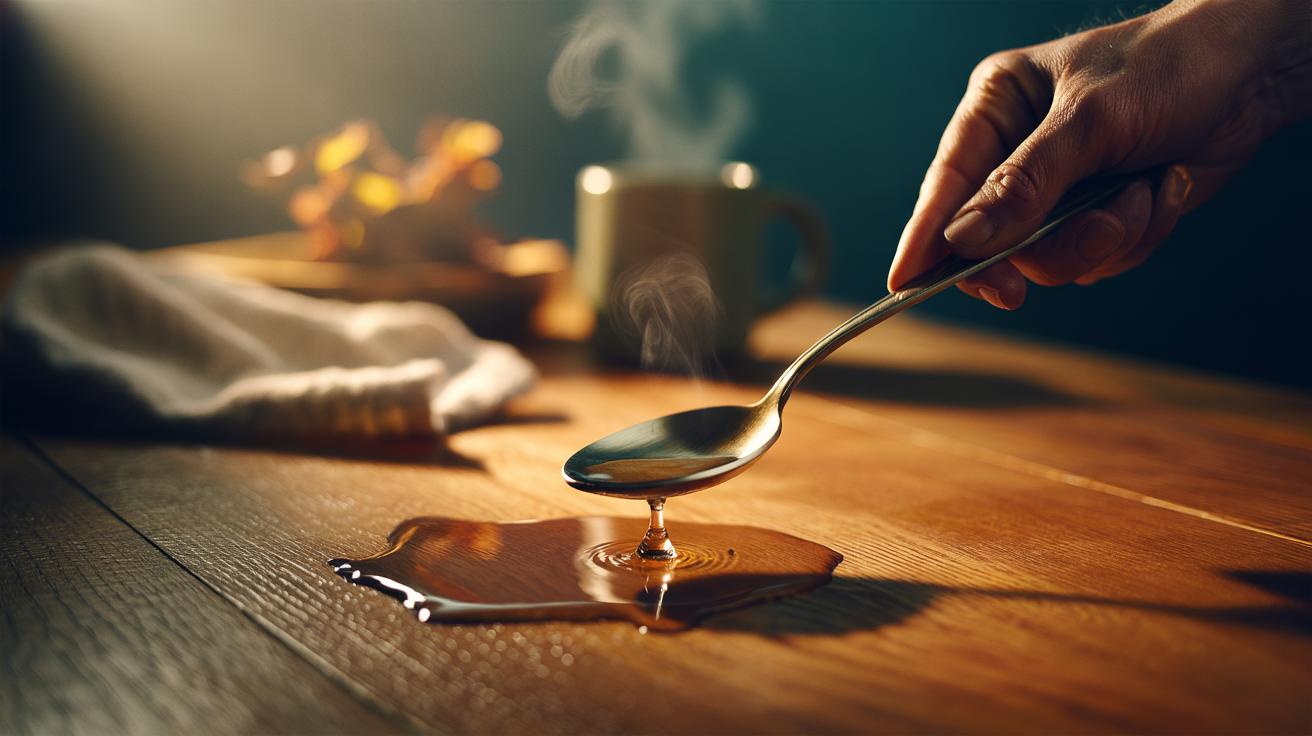
First, clean and dry the area. Place a single drop of water or a barely damp cotton pad on the dent; the aim is a micro-reservoir, not a wet patch. Heat a spoon by dipping it in freshly boiled water or resting it in a mug of hot water. Dry the spoon. You want heat, not liquid, contacting the finish. If the surface is delicate, interpose a thin cotton cloth between spoon and wood.
Press the convex side of the spoon onto the dent and move it in small circles for 10–20 seconds. Lift, assess, and reapply a fraction more moisture if needed. Repeat in short cycles until the dent rises flush or near flush. For deeper dents, let the area cool and dry for a few minutes between passes, then resume. Incremental lifts preserve the finish and prevent over-swelling.
Once satisfied, allow the spot to dry thoroughly. If a slight rim remains, flatten it with a light pass of 1,000–2,000 grit abrasive wrapped round a cork block, then buff. A quick coat of wax or a dab of matching polish blends sheen. Stop at the first sign of finish softening, whitening, or print-through, and adjust your technique.
Choosing the Right Surface: Solid Wood, Veneer, and Finishes
The spoon method shines on solid timber, where compressed fibres have room to rebound. Veneer demands caution: adhesives can creep under heat and moisture, and the skin is often 0.6 mm or thinner. Keep cycles short, moisture minimal, and pressure very gentle. If you feel movement at an edge, cease and consider professional help. Finishes set the risk profile. Shellac and traditional lacquer can blush or print; polyurethane copes better but may dull under heat.
Match technique to the surface in front of you. On oiled or waxed tops, moisture can penetrate quickly, making lifts efficient but also raising grain that later needs a careful de-nib. High-gloss piano finishes are particularly sensitive; consider a dry heat variant through a cloth and accept a partial improvement rather than a perfect raise. The table below offers quick guidance at a glance.
| Surface Type | Heat/Moisture Tolerance | Recommended Approach | Risk Level |
|---|---|---|---|
| Solid hardwood (oak, ash) | High | Standard spoon + tiny moisture, short cycles | Low–Medium |
| Softwood (pine, cedar) | High | Gentle heat; fibres lift quickly | Low |
| Veneer on MDF/plywood | Low–Medium | Minimal water; very brief cycles; light pressure | Medium–High |
| Shellac or nitro lacquer | Low | Prefer dry heat through cloth; expect blush risk | High |
| Polyurethane | Medium | Brief damp + heat; polish afterwards | Medium |
Safety, Limitations, and When to Stop
Always prioritise the finish over the urge to chase perfection. If a dent sits near a joint, marquetry edge, or veneer seam, the risk of adhesive creep rises. Use a thermometer spoon if you have one, or cycle your heat source every 10–15 seconds to stay conservative. Keep a dry cloth to wick away any unintended droplets—water marks are easier to prevent than to remove.
Not all depressions are true dents. If fibres were cut by a sharp impact, you’re dealing with a scratch or gouge that needs filler, burn-in, or local refinishing. Heat won’t reconnect severed cells. Likewise, heat can worsen sun-cracked lacquer or brittle, crazed finishes. In these cases, limit intervention to cleaning, waxing, and managing expectations, or obtain professional restoration advice.
Alternatives exist. A household steam iron over a damp cloth works on unfinished timber or robust finishes but spreads heat more widely; the spoon offers tight control on precious furniture. For persistent dents, a few cycles across several hours often beat a single long blast. Patience safeguards both wood and finish.
Used with care, the hot spoon technique shows how heat and moisture can coax crushed wood fibres back to life, restoring pride to tabletops and sideboards without heavy sanding. It’s a conservator’s mindset: intervene minimally, observe closely, and preserve original material wherever possible. With a spoon, a drop of water, and a steady hand, many dents can be softened into memory. What piece in your home might benefit from this quietly effective treatment, and how will you tailor the method to its wood and finish?
Did you like it?4.4/5 (25)