In a nutshell
- 🔥 Uses steam and latent heat from hot water to soften baked-on grease, opening micro-gaps so a crumpled foil ball can lift residue with light abrasion.
- 🧽 Step-by-step: prewarm to ~80–120°C, lay a towel, make an aluminium foil ball, pour hot (not boiling) water, glide in circles, re-wet as needed, then rinse and microfibre buff.
- ⚠️ Safety first: protect tempered glass from thermal shock, avoid door seals and ventilation slots, steer clear of printed borders, and never combine the hack with a just-finished pyrolytic cycle.
- 🧪 Smart add-ons: a dab of washing-up liquid helps emulsify; a thin bicarbonate of soda paste can boost lift; use vinegar only for final shine—and avoid acids or bleach with foil.
- ✅ Payoff: a low-cost, low-chemical method that restores clear oven glass quickly, with the steam doing most of the work and the foil providing gentle, conforming abrasion.
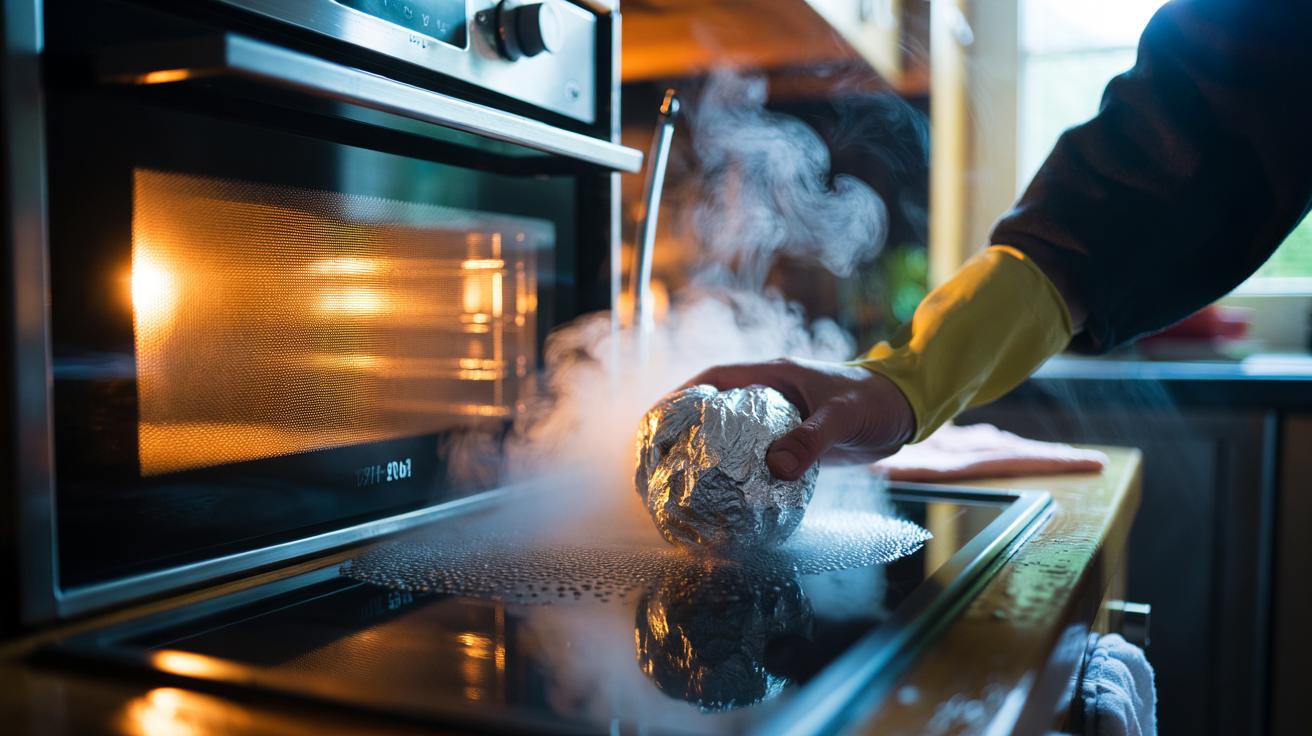
There’s a viral cleaning shortcut doing the rounds in UK kitchens: using hot water and a crumpled aluminium foil ball to restore a cloudy, streaked glass oven door. It works because steam loosens the polymerised film of fat and sugars, while foil offers gentle, flexible abrasion that glides over glass without biting. The method is inexpensive, quick, and low on chemicals, which makes it ideal for weeknight resets or rental properties. Work warm, not scalding, and avoid shocking the glass. With a towel to catch drips and a microfibre to finish, you can cut through that amber haze and bring back a clear view of dinner in minutes.
Why Steam Breaks Down Baked-On Grease
The magic here is latent heat. When hot water meets warm glass, it flashes to steam and then condenses, dumping a surge of energy into the grime. That burst softens polymerised fats and caramelised sugars, turning a brittle crust into a plasticised layer that lifts easily. As the film swells, micro-gaps open at the glass interface; the foil ball’s nubbly surface nudges at those gaps, reducing the residue’s adhesion. Steam is the solvent’s wingman: it doesn’t dissolve the mess, it weakens it so a light abrasive can finish the job.
There’s also simple physics: expanding vapour creeps under edges, and condensation boosts capillary action so moisture wicks beneath the soil. Glass, a smooth non-porous substrate, gives steam nowhere to hide, so heat delivery is even. Provided the door is pre-warmed, the thermal gradient stays gentle and risk remains low. Never pour boiling water onto a cold oven door—let the panel come up to a safe, hand-warm temperature first.
How to Use the Hot Water and Foil Ball Method
Heat the oven to roughly low fan (about 80–120°C), then switch it off and open the door to vent for a minute. Lay a towel beneath the panel to catch runoff. Crumple a tennis-ball-sized aluminium foil ball—smooth any sharp edges with a quick squeeze. Pour a small mug of hot (not boiling) water across the inner glass, letting steam bloom. Working in circles, glide the foil over the softened film. Wipe, re-wet, and repeat as the glass clears. If friction rises, reapply hot water; the steam does most of the heavy lifting.
| Item | Why It Matters |
|---|---|
| Hot water | Generates steam to soften baked-on grease quickly. |
| Aluminium foil ball | Provides gentle abrasion that conforms to the glass. |
| Microfibre cloth | Buffs away loosened residue without streaks. |
| Washing-up liquid (drop) | Lowers surface tension and emulsifies fats. |
| Gloves and towel | Protects hands; catches drips at the door’s edge. |
Finish with a hot rinse and a microfibre buff. For persistent corners, rewarm the panel and spot-treat. Avoid grinding across the glass edge or rubbing over door seals.
Safety and Glass Care Tips
Oven doors use tempered glass that resists heat but dislikes sudden temperature swings. Keep water hot but not boiling, and the door warm, not cold. Avoid running water into ventilation slots or the hinge cavity; moisture can seep behind the inner pane and leave fogging. If your door has a printed border or anti-reflective coating, steer the foil ball clear and use a cloth there. Wipe horizontally and gently—pressure is far less important than steady heat plus lubrication.
Thermal shock is rare with sensible prep but worth respecting. Don’t mix this method with a just-completed pyrolytic cycle; the glass remains extremely hot and fragile at the edges. Skip metal scrapers unless you’re trained and the panel is fully cooled; one nick can propagate cracks. Always test the foil on a small, inconspicuous area first. If you suspect micro-scratches from prior cleaning, switch to a non-scratch pad and keep the steam step—softness is your ally here.
When to Combine Cleaners and What to Avoid
For thick, tarry deposits, add a dab of washing-up liquid to the hot water to emulsify oils. A thin paste of bicarbonate of soda can be spread on cool glass, then re-warmed with hot water so it becomes a mild slurry under the foil. Rinse thoroughly and buff dry to prevent filming. To remove final smears, a spritz of glass cleaner or diluted white vinegar works well—but only after the foil step is done and wiped away.
A few red lines keep this hack safe. Do not use aluminium foil with acidic soaks (like neat vinegar), which can react and stain. Avoid chlorine bleach, oven cleaner overspray on door seals, or harsh scouring pads that can haze the surface. If you’ve a pyrolytic or catalytic oven, consult the manual: some coatings need gentle care. And if the inner panel is double-glazed and streaking appears between panes, it’s a seal issue, not a cleaning job—call the manufacturer.
Used thoughtfully, the hot water plus foil ball method is a tidy, low-cost way to reclaim a crystal-clear oven window with little effort. The steam softens the grime’s grip, and the foil’s soft texture coaxes it away without gouging or fumes. Keep the temperature sensible, protect the seals, and finish with a microfibre polish, and your next roast will be viewable in cinematic clarity. Which tweaks—soap, bicarb, or a final vinegar shine—work best on your oven glass, and what have you found most effective for stubborn corners?
Did you like it?4.6/5 (24)