In a nutshell
- ❄️ The ice-cube hack lifts carpet dents by slow-melt hydration that restores fibre resilience, while mild temperature change helps the pile spring back without harsh chemicals.
- 🧭 Step-by-step: vacuum the dent, place 1–3 ice cubes, let them melt naturally, blot thoroughly, groom with a spoon or soft brush, then add airflow or low heat; repeat for stubborn, long-set dents.
- 🧪 Best candidates: wool and synthetics (e.g., polypropylene). Avoid viscose/rayon, sisal, and seagrass; test dyes for fastness and protect timber floors from drips.
- ⚠️ Risk control: over-wetting can cause browning, odours, or wick old spills; use a barrier, monitor for discolouration, and stop if mustiness appears to prevent damage.
- 🛡️ Prevention tips: furniture coasters, load rotation, regular vacuuming, resilient underlay (crumb rubber or premium foam), and maintaining humidity to keep wool supple.
Dented pile where a heavy sofa or desk has sat can make even the smartest lounge look tired. The low-tech ice-cube hack promises to lift those carpet dents with nothing more than tap water and time, using freezing to coax the pile back to life. It’s a reversible, low-risk trick that relies on moisture and temperature, not harsh chemicals. The principle is simple: slow melt, gentle rehydration, then a little grooming. Done well, it can revive wool and synthetics alike, and it’s kinder to backing fabrics than aggressive steaming. Here’s the science, the steps, and the pitfalls, so you can reset fibres quickly without inviting stains, smells, or mould.
Why Ice Works on Carpet Dents
Carpet dents form where weight compresses the pile, pushes out air, and can even flatten the twist in yarns. As fibres lose resilience, they “remember” the pressure point. Ice reverses this by delivering a slow, controlled dose of water as it melts, letting capillary action travel moisture along yarns and into the underlay. The controlled hydration softens and relaxes the pile so it recovers its vertical spring. There’s also a subtle temperature effect: the cold contracts fibres and backing momentarily, and the subsequent return to room warmth encourages a gentle lift as tension equalises.
On natural carpets such as wool, this slow-release moisture plumps the cuticle and restores curl, while synthetics like polypropylene respond by regaining their mechanical memory. The key advantage over pouring water is precision: cubes melt in place, avoiding over-wetting that can wick soils from the backing. Used with a light groom and airflow, you get rebound without the risks of a heavy steam blast.
Step-by-Step: The Ice-Cube Method
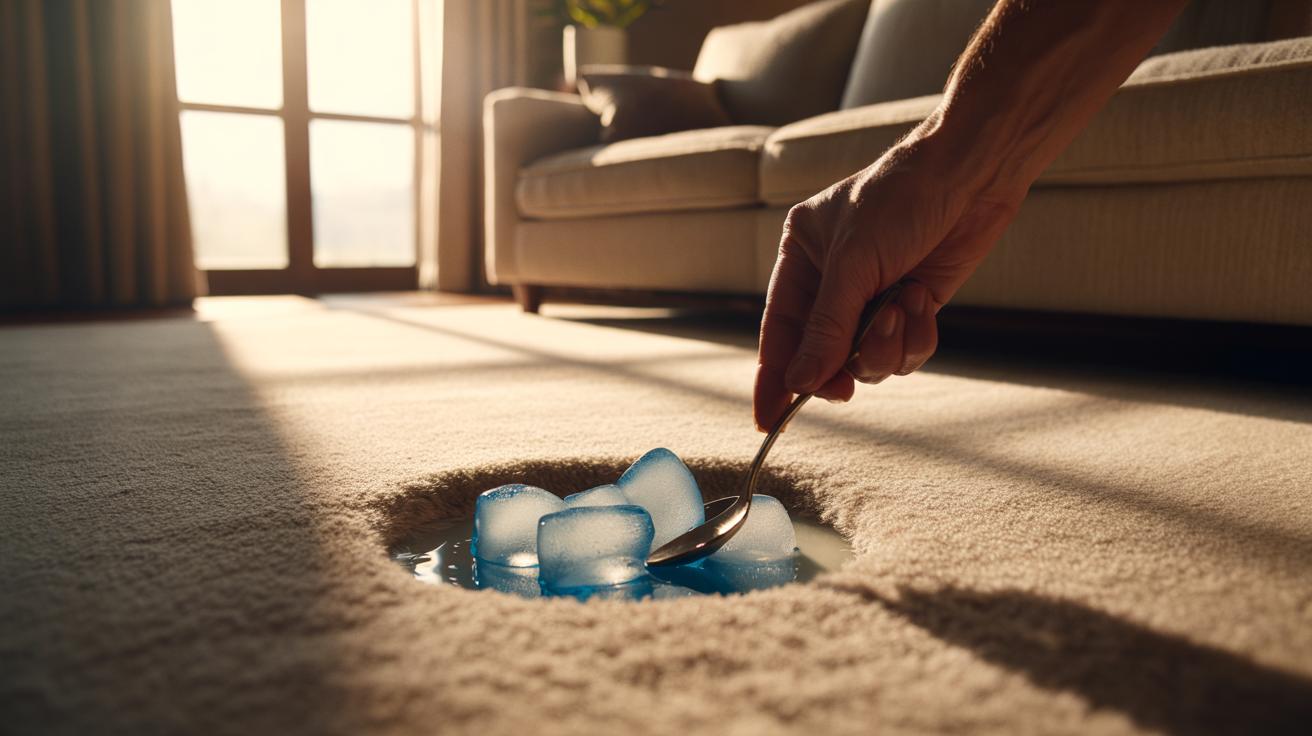
Start by vacuuming the dent to lift grit that could abrade fibres. Place one or two standard ice cubes directly in the indentation; for deep pile, use several smaller cubes to spread melt evenly. Allow the ice to melt naturally—no heaters—so water penetrates slowly and doesn’t shock the backing. After 30–60 minutes, blot the area with a clean, absorbent towel to remove excess moisture, then tease the pile upright with a spoon edge or a soft brush. Encourage airflow with a fan and, if needed, finish with a low-heat hairdryer from a distance while brushing upright. Repeat once if the dent is years old.
| Carpet/Pile | Cube Size | Melt Time | Aftercare |
|---|---|---|---|
| Low-pile synthetics | 1 standard cube | 30–40 mins | Blot, brush, fan |
| Medium wool twist | 1–2 small cubes | 40–60 mins | Blot, spoon-groom |
| Deep/soft pile | 2–3 small cubes | 60–90 mins | Repeat once if needed |
Pro tip: If the carpet sits on a wooden floor, slip a waterproof barrier under the area to protect against drips. Always blot thoroughly—damp, not wet, is the target. If you see a ring forming, stop, blot, and use a fan immediately to prevent browning.
Safety, Stain Risks, and When to Avoid the Hack
While ice is gentle, there are caveats. Some backings—particularly jute or latex past their best—can release residues when over-wet, causing browning or odour. Test a small, hidden spot first if you have a natural-fibre rug or unknown dyes. Viscose/rayon, sisal, and seagrass are poor candidates: they dislike moisture and may distort. On hand-dyed rugs, colour fastness can vary; place a white cloth under the test area and check for transfer. If a dent sits above raw timber, protect against drips that could raise the grain or mark the finish.
Hygiene matters too. Old spills beneath dents can “wake up” when rehydrated, wicking a pale halo to the surface. Vacuum thoroughly, then consider applying the ice over a microfibre cloth to moderate moisture. If you smell mustiness or see tea-coloured patches while melting, stop and bring in a professional cleaner. For tenants, photograph the area before and after to document condition improvements for check-out reports.
Beyond Ice: Pro Tips to Prevent Future Dents
Prevention is a mix of load management and routine care. Use furniture coasters or high-density felt pads to spread weight; a larger footprint reduces pressure per square centimetre dramatically. Rotate heavy items seasonally to vary load paths, and give the pile a “holiday” by sliding pieces forward a few centimetres during cleaning. Regular vacuuming restores loft and slows the matting that becomes denting under pressure. In lounges, aim for two thorough passes a week on traffic lanes, using a beater-bar brush appropriate to your carpet type.
Consider a breathable underlay with good rebound, such as crumb rubber or premium foam, to add resilience underfoot. Where humidity is low, a cool mist humidifier in winter can help wool retain suppleness. If you need heat, choose a hairdryer on low and keep it moving rather than a clothes steamer, which can oversoften latex backings. Before parties or house moves, pre-place coasters and mark furniture footprints so loads go exactly where support is strongest.
Handled with patience, a few ice cubes can lift dents and restore a room’s tidy lines, without specialist kit or risk to delicate pile. The trick is measured moisture, good blotting, and a gentle groom to encourage the fibres back to attention. Reserve steam for deeper cleaning and keep an eye on backings that dislike water. From rental flats to family homes, this quick fix can save a call-out—and your deposit. What dents are you battling right now, and which spot in your home will you test with an ice cube first?
Did you like it?4.4/5 (21)