In a nutshell
- ❄️ Science: The ice‑cube rub drives gum toward its glass transition, reducing adhesion and creating micro‑fractures so residue cracks away cleanly.
- 🧊 Technique: Isolate the spot, apply bagged ice for 60–90 seconds, then gently shear with a spoon or card; repeat short cycles or use a 15–30 minute freezer chill for small items—always freeze the gum, not the garment.
- 🧼 Aftercare: Lift lingering oily residues with washing‑up liquid, spot‑treat synthetics with isopropyl alcohol (patch test), launder cool, and avoid heat until the mark vanishes.
- 🧵 Fabrics & cautions: Highly effective on cotton, denim, and poly blends; use brief cold passes and extra care on wool, silk, velvet, leather, and suede, and heed “dry clean only” labels.
- 🧰 Tools & timing: Rely on ice in a zip bag, freezer packs, and blunt scrapers; follow the rhythm “chill, chip, check” for a fast, fabric‑safe, low‑cost clean.
Chewing gum clings with the tenacity of a bad headline, threading itself into fabric fibres and daring you to pull. Before you reach for aggressive solvents, try the deceptively simple ice‑cube rub: a cold, controlled massage that makes gum embrittle and crack away cleanly. This method works with everyday wardrobes and upholstery, keeps colours safe, and demands nothing more than ice, a bag, and patience. The trick is to freeze the gum, not the garment, turning a rubbery nuisance into brittle crumbs you can lift in minutes. Here’s the science behind the chill, a step‑by‑step guide that actually works, and a quick reference for different fabrics and tools.
How Freezing Breaks Gum’s Grip
Chewing gum is a tangle of polymer chains designed to be viscoelastic: stretchy yet sticky at room temperature. Drop its temperature and you nudge it toward its glass transition, the point where those chains stiffen and stop flowing. Once the gum cools below this threshold, it loses the ability to deform around fibres and instead behaves like a brittle solid. At freezing point, adhesion drops while brittleness rises, which is precisely what you need for a clean release.
The ice‑cube rub amplifies this by delivering cold exactly where it counts. As the gum contracts faster than the fabric, tiny micro‑fractures open across its surface. A blunt edge—spoon, credit card, butter knife—can then shear the gum from the weave with minimal disturbance. Cotton, denim, polyester, and many blends respond well because their fibres don’t absorb water quickly and can handle brief cold exposure without warping or discolouring.
Step‑by‑Step: The Ice‑Cube Rub Technique
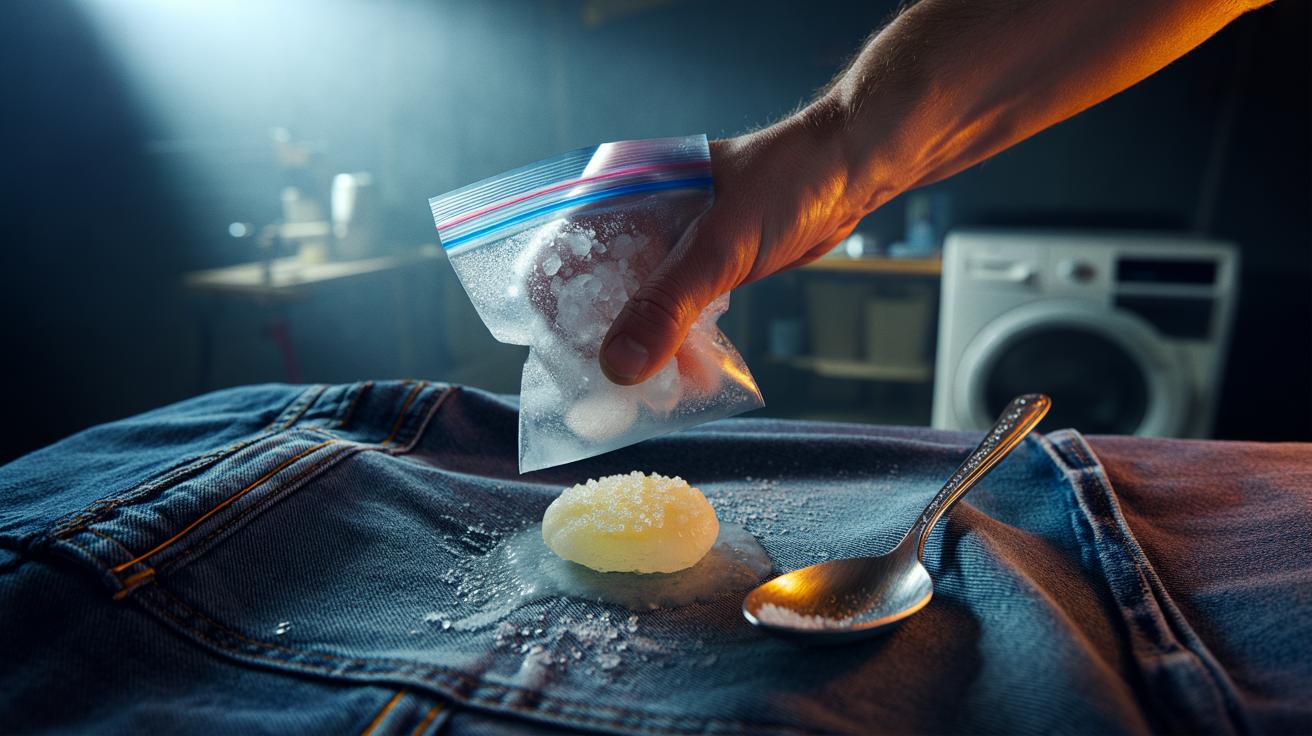
Start by isolating the mess. Lay the fabric flat, gum facing up, with a folded absorbent cloth beneath to keep moisture away from clean layers. Seal two or three ice cubes in a zip‑top bag to avoid drips. Now, rub the bagged ice over the gum in small circles, keeping the cold on the gum, not the fabric. After 60–90 seconds, test an edge with a spoon. If the gum shatters or lifts as flakes, you’ve hit the right temperature zone.
Work in passes. When the gum softens again—body heat and friction will warm it—reapply the ice for another minute. Use short, shallow scrapes along the fabric’s grain to protect the weave. For thick deposits, freeze, chip, re‑freeze, and chip again. If the garment is small (a hat or child’s T‑shirt), bag it and chill in the freezer for 15–30 minutes, then remove and shear immediately before it warms.
What to Do After the Gum Pops Off
You may see a faint shadow or a thin smear once the main lump is gone. That residue is often flavour oils or colourants from the gum, not the gum base itself. Dab the area with a tiny amount of washing‑up liquid mixed with warm water, blotting from the outside in. For stubborn traces on synthetics, a cotton bud lightly moistened with isopropyl alcohol can help—but patch test an inside seam first. Never add heat from an iron or tumble dryer until the mark has fully vanished.
Rinse, then launder on a cool or moderate cycle suited to the fabric. Wool and silk prefer a delicate wash and minimal agitation. Upholstery? Vacuum away crumbs, then blot with mild soap solution and clear water. Avoid bleach, which can set dye shifts created by mentholated flavours. When dry, tease the fibres with a soft brush to restore the nap, especially on knits and brushed cottons.
Tools, Timings, and Textiles: A Quick Reference
The right gear and timing make the difference between a neat lift and a fuzzed patch. Keep the cold focused, the scraping gentle, and the fabric supported. Think chill, chip, check—then repeat in short cycles until the gum gives up. Below is a concise guide you can keep near the laundry sink.
| Tool/Material | Use | Approx. Time | Best For | Notes |
|---|---|---|---|---|
| Ice cubes in zip bag | Localised freezing without wetting | 1–2 minutes per pass | Cotton, denim, poly blends | Keep bag sealed to avoid drips |
| Freezer pack | Hands‑free chilling on larger patches | 3–5 minutes | Upholstery, coats | Lift and check frequently |
| Spoon/credit card | Blunt shearing of brittle gum | Short, repeated strokes | All sturdy weaves | Avoid sharp knives on delicate fibres |
| Washing‑up liquid | Remove oily flavour residues | 2–3 minutes blotting | Most garments | Rinse thoroughly |
| Isopropyl alcohol | Spot‑treat dye shadows | Seconds, with patch test | Synthetics | Avoid on acetate and silk |
For wool, silk, velvet, and any item labelled “dry clean only,” restrict contact to the gum itself, use the briefest cold passes, and scrape with extra care. Leather and suede should be chilled via a barrier and gently flaked, then conditioned to prevent drying.
Cold turns the gum’s elastic advantage into a brittle weakness, which is why the ice‑cube rub is such a reliable first response. It’s quick, cheap, fabric‑safe, and gratifyingly tidy when done in short, chilled rounds. By targeting the gum’s chemistry rather than bullying the fabric, you get a cleaner, faster win. If you’ve wrestled with a particularly awkward textile, or found a hybrid trick that pairs freezing with another gentle remedy, what timings, tools, or motions made the difference for you—and which fabrics proved the most surprising?
Did you like it?4.7/5 (25)